 Birch Bay Siding
 Living on Lummi Island: What the Climate Does to Exterior Materials
Lummi Island sits out in the Salish Sea, surrounded by saltwater on every side, which means homes here take a different kind of weathering than houses even a few miles inland in Whatcom County. Salt-laden air corrodes fasteners, breaks down finishes faster, and works its way into seams and end cuts that would stay dry in a more sheltered location. Add in the long, wet Pacific Northwest fall and winter, driving rain off the water, and a moss and algae season that can run eight or nine months out of the year in shaded, north-facing spots, and you've got an environment that's genuinely tough on siding, trim, roofing, and anything else on the outside of a house.
None of this means Lummi Island is a bad place to own a home — it just means the exterior materials and the installation details matter more here than they would in a drier climate. We've seen what happens when siding, paint, and trim aren't matched to this environment: swelling at butt joints, paint failure on end grain, moss creeping up north walls, and rot starting in places nobody checks until it's a real repair instead of a quick fix.
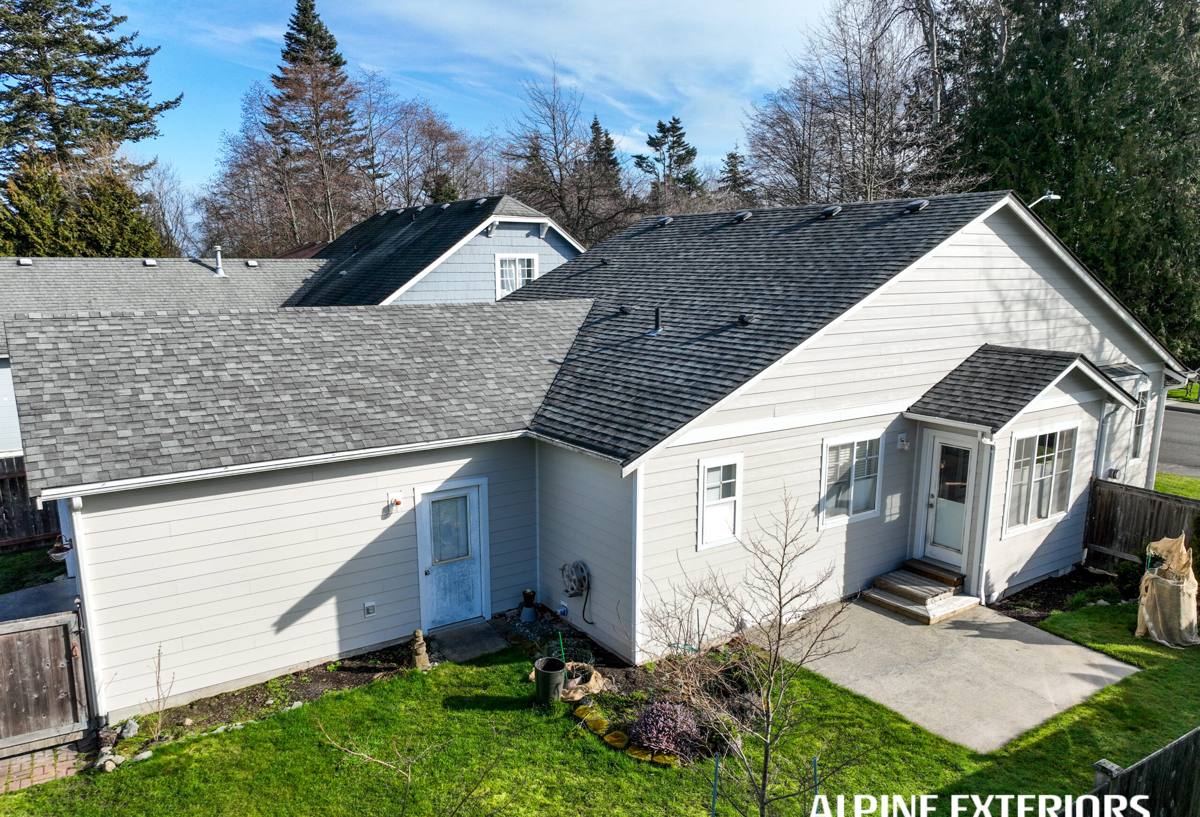
Ferry Access and What It Means for Your Project
Lummi Island is reached by ferry, which changes how exterior projects need to be planned compared to mainland Birch Bay or Blaine jobs. Material deliveries, dumpster drop-offs, and crew scheduling all have to work around ferry sailings, so a contractor who hasn't worked the island before can end up burning a day just figuring out logistics. We plan around this up front — staging materials so a full crew and everything they need for the day makes it across on one or two sailings, rather than making multiple trips back and forth.
This is one of the practical reasons a local, experienced crew is worth more on Lummi Island than it might be elsewhere: the schedule has to account for the ferry, the tides if a dock or beach-adjacent property is involved, and the reality that a forgotten tool or part means waiting for the next sailing, not a quick run to a hardware store.
What This Means for Timelines
We build ferry logistics into the estimate and schedule from the start, so there are no surprise delays mid-project. Most jobs run efficiently once the crew and materials are on-site — the planning happens before the first sailing, not during the project.
Why We Only Install James Hardie Fiber Cement
We install one siding product: James Hardie fiber cement. We don't install vinyl, LP SmartSide, Cemplank, Allura, primed spruce, or cedar, and on an island exposed to salt air and heavy rain that's not a marketing position — it's a standard we hold because of what we've seen these materials do over time in exactly this kind of climate.
Where the Alternatives Fall Short Here
- Vinyl siding expands and contracts with temperature swings and can warp or crack in high wind exposure, which is common on an unsheltered island. It also isn't paintable in most colors, so once it fades from UV and salt exposure, your options are limited.
- LP SmartSide and other wood-strand products are engineered wood, and engineered wood needs its edges and cut ends sealed perfectly and kept that way. In a salt-air, high-moisture environment, any lapse in that maintenance invites swelling and rot at seams and corners.
- Cedar and primed spruce are natural wood products that require ongoing refinishing to hold up against driving rain and moss growth. On a shaded, north-facing wall near the water, that maintenance interval shrinks fast.
- Cemplank and Allura are also fiber cement, and they're reasonable products — but we've standardized our crews, our fastening schedules, and our warranty process around one manufacturer so every install meets the same standard, every time.
What James Hardie Gets Right for This Environment
Fiber cement is non-combustible, doesn't rot, and doesn't provide a food source for the moss and algae that thrive in Whatcom County's damp, shaded conditions. James Hardie's ColorPlus factory finish is baked on and warrantied against fading in a way field-applied paint isn't, which matters when UV and salt exposure are both working against a finish. Their HZ5 product line is engineered specifically for climates like this one — freeze-thaw cycles, sustained moisture, and coastal exposure — and the company backs it with a strong, transferable limited warranty that follows the house, not just the original owner.
Our Siding Installation Process
Correct installation is what makes fiber cement perform for decades instead of years, and it's where a lot of the real risk in a siding project actually lives — not in the product itself.
- Assessment and moisture check. We inspect the existing siding, sheathing, and any signs of prior moisture intrusion before quoting anything — especially important on a property that's been sitting in salt air for years.
- Weather barrier and flashing. Proper water-resistive barrier, window and door flashing, and drainage planes go in before a single piece of siding is hung. This is the step that determines whether driving rain stays out or finds its way behind the cladding.
- Fastening to spec. James Hardie has specific fastener, clearance, and gap requirements, and in a corrosive salt-air environment we use fasteners rated for that exposure — not just whatever's on the shelf.
- Factory-finished panels. Because ColorPlus finish is applied at the factory under controlled conditions, we're not relying on field-applied paint holding up against wind-driven rain right after installation.
- Final detailing. Trim, caulking, and touch-up at cut ends are finished so there are no exposed edges for moisture to find.
Beyond Siding: Roofing, Windows, and Decks
Siding isn't the only exterior system fighting the marine climate on Lummi Island — roofing, windows, and decks take the same beating from salt air and moisture, and they're worth thinking about together rather than one at a time.
Roofing
Moss growth on roofs is one of the most common issues we see on shaded, tree-covered lots in this part of Whatcom County. Roof material, underlayment quality, and ventilation all affect how well a roof sheds moisture and resists moss colonization over time.
Windows
Window flashing and seal quality matter enormously in a climate with sustained wind-driven rain. A window that isn't flashed correctly can let water into the wall assembly behind good siding, which is why we treat window integration as part of the siding job, not a separate afterthought.
Decks
Decks facing the water take direct salt spray and sun exposure with little shelter. Fastener corrosion resistance and proper board spacing for drainage are bigger factors here than they'd be on a sheltered inland deck.
Cost Factors for Lummi Island Projects
Every project is different, but these are the main variables that move a Lummi Island exterior estimate up or down:
| Factor | Why It Matters Here |
|---|---|
| Ferry logistics and scheduling | Material staging and crew trips have to account for sailing schedules |
| Wall exposure to wind and salt spray | Waterfront and unsheltered walls need more attention to flashing and fastening detail |
| Existing moisture or rot damage | Salt air and long wet seasons can hide damage behind old siding |
| Home size and wall complexity | More corners, windows, and trim details add labor time |
| Access to the property | Steep or waterside lots can affect staging and equipment needs |
Choosing a Local Contractor for Island Work
A contractor who hasn't worked on Lummi Island before is learning the ferry schedule, the exposure patterns, and the access quirks on your dime. A crew that already knows the island can plan the job correctly the first time — right down to which sailing the material truck needs to catch. Ask any contractor bidding island work directly whether they've completed projects here before, how they handle scheduling around the ferry, and whether they carry proper licensing and insurance for work in Washington. A straight answer to all three is a good sign.
Maintenance Checklist for Salt-Air, High-Moisture Homes
- Rinse siding periodically to clear salt residue, especially on walls facing the water
- Check north-facing and shaded walls for early moss or algae growth
- Inspect caulking around windows, doors, and trim annually for cracking or gaps
- Keep gutters clear so overflow doesn't run down and behind siding
- Trim back vegetation that keeps walls shaded and slow to dry
- Have flashing and fasteners checked periodically for corrosion in high-exposure areas
If you're weighing a siding, roofing, window, or deck project on Lummi Island, we're happy to come take a look and walk the property with you. We'll give you a straight, no-pressure estimate based on what your home actually needs — feel free to use the form below to get started.