 Birch Bay Siding
 Birch Bay Village and the Whatcom County Coastline
Homes in Birch Bay Village sit close enough to the water that the weather isn't an abstraction — it's a daily fact of ownership. Whatcom County's coastal strip gets a steady diet of onshore wind, salt-laden air, and long stretches of gray, wet weather that can run from October well into spring. None of that is unusual for this part of Washington. What's unusual is how much it varies block to block depending on exposure, tree cover, and how a house sits relative to the water and prevailing wind.
We work on homes throughout Birch Bay Village and the surrounding area, and the pattern we see again and again is the same: siding, trim, and roofing systems that were never built for this specific combination of salt, moisture, and shade fail years before they should. That's the problem this page is really about.
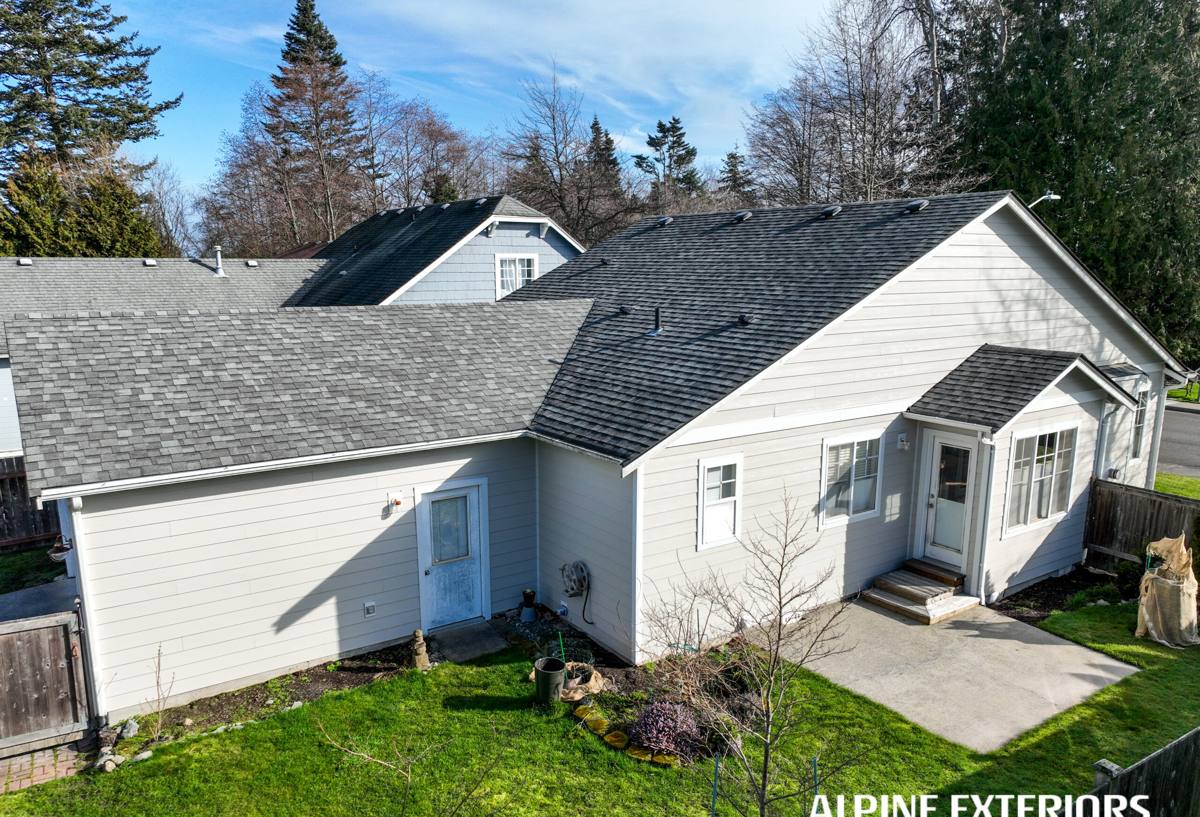
What Salt Air, Driving Rain, and Moss Actually Do to a House
Salt air
Airborne salt doesn't just sit on a wall — it's mildly corrosive and hygroscopic, meaning it actually pulls moisture out of the air and holds it against whatever surface it lands on. Over years, that means fasteners, flashing, and any exposed metal on a home take more punishment near Birch Bay than they would ten or fifteen miles inland. Paint and coatings on wood-based siding also break down faster under repeated salt exposure, which is part of why repainting cycles on older homes here tend to run shorter than the manufacturer's stated intervals.
Driving rain
Wind-driven rain off the water doesn't fall straight down — it hits siding at an angle, works into laps, seams, and butt joints, and finds any gap in flashing or caulk that a calmer climate would never expose. This is a wind-driven-rain zone, and siding materials and installation details that are fine in a sheltered inland lot can underperform here simply because the water is being pushed sideways into the wall assembly, not just running down it.
Moss and prolonged dampness
Between the marine layer, shade from mature trees on many lots, and a long wet season, moss and algae growth is a near-constant maintenance issue on north- and west-facing walls, roofs, and decks. Beyond the cosmetic staining, sustained moss growth holds moisture against a surface for extended periods — which is exactly the condition that accelerates rot in wood-based products and breaks down lower-quality coatings.
Why This Changes What We Recommend for Siding
We install James Hardie fiber cement siding exclusively. We don't offer vinyl, LP SmartSide, Cemplank, Allura, primed spruce, or cedar as options, and in a climate like Birch Bay's, that's not a marketing position — it's the conclusion we came to after years of seeing which products actually hold up here and which ones create recurring maintenance calls.
Fiber cement is a cement-and-cellulose composite. It doesn't feed mold or rot the way wood-based siding can, and it doesn't expand and contract with moisture the way engineered wood products do. In a zone with this much sustained dampness and salt exposure, that difference matters more than it would in a drier inland market. Hardie's ColorPlus factory-applied finish is also baked on and cured under controlled conditions, which gives it better adhesion and color retention against UV and salt air than field-applied paint typically achieves — and it's backed by its own finish warranty separate from the product warranty.
Hardie also builds region-specific product lines (its HZ5 formulation is engineered for wetter, harsher climates), which lets us match the product to the exposure a given home actually faces rather than installing a one-size-fits-all board everywhere.
What we're not saying
We're not claiming every other siding product is defective or that homes with vinyl or wood siding are in imminent danger. Plenty of those homes are holding up fine, especially with regular upkeep. What we are saying is that when a homeowner asks us to bid a job, we bid it in the material we believe performs best under Birch Bay's specific conditions and stand behind — and that's fiber cement.
Full Exterior Work, Not Just Siding
Siding is rarely the only part of a Birch Bay Village home under stress from the marine climate. We handle the full exterior envelope, because these systems interact:
- Roofing — moss growth, wind-driven rain at eaves and valleys, and salt-air corrosion on flashing and fasteners are the same issues affecting your siding, just overhead.
- Windows — poor flashing integration between windows and siding is one of the most common sources of hidden water intrusion we find when we open up a wall; window replacement and siding work are often best planned together.
- Decks — exposed to the same driving rain and moss conditions, often with less protection from overhangs, decks in this area tend to need more frequent attention than siding does.
When we're on-site for a siding estimate, we'll flag anything we see on the roof, windows, or deck that's contributing to moisture problems — even if it's outside the scope of the job you called us about.
What a Siding Project Looks Like for a Birch Bay Village Home
1. On-site assessment
We look at exposure (which walls take the most wind-driven rain and salt), existing moisture damage, current flashing and trim details, and how much shade and moss pressure the home deals with.
2. Product and detail selection
We recommend the Hardie product line and profile suited to the home's exposure, and pay particular attention to flashing, house wrap integration, and butt-joint treatment — the details that determine whether a home actually resists wind-driven rain or just looks good until the first real storm tests it.
3. Installation to manufacturer spec
Fiber cement performs the way it's rated to perform only when it's installed to spec — correct fastener placement, proper clearances, and correct flashing details all matter more in a high-moisture coastal environment than in a mild inland one. This is where a lot of the real-world difference between a good installation and a mediocre one shows up years later.
4. Warranty and finish protection
James Hardie siding carries a transferable product warranty, and ColorPlus finishes carry their own finish warranty — both of which depend on the installation meeting manufacturer requirements, which is one more reason installation quality isn't a place to cut corners in this climate.
Cost Factors for Siding Projects in This Area
Every home is different, but these are the variables that most often move a Birch Bay Village siding estimate up or down:
| Factor | Why it matters here |
|---|---|
| Home size and wall complexity | More corners, dormers, and trim details mean more labor and material, especially with the flashing detail this climate demands |
| Existing damage / rot found during tear-off | Coastal moisture means hidden sheathing or framing repair is more common here than in drier markets |
| Exposure level | Walls facing prevailing wind and rain may warrant a higher-spec Hardie product (like HZ5) or extra flashing detail |
| Access and site conditions | Tree cover, tight lots, and slope affect scaffolding, staging, and moss/debris cleanup |
| Trim and accessory scope | Fascia, soffits, and trim replaced alongside siding affects total project cost and long-term consistency |
Maintenance Reality Check for This Climate
No siding is truly "maintenance-free" in a marine environment, but the maintenance burden looks very different depending on the material. Here's what we tell homeowners to expect and watch for, regardless of what's currently on the house:
- Rinse moss and algae buildup off siding and roofing at least once a year, more often on shaded north- and west-facing walls
- Inspect caulking and trim joints annually — coastal wind and rain cycles work sealant loose faster than in sheltered inland areas
- Check window and door flashing integration for gaps, especially after major wind events
- Watch for soft spots, staining, or bubbling paint, which often indicate moisture already behind the surface
- Keep gutters and downspouts clear — overflow during driving rain is a common source of wall-level water damage
- Trim back vegetation that keeps walls shaded and damp longer than necessary
Why a Local Crew Matters for This Kind of Work
A lot of exterior work is generic — the same crew could do it competently in Spokane or Seattle. Coastal Whatcom County work isn't quite that simple. Knowing which walls in Birch Bay Village typically take the worst of the wind-driven rain, how much moss pressure to expect on a shaded lot, and which flashing details actually hold up here comes from doing this work in this exact environment, year after year. That's the difference between a crew that installs siding correctly on paper and one that installs it correctly for this specific coastline.
If you're weighing a siding, roofing, window, or deck project for a home in Birch Bay Village, we're happy to take a look and give you a straightforward assessment — no pressure, no upsell to a product we wouldn't put on our own homes. Reach out for a free estimate using the form below.