 Birch Bay Siding
 California Creek's Exterior Challenge
California Creek sits along the Birch Bay shoreline in Whatcom County, close enough to the water that salt-laden air is a daily fact of life for every home in the area, not just the ones with a direct water view. Add in the Pacific Northwest's long wet season, driving rain that comes sideways off the bay during winter storms, and the deep shade many lots get from mature evergreens, and you have a combination that is genuinely hard on exterior building materials. Paint fades and chalks faster near the shoreline. Fasteners and trim corrode sooner than they would ten miles inland. And anything that holds moisture against a wall for long stretches becomes a host for moss, algae, and eventually rot.
None of this makes California Creek a bad place to own a home — it's a beautiful stretch of Whatcom County for a reason. But it does mean the exterior envelope matters more here than it would in a drier, more sheltered part of the state. Siding, roofing, windows, and decking all have to work as a system to keep water moving off the house instead of into it.
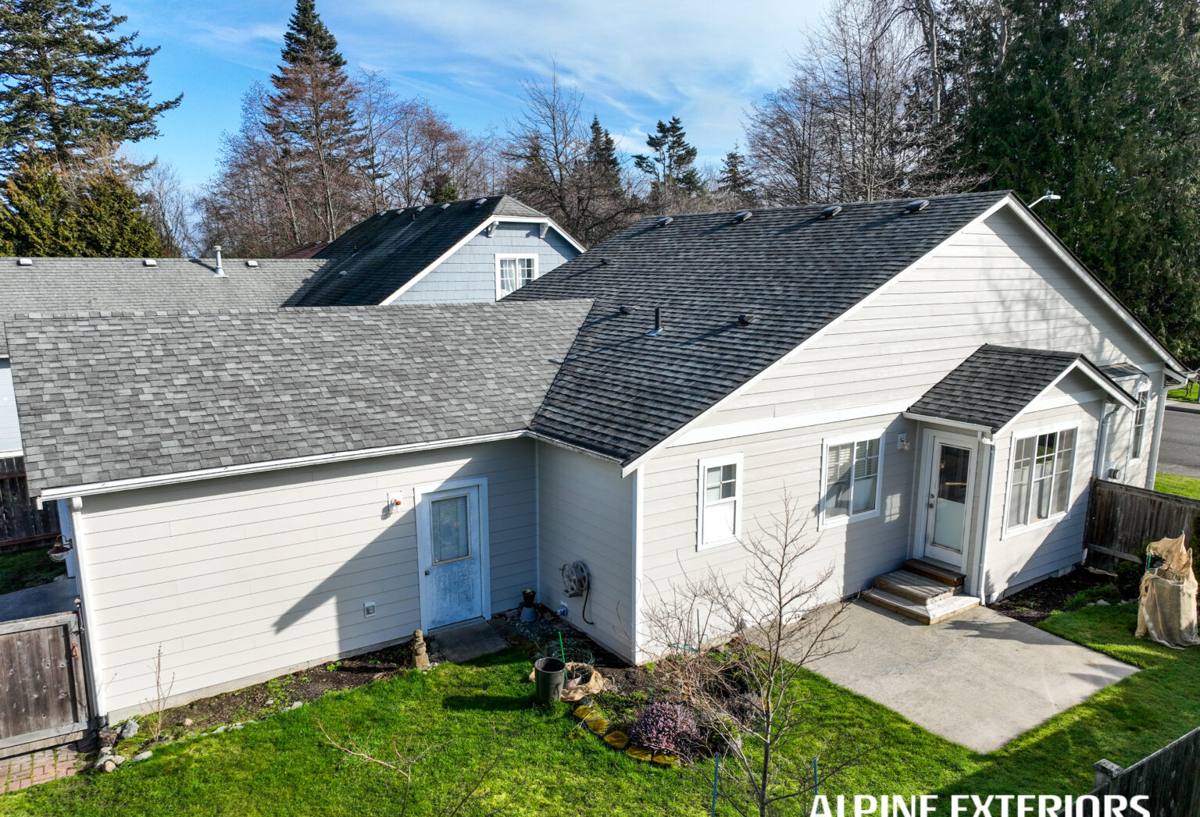
What Salt Air Actually Does to a Home's Exterior
Salt air is corrosive in ways that aren't always obvious until years in. It's not that salt spray is visibly coating the siding — it's that fine airborne salt settles on every exterior surface and accelerates the breakdown of anything not built to resist it.
- Fasteners and metal trim corrode faster, which can lead to streaking, loosening, and eventually water paths behind the cladding.
- Paint films on wood siding chalk and fade at an accelerated rate, meaning more frequent repainting just to keep the surface protected.
- Caulking and sealants at joints and trim break down sooner under the combination of salt, UV, and moisture cycling.
- Wood-based products (cedar, primed spruce, engineered wood trim) are more prone to swelling, checking, and edge rot when they're repeatedly wetted and dried in a salt-air environment.
This is the backdrop for why we're selective about what we put on homes in this part of Birch Bay. A siding product that performs fine in a dry inland climate can fall well short of expectations a few blocks from the water.
Driving Rain and Wind-Driven Moisture
Whatcom County storms often bring rain that isn't falling straight down — it's being pushed sideways by wind off the water. That matters because driving rain finds every weak lap joint, every under-caulked penetration, and every gap in flashing that vertical rain would simply run past. Homes in California Creek need siding systems installed with real attention to water management: correct laps, properly flashed windows and doors, and house wrap that's detailed correctly at every penetration. The siding material itself is only part of the story — installation quality is often the bigger factor in whether a home stays dry.
The Long Moss Season
Shaded, north-facing walls and roof planes in this area can stay damp for weeks at a stretch during the fall and winter. That's exactly the environment moss and algae need to establish. On roofing, moss holds moisture against shingles and can work its way under tabs over time. On siding, algae staining is mostly a cosmetic issue, but on the wrong substrate it can also signal that a wall isn't drying out between rain events — which is a bigger problem than the staining itself.
Why We Only Install James Hardie Fiber Cement
We install James Hardie fiber cement siding exclusively — not vinyl, not LP SmartSide, not Cemplank or Allura, not primed spruce or cedar. That's a deliberate standard, not a default, and it comes directly out of what we see happen to other materials in coastal Whatcom County conditions.
Fiber cement is a blend of cement, sand, and cellulose fibers, which makes it non-combustible and dimensionally stable in a way wood and wood-based composites simply aren't. It doesn't expand and contract with moisture the way wood does, so it doesn't swell, check, or cup at the edges the way cedar or primed spruce can after repeated wet-dry cycles. James Hardie's ColorPlus finish is a baked-on, factory-applied color system engineered to resist fading and chalking substantially longer than field-applied paint — which matters directly in a salt-air environment where UV and salt both accelerate paint breakdown.
James Hardie also builds region-specific HZ product lines engineered for different climate zones, and the versions used in the Pacific Northwest are formulated for exactly the wet, moderate-temperature conditions Whatcom County sees. That's a meaningful difference from a one-size-fits-all product. Combined with a strong transferable warranty, it's the reason we've standardized on Hardie rather than offering a menu of siding materials with different trade-offs.
We're not going to tell you vinyl or LP SmartSide are junk — they're legitimate, widely used products with real advantages in the right application, mainly upfront cost. But we've made a professional call not to install them, because the maintenance burden, moisture sensitivity, or long-term appearance trade-offs don't hold up the way we want a home's exterior to hold up in this specific climate.
Siding Material Comparison for a Coastal Whatcom County Home
| Material | Moisture Behavior in Salt Air/Rain | Maintenance | Typical Lifespan Considerations |
|---|---|---|---|
| James Hardie Fiber Cement | Dimensionally stable; doesn't swell or rot; factory ColorPlus finish resists fading | Occasional wash; repaint interval is long if ever needed | Built for decades with correct installation and upkeep |
| Vinyl | Won't rot but can warp/crack in temperature swings; seams can allow water behind panels | Low, but fading and brittleness increase over time | Moderate; performance drops as it ages and UV-exposes |
| LP SmartSide | Engineered wood strand product; can be vulnerable at cut edges and joints if not sealed and maintained precisely | Requires diligent edge sealing and repainting on schedule | Depends heavily on installation and ongoing maintenance discipline |
| Cedar / Primed Spruce | Natural wood; absorbs and releases moisture, prone to checking, cupping, and rot in wet coastal exposure | Highest — regular repainting/staining and rot inspection | Shorter without consistent, disciplined maintenance |
This table isn't meant to disparage any of these products — it's meant to show the trade-offs plainly, the way we'd explain it standing in front of a California Creek home with you.
Roofing, Windows, and Decks as Part of the Same System
Siding doesn't work in isolation. A house is a single water-management system, and the weak point is usually wherever two systems meet — where siding meets a window, where a deck ledger attaches to the wall, where roofing meets a wall plane.
Roofing
In a moss-prone, rain-heavy area like Birch Bay, roofing needs proper ventilation, correctly lapped underlayment, and flashing details that shed water fast at valleys and penetrations. A roof that's holding moisture is a roof that's feeding moss growth and shortening its own service life.
Windows
Window flashing is one of the most common failure points on coastal homes — not because the window itself fails, but because the flashing and integration with the siding wasn't detailed to shed wind-driven rain. Correct window installation ties directly into how the siding around it is installed.
Decks
Decks in this climate see the same driving rain and damp shade issues as siding, plus standing water on horizontal surfaces. Proper ledger flashing, gap spacing for drainage, and material choice all matter for keeping a deck from becoming a moisture entry point into the house itself.
Handling siding, roofing, windows, and decks under one crew means these transitions get treated as one connected system rather than four separate trades hoping their work lines up.
Why a Local Crew Matters Here
A contractor who works across Whatcom County and specifically in Birch Bay-area neighborhoods like California Creek has already seen how wind, salt exposure, and shade patterns play out on specific lots — which walls take the worst weather, which details fail first, and which don't need to be over-built. That local pattern recognition shows up in small decisions: where to add extra flashing attention, which trim details need upgrading, and how to sequence work around this area's wet-season weather windows.
Local also means accountability. A crew that's going to be back in the neighborhood next month has every reason to get the details right the first time.
What to Expect From an Exterior Project Here
A typical siding project in this area starts with an on-site assessment of the existing exterior — looking at current siding condition, trim and flashing details, moisture staining patterns, and any roofing or window issues that should be addressed at the same time rather than separately later. From there, we walk through Hardie product lines, profiles, and ColorPlus color options, scope the work, and provide a written estimate.
Installation itself follows manufacturer specifications closely — correct fastening patterns, proper clearances at grade and roof lines, and flashing integration at every window, door, and penetration. In a climate like this one, skipping these details is exactly how a home ends up with premature moisture problems regardless of how good the siding material itself is.
Questions Worth Asking Any Exterior Contractor Here
- Are they installing to the manufacturer's written specifications, including fastening and clearance requirements?
- Do they detail flashing at every window, door, and penetration, not just at the obvious spots?
- Can they explain, specifically, how their approach accounts for salt air and driving rain in this area?
- Do they carry proper licensing and insurance for exterior work in Washington?
- Will the same crew handle siding, roofing, windows, and decks, or will transitions between trades be left to chance?
- What does the warranty actually cover, and is it transferable if the home sells?
Getting Started
If you're weighing a siding, roofing, window, or deck project for a home in California Creek, we're glad to come take a look and talk through what your specific home is dealing with — sun exposure, shade patterns, current material condition, and what a Hardie fiber cement system would look like for it. There's no pressure and no obligation. Reach out for a free estimate and we'll walk the property with you.