 Birch Bay Siding
 Exterior Work in the Point Whitehorn Area
Point Whitehorn sits along the Whatcom County shoreline just outside Birch Bay, close enough to the water that its homes deal with a different set of exterior conditions than houses ten miles inland. The natural area and the shoreline bluffs nearby aren't just a nice place for a walk — they're a reminder of how much salt air, wind, and moisture move through this stretch of coastline every single day. If you own a home in this area, your siding, roof, windows, and deck are working harder than they would almost anywhere else in the county.
We're a local exterior contractor based in Birch Bay, and Point Whitehorn is part of our regular service area. We're not dispatching a crew from Seattle or Bellingham who's never seen how this specific stretch of shoreline treats a house. We know what the wind does coming off the water, how far the salt carries inland, and which sides of a house take the worst of the winter storms.
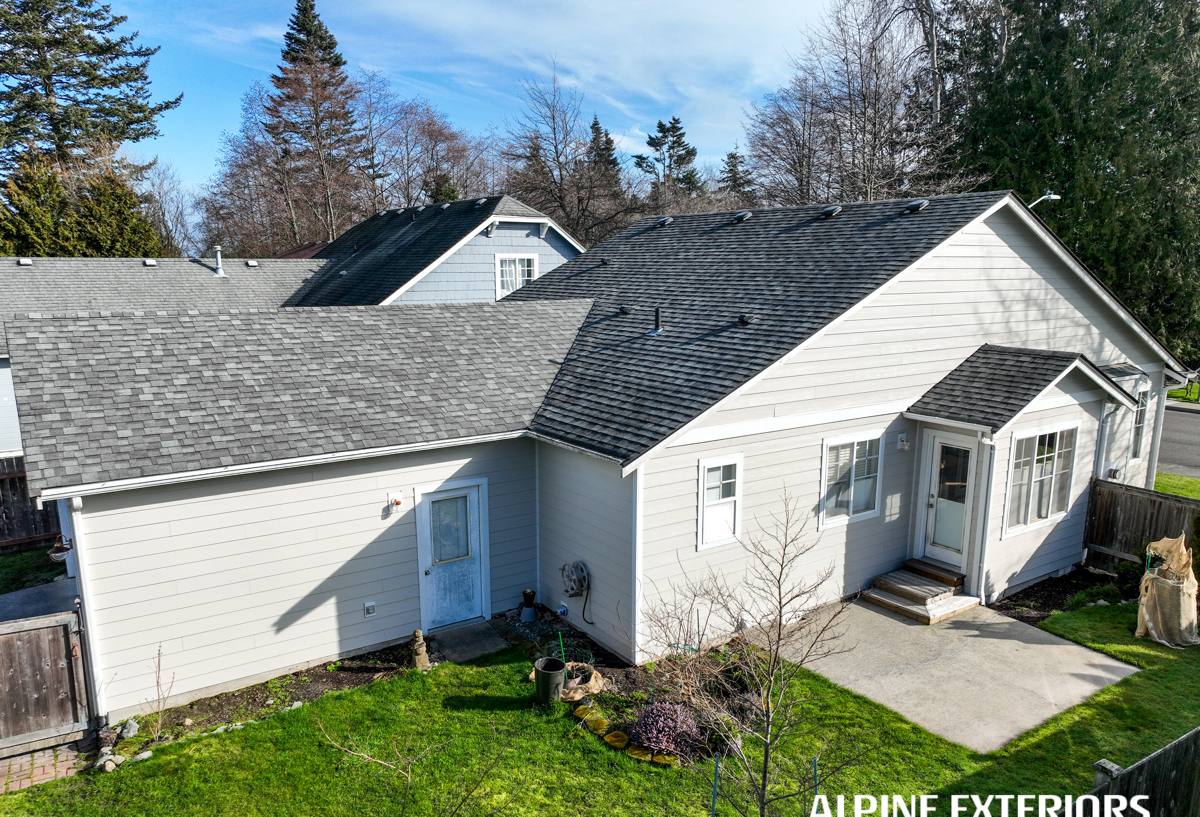
What the Climate Actually Does to a Point Whitehorn Home
Salt Air
Airborne salt from the Strait of Georgia and the bay doesn't just affect boats and metal fixtures — it settles on siding, trim, and roofing material year-round. Salt is hygroscopic, meaning it pulls moisture out of the air and holds it against whatever surface it lands on. On wood siding and trim, that means more time spent damp than a similar house further inland. On metal fasteners, flashing, and hardware, it accelerates corrosion. Over years, homes closer to the water simply show wear faster than the same house built five miles inland.
Driving Rain
Whatcom County gets a lot of rain, but the exposed, open terrain around Point Whitehorn means that rain often arrives sideways rather than straight down. Wind-driven rain finds every gap, every under-caulked seam, and every spot where flashing was installed a little short. It's punishing on siding systems that depend on paint film or caulk joints to stay watertight, because those are exactly the details that wind-driven rain is designed to defeat.
Moss Season
Between the marine humidity and the tree cover common in this area, moss and algae growth on roofs, siding, and decking isn't seasonal here so much as it's a long, slow-building condition that runs most of the year. Moss holds moisture against a surface, which is bad news for wood products in particular, and it can work its way under shingles and siding laps if left unaddressed.
Why We Only Install James Hardie Fiber Cement Siding
We get asked fairly often why we don't offer vinyl, LP SmartSide, cedar, or primed spruce siding as options. It's a fair question, and the honest answer is that we made a standard for our company based on what actually holds up in this climate over the long haul — not what's cheapest to install or easiest to sell.
Wood-based siding products, whether that's cedar, primed spruce, or engineered wood like LP SmartSide, all share a common vulnerability: they depend on an intact paint or coating film to keep moisture out. In a climate with this much sustained dampness and salt exposure, any gap in that film — from a nail pop, a hairline crack, or normal weathering — gives moisture a path into the wood substrate. Once that happens, the clock starts on rot, swelling, and eventually replacement, and repainting on a coastal home isn't a once-a-decade chore, it's closer to every five to seven years if you want to stay ahead of it.
Vinyl siding handles moisture differently — it doesn't rot — but it has its own trade-offs in this environment. It expands and contracts significantly with temperature swings, which stresses seams and fasteners over time, and repeated flexing in high-wind coastal exposure can loosen panels faster than in a more sheltered location. It also isn't a good match for the look most homeowners in this area are after when they're investing in a full exterior upgrade.
James Hardie fiber cement siding is non-combustible, doesn't rot, doesn't attract pests, and — critically for this location — comes with a factory-applied ColorPlus finish that's baked on and warranted, rather than a field-applied paint job that starts weathering the day it's installed. Hardie also engineers specific product lines (their HZ5 line, for example) for wetter, harsher climates, which is exactly the category Whatcom County coastal properties fall into. It's a system built for the conditions Point Whitehorn actually has, not a general-purpose product we're asking to perform above its design.
How Hardie Siding Performs Against the Local Conditions
| Condition | What It Does to a Home | How Hardie Fiber Cement Responds |
|---|---|---|
| Salt air | Accelerates corrosion and paint breakdown | Non-combustible cement composition, factory ColorPlus finish resists fading and chalking |
| Wind-driven rain | Forces water into seams and under laps | Engineered lap profiles and correct flashing details shed water rather than trap it |
| Moss and algae | Holds moisture against wood substrates | Cement core doesn't feed rot the way wood fiber does; surface cleans without damaging the finish |
| Temperature swings | Stresses vinyl seams and wood joints | Dimensionally stable, minimal expansion/contraction |
Roofing, Windows, and Decks in the Same Environment
Siding is only one part of a coastal home's exterior envelope, and we treat it that way. The same salt exposure and moss pressure that affects siding hits roofing just as hard — moss buildup on roofing shortens its service life and can lead to hidden moisture problems under shingles if it's not addressed. We handle roof repair and replacement with that in mind, including proper ventilation and moisture management, not just a shingle swap.
Windows on a home this close to the water take a beating from both wind pressure and salt corrosion on hardware and seals. Older windows with failing seals let moist air infiltrate around the frame, which compounds the exterior moisture problems you're already managing. When we replace windows, we're looking at flashing and integration with the siding system as much as the window unit itself — a well-installed window with poor flashing detail will leak eventually, regardless of the window's quality.
Decks in this area face their own version of the same problem: constant dampness, moss growth on horizontal surfaces, and UV exposure off the water. We build and repair decks with materials and fastening details suited to that reality, whether that's a composite decking system or properly detailed and finished wood construction.
Full Exterior Envelope, One Crew
Handling siding, roofing, windows, and decks under one contractor matters more in a climate like this than it does in a milder one, because these systems interact. Flashing at a window has to integrate correctly with the siding around it. A roof edge has to shed water away from the top course of siding, not onto it. When one crew is responsible for the whole envelope, those transitions get handled as a system instead of as separate trades hoping the other guy did it right.
What Working With a Local Crew Looks Like
Being local to Birch Bay means a few practical things for Point Whitehorn homeowners. We're familiar with how this stretch of coastline behaves in different seasons, we're not routing a crew a long distance for a walkthrough or a warranty callback, and we're going to be around locally long after the project is finished if a question comes up.
Our process for a siding, roofing, window, or deck project generally includes:
- An on-site assessment of your current exterior condition, including any moisture, rot, or moss issues already present
- A clear, honest conversation about what's actually needed versus what can wait
- A written estimate with the scope of work spelled out, not a vague lump-sum number
- Attention to flashing, moisture barriers, and transition details — the parts of the job that don't show up in photos but determine whether the work lasts
- A finished project that's built to handle the specific conditions of a Point Whitehorn address, not a generic install
Signs Your Siding May Need Attention
Homeowners in this area often wait longer than they should to address siding problems, partly because early damage from salt and moisture isn't always obvious from the ground. A few things worth checking:
- Soft or spongy spots when you press on wood siding, especially near the bottom courses and around window trim
- Paint that's chalking, peeling, or bubbling faster than it did in previous years
- Persistent moss or dark streaking that keeps coming back after cleaning
- Visible gaps at seams, corners, or where siding meets trim, windows, or the roofline
- Fastener corrosion or staining bleeding through the surface
Any of these can mean moisture has already gotten past the surface, and it's worth having someone look at it before it turns into a larger repair.
A Straightforward Next Step
If you're weighing a siding replacement, a roof that's showing its age, tired windows, or a deck that needs rebuilding, we're happy to come take a look and give you an honest read on where things stand. There's no pressure and no obligation — just a straightforward assessment from a crew that works in this exact area and understands what Point Whitehorn homes are up against. Use the form below to request a free estimate.