 Birch Bay Siding
 Siding Built for Terrell Creek's Climate
Terrell Creek sits close enough to the water that homes here take a different kind of beating than houses further inland in Whatcom County. It's not one dramatic storm that does the damage — it's the accumulation. Salt-laden air moving off the bay, driving rain that comes in sideways during the fall and winter, and a long stretch of the year where north-facing walls and shaded siding barely get a chance to dry out before the next system rolls through. Add in the moss and algae that thrive in that kind of damp, low-light environment, and you've got a set of conditions that will find every weakness in an exterior within a few years, not a few decades.
We're a local crew that works this stretch of Birch Bay and the surrounding Whatcom County communities regularly, so we're not guessing at how a product performs here — we see it firsthand, on real houses, through real winters. That matters more than most homeowners realize when they're picking a contractor and a siding material.
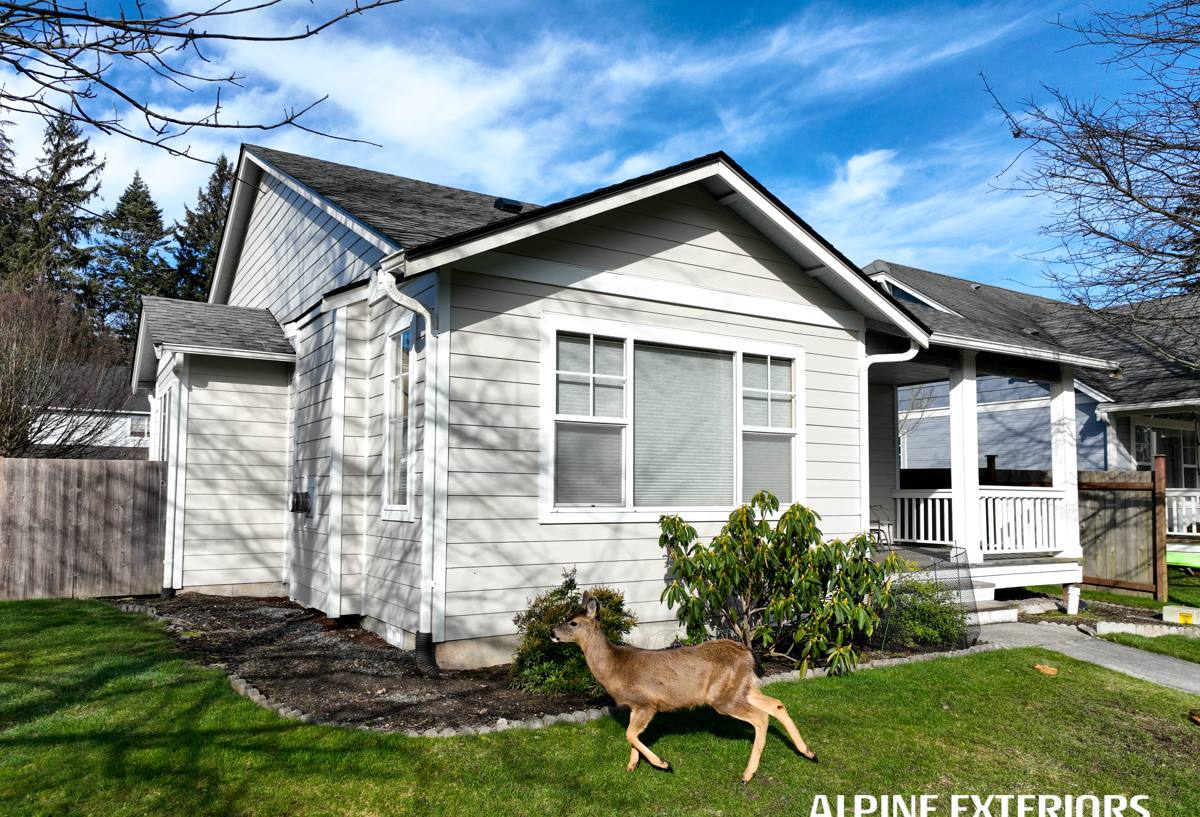
What Homes in Terrell Creek Actually Face
Salt Air and Coastal Moisture
Proximity to Birch Bay means airborne salt is a constant, low-grade factor in how exterior materials age. Salt air accelerates corrosion on fasteners and metal trim, and it changes how paint and coatings hold up over time. Materials that aren't engineered with coastal exposure in mind tend to show it first in fading, chalking, or early finish failure.
Driving Rain
Wind-driven rain doesn't just fall on a house — it gets pushed into laps, seams, and butt joints. Any siding product with a weak point at its joinery, or any installation with sloppy flashing and caulking, will eventually let water behind the cladding. Once moisture gets behind siding and can't dry out, you're looking at rot, mold, and sheathing damage that's expensive to fix compared to what it would have cost to prevent.
Moss and Algae Season
Whatcom County's wet season runs long, and shaded or north-facing exterior walls in a tree-lined area like Terrell Creek can stay damp for weeks at a stretch. That's exactly the environment moss and algae need to take hold. Beyond the cosmetic issue, sustained moisture against a wall surface stresses whatever coating or finish is on it and can shorten the service life of the siding underneath.
Why We Install Only James Hardie Fiber Cement
We made a deliberate decision as a company to install James Hardie fiber cement siding exclusively. We don't install vinyl, LP SmartSide, Cemplank, Allura, primed spruce, or cedar. That's not a marketing position — it's a standard we hold because of what we've seen these products do, and not do, on homes in exactly this kind of climate.
Where the Alternatives Fall Short Here
Vinyl siding is inexpensive and easy to install, and for a lot of climates that's a fair trade. But vinyl is a thin, flexible plastic product that expands and contracts with temperature, can crack in impacts, and offers essentially no protection if wind-driven rain gets behind it — there's no substrate to protect because there often isn't one. LP SmartSide and other engineered wood products use a wood-strand core, and wood-based cores are inherently more vulnerable to sustained moisture exposure than fiber cement; edge sealing and caulk maintenance become critical, and any lapse in that maintenance in a wet climate shows up as swelling or delamination. Cedar is a beautiful, honest material, but it's combustible, it demands ongoing refinishing to hold its look, and in a damp, moss-prone environment it needs consistent upkeep to avoid rot. Primed spruce and similar unfinished wood products put the burden of a good factory finish entirely on the installer and the paint job that follows — and paint is only ever as good as its next recoat.
What Hardie Gets Right for This Climate
James Hardie fiber cement is a cement-and-cellulose composite, not wood and not plastic. It doesn't rot, it's not attractive to pests, and it's non-combustible. Hardie's ColorPlus finish is baked on at the factory under controlled conditions, which gives it far more consistent UV and moisture resistance than a field-applied paint job, and it holds color longer in salt-air exposure than most field-finished alternatives. Hardie also engineers specific product lines — HZ5 and HZ10 — for different climate zones, so the product specified for a coastal Pacific Northwest install is built with that moisture and freeze-thaw profile in mind, not a generic national spec.
The Hardie Product Lines We Work With
| Product | Best Use | Notes for Terrell Creek |
|---|---|---|
| HardiePlank Lap Siding | Primary wall cladding | Most common choice; smooth or cedar-textured finish, wide color range |
| HardiePanel Vertical Siding | Accent walls, gables, modern facades | Works well paired with lap siding for dimension |
| HardieTrim Boards | Corners, window and door trim, fascia | Matches siding durability so trim doesn't become the weak point |
| HardieShingle Siding | Accent shingle sections, gable ends | Gives a coastal Northwest look without cedar's maintenance |
Every one of these is available in Hardie's ColorPlus factory-finish palette, or in primed form for site painting where a custom color is wanted. For most Terrell Creek homes we recommend ColorPlus simply because it removes a recurring maintenance task and holds up better against salt air over time.
How We Approach a Siding Job Here
Assessment First
Before we talk about siding, we look at the whole envelope — existing water damage, condition of the sheathing underneath, how the roofline sheds water onto the walls below, and where the house is most exposed to wind-driven rain. A siding job that ignores what's happening underneath the old cladding is just covering up a problem, not fixing it.
Weather Barrier and Flashing
This is where most siding failures actually start, regardless of what material goes on top. We install a proper weather-resistive barrier, flash every window and door opening correctly, and pay close attention to the details at butt joints, inside corners, and anywhere two planes of the house meet. In a climate that gets sustained driving rain, these details matter more than the siding brand.
Installation to Manufacturer Spec
James Hardie's warranty coverage depends on installation being done to their published specifications — proper fastener spacing and type, correct clearances from grade and roofing, appropriate caulking at joints, and correct nailing patterns. We install to that spec as a baseline, not an upsell, because it's the only way the product performs and the warranty holds up the way it's supposed to.
Finish and Cleanup
Trim, caulking, and touch-up work happen last, and we walk the job with the homeowner before we consider it done. A siding installation should look finished from five feet away and from five feet up close.
Beyond Siding: Roofing, Windows, and Decks
Siding doesn't work in isolation — it's one part of a building envelope that also includes the roof, the windows, and any attached structures like decks. We handle all four because they interact directly with each other. A roof that's shedding water onto a wall in the wrong spot will undermine even a perfect siding job. Windows that aren't flashed correctly create a moisture path straight into the wall cavity. And decks attached to the house create ledger connections and transition points that need to be detailed correctly to keep water out of the structure behind them.
For a Terrell Creek home, that whole-envelope view is especially relevant given how much of the damage in this area comes from sustained moisture exposure rather than any single storm event. Addressing siding, roofing, windows, and decks as one connected system — rather than four separate contractors with four separate opinions — tends to produce a tighter, longer-lasting result.
What Drives the Cost of a Siding Project
| Factor | Why It Matters |
|---|---|
| Home size and wall complexity | More corners, gables, and dormers mean more cutting, trim, and labor time |
| Condition of existing sheathing | Rot or moisture damage found during tear-off adds repair scope |
| Siding profile and finish | ColorPlus factory finish costs more up front than primed board but saves on future painting |
| Accessibility | Steep rooflines, tight lot lines, or limited equipment access affect labor time |
| Scope of trim and accent work | Mixed lap and panel siding, shingle accents, and custom trim add detail work |
Every one of these varies house to house, which is why we walk the property and give a written estimate rather than quoting a number over the phone. There's no honest way to price a siding job without seeing the walls first.
Why a Local Crew Matters in Terrell Creek
Exterior work in this part of Whatcom County isn't generic. A crew that mostly works drier inland climates doesn't always internalize how much flashing and weather-barrier detail matters until they've seen a few callbacks. We work this specific coastal environment regularly, which means we know which details can't be shortcut here — the ones that separate a siding job that looks good for a season from one that holds up through twenty winters of salt air and driving rain.
Being local also means we're reachable after the job is done. If a question comes up two years in, you're calling a crew that's still working in your neighborhood, not chasing down a company that moved on to the next region.
Simple Maintenance Checklist for Hardie Siding in This Climate
- Rinse siding with a garden hose once or twice a year to clear salt residue and organic buildup, especially on shaded or north-facing walls
- Check caulking at trim joints and window/door transitions annually and re-caulk any cracked or gapped areas
- Keep gutters clear so overflow isn't running directly down wall surfaces
- Trim back vegetation and tree cover that keeps a wall section shaded and damp longer than the rest of the house
- Watch for moss or algae starting on north-facing sections and address it early rather than letting it spread
- Inspect after major windstorms for any loose trim, popped fasteners, or damaged panels
Getting Started
If you're weighing a siding, roofing, window, or deck project for a home in Terrell Creek, we're glad to walk the property with you, look at what your walls are actually dealing with, and give you a straightforward, no-pressure estimate. Use the form below to get in touch.