 Birch Bay Siding
 Why Roofs Near Cherry Point Wear Differently
Cherry Point sits right up against the water in one of the more exposed corners of Whatcom County, and that location shapes everything about how a roof ages here. You've got salt-laden air moving off the Strait, wind-driven rain that doesn't fall straight down but gets pushed sideways under laps and around flashing, and long stretches of overcast, damp weather that keep roof surfaces wet far longer than they'd stay wet inland. Add in tree cover common to this part of Birch Bay and the result is a moss season that can run most of the year rather than just a few soggy months.
None of that means a roof here is doomed to fail early. It means the roof has to be built and installed with those specific stresses in mind. A shingle, fastener, or flashing detail that performs fine forty miles inland can underperform on a property exposed to salt spray and constant moisture. Replacement done right accounts for that from the deck up, not just at the surface layer homeowners can see.
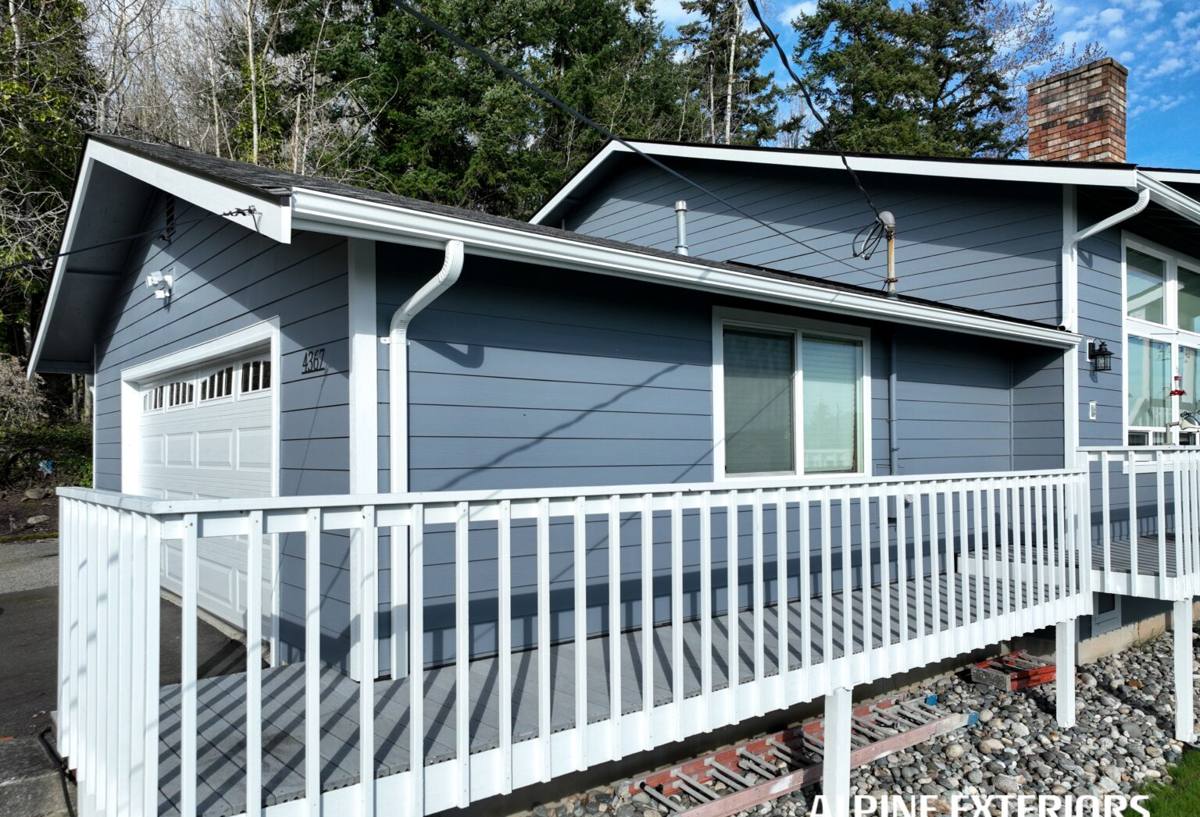
Signs a Cherry Point Roof Needs Replacement, Not Another Repair
Roof repair has its place, but there's a point where patching a coastal roof stops making financial sense. Knowing where that line sits saves homeowners from spending repair money that would have been better put toward a full replacement.
Warning signs worth taking seriously
- Granule loss heavy enough that you're finding shingle grit collecting in gutters and downspouts
- Shingles that are cupping, curling, or cracking, especially on slopes that face prevailing wind and rain
- Persistent moss or algae growth that keeps returning within weeks of cleaning
- Soft spots, sagging, or spongy areas when walked, which usually points to deck damage underneath
- Rusted, lifted, or corroded flashing around chimneys, vents, and valleys
- Water stains on interior ceilings or in the attic, even if they're small
- A roof that's now past 20-25 years old in this environment, regardless of how it looks from the ground
Salt air accelerates corrosion on fasteners and metal flashing well before the shingles themselves look obviously worn, so a roof here can be failing from the inside out while still looking passable from the curb. That's part of why a proper inspection matters more than a quick visual check.
What a Correct Roof Replacement Involves
A roof replacement is only as good as the layers nobody sees once the shingles go down. In a coastal, high-moisture area like Cherry Point, skipping or shortcutting any of these steps is where premature failures start.
Tear-off and deck inspection
Every old layer comes off down to the deck. This isn't just tradition — it's the only way to actually see the plywood or OSB underneath and catch soft, delaminated, or water-damaged sections before they're covered up and forgotten for another 20 years. Any compromised decking gets replaced, not papered over.
Moisture barrier and underlayment
Given how much wind-driven rain this area sees, underlayment choice matters more here than in drier parts of the state. We use synthetic underlayment for its tear resistance and water shedding, and we install self-adhering ice-and-water membrane at the vulnerable points: eaves, valleys, and around every roof penetration, whether or not the county technically requires it for the slope.
Flashing details
Flashing failures cause more leaks than worn-out shingles do. Chimneys, skylights, sidewalls, and valleys all get new metal flashing set into the underlayment correctly, not caulked over old flashing as a shortcut. Caulk is a maintenance item, not a waterproofing plan.
Ventilation
A roof deck that can't breathe traps moisture, which speeds up rot and gives moss and algae a head start. We check that intake and exhaust ventilation are balanced for the attic space, and correct it as part of the replacement when it's inadequate — a common issue on older Birch Bay-area homes that were built or re-roofed before current ventilation standards.
Fasteners and hardware
Salt air corrodes standard fasteners faster than most homeowners expect. We use corrosion-resistant fasteners and hardware suited to coastal exposure rather than whatever is cheapest by the box, because a nail that rusts through in twelve years undermines everything installed correctly around it.
Choosing the Right Roofing Material for This Location
There's no single "best" roofing material — there's the material that fits your budget, your roof's exposure, and how much long-term maintenance you're willing to take on. Here's how the common options stack up specifically for a salt-air, high-moss environment like Cherry Point.
| Material | Coastal/Moss Performance | Maintenance | Typical Lifespan Here |
|---|---|---|---|
| Architectural asphalt shingle | Good with proper underlayment and algae-resistant granules | Periodic moss/debris removal | 20-30 years |
| Standing seam metal | Excellent shedding of moisture, sheds moss growth better than shingles | Low; occasional gutter and fastener check | 40-50+ years |
| Wood shake | Poor in constant damp/moss conditions without diligent upkeep | High; regular treatment needed | Highly variable |
| 3-tab asphalt shingle (budget grade) | Fair; thinner profile is more exposed to wind-driven rain | Similar to architectural, less wind tolerance | 15-20 years |
We steer most Cherry Point homeowners toward architectural shingles with algae-resistant granules as the balance of cost and coastal performance, or standing seam metal for owners who want to minimize long-term maintenance and are comfortable with the higher upfront cost. We're generally cautious about wood shake in this specific microclimate — not because it's a bad product everywhere, but because sustained dampness and moss pressure here demand a maintenance commitment most homeowners underestimate.
Cost factors specific to this area
Beyond square footage and material grade, a few things move the price on a Cherry Point roof replacement more than they would inland:
- Extra ice-and-water membrane at eaves and valleys for wind-driven rain protection
- Corrosion-resistant fastener and flashing upgrades for salt air exposure
- Deck repair, which is more common on older coastal roofs than homeowners expect
- Ventilation corrections on homes that were under-vented to begin with
- Site access and staging on properties with limited driveway or yard space
Our Replacement Process
- On-site inspection and honest assessment of whether repair or replacement actually makes sense
- Written estimate that breaks out material, labor, and any deck or ventilation work separately
- Scheduling that accounts for the wet-season window and gives us dry days to work
- Tear-off, deck inspection, and any necessary sheathing repair
- Underlayment, ice-and-water membrane, and flashing installation
- New roofing material installed to manufacturer specification
- Ventilation check and correction if needed
- Full site cleanup, including a magnetic sweep for stray nails
- Final walkthrough so you can see the finished work before we consider the job done
Moss, Algae, and Keeping a New Roof Performing Long-Term
Even a correctly installed roof in this area will face moss and algae pressure over time — that's the nature of the climate, not a sign of a bad job. What changes with a proper installation is how well the roof handles that pressure and how easy it is to manage.
What homeowners can do between inspections
- Keep gutters and downspouts clear so water isn't backing up under the lowest courses of shingles
- Trim back overhanging branches to cut down on shade and debris that feed moss growth
- Have moss removed by soft washing rather than aggressive scraping, which can strip granules
- Watch for zinc or copper strip performance if your roof has one installed, and replace when it stops being effective
- Schedule a roof check after any major windstorm, not just on a fixed annual schedule
Why Local Experience in Cherry Point Matters
A roofing crew that mostly works drier, inland areas of Whatcom County is going to make different default assumptions than one that regularly works the Birch Bay shoreline. Underlayment coverage, flashing details, fastener selection, and ventilation targets that are "good enough" forty minutes from the water aren't necessarily good enough here. Crews with regular Cherry Point experience know which slopes take the worst of the wind-driven rain, how fast moss re-establishes on shaded north-facing sections, and where salt air tends to attack hardware first.
That kind of familiarity isn't something you can fully substitute with a generic spec sheet. It shows up in the small decisions made on the roof deck — an extra course of ice-and-water membrane here, a different fastener spec there — that don't show up on an invoice line item but do show up in how the roof performs ten and twenty years out.
Get a Straight Answer About Your Roof
If your roof is showing wear, you're not sure whether repair or replacement is the right call, or you just want a straightforward assessment from a crew that works this exact stretch of Whatcom County coastline, we're glad to take a look. Reach out for a free, no-pressure estimate using the form below.