 Birch Bay Siding
 Roofing in Cherry Point: A Coastal Whatcom County Problem, Not a Generic One
Cherry Point sits right up against the Strait of Georgia, on a stretch of Whatcom County shoreline that takes weather straight off the water. That location is part of what makes it a beautiful place to own a home — and part of why roofs here wear differently than roofs fifteen miles inland. Salt-laden air, driving rain that comes in sideways during winter systems, and a long, wet moss season all work on a roof at the same time, often in ways that aren't obvious from the ground.
A roof repair company that mostly works subdivisions in Bellingham or Ferndale isn't wrong about roofing in general — but they may not be tuned in to what actually fails first on a Cherry Point roof, or why. This page is about that specific problem: what roof repair means for this neighborhood, what a correct repair actually involves, and how we approach it.
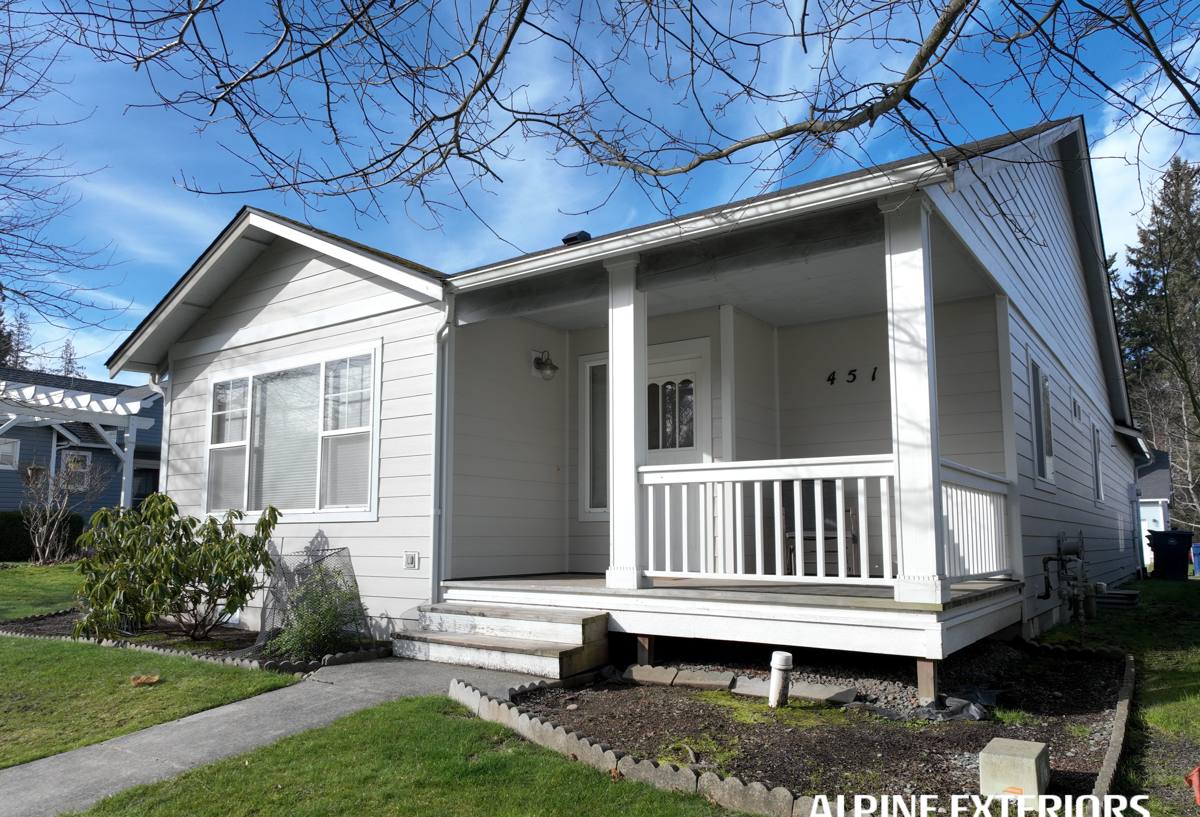
Why Cherry Point Roofs Take a Different Kind of Beating
Salt Air and Metal Fatigue
Airborne salt doesn't just affect fences and outdoor furniture near the water — it settles on roofing hardware too. Nail heads, flashing seams, gutter fasteners, and any exposed metal on the roof are all candidates for accelerated corrosion when they're regularly exposed to salt-carrying wind off the Strait. Corroded fasteners lose their grip over time, and corroded flashing can develop pinholes long before it looks obviously "bad" from a distance. A lot of the leaks we get called out for in this area trace back to flashing or fastener failure, not shingle failure.
Driving Rain and Wind-Driven Exposure
Cherry Point's exposure to the water means storms often arrive with real horizontal force behind the rain. That matters for roofing because most roofing systems are designed to shed water moving downward — not water being pushed sideways and upward under shingle tabs, around vent boots, and into seams that would stay dry in a calmer inland rain. Homes here need tighter seals at every penetration and transition, because the margin for error during a wind-driven storm is smaller than it is a few miles inland.
A Long Moss Season
Western Whatcom County's damp, mild climate is close to ideal for moss growth, and shaded or north-facing roof sections in Cherry Point can stay damp for extended stretches, especially under tree cover. Moss isn't just cosmetic. As it grows, it lifts shingle edges, holds moisture against the roofing material far longer than bare shingles would experience, and creates a wicking path for water to work its way underneath the shingle layer. Left long enough, moss growth turns a roof that would otherwise have years of life left into one with soft, water-damaged decking underneath.
Common Roof Repair Needs We See in This Area
- Lifted or cracked shingles along the edges where wind-driven rain gets underneath
- Corroded or failing flashing around chimneys, skylights, and roof-wall transitions
- Moss-damaged shingles on shaded, north-facing, or tree-covered sections
- Leaks around vent boots and pipe penetrations where rubber seals have hardened or cracked
- Gutter and fascia damage from long-term moisture exposure at the roof edge
- Soft or spongy decking discovered once shingles are pulled back for repair
- Granule loss on older asphalt shingles from years of wind and rain abrasion
What a Correct Roof Repair Actually Involves
Diagnosis Before Anything Else
A roof leak rarely shows up directly above the spot where it enters. Water travels along decking, framing, and underlayment before it finds a gap to drip through into the living space, which means a repair that only patches the ceiling stain location often misses the real entry point. A proper repair starts with tracing the leak back to its actual source — checking flashing, vent boots, shingle condition, and the underlayment itself, not just the visible surface.
Repair vs. Replace, Section by Section
Not every roof problem calls for a full replacement, and not every leak can be fixed with a patch. Part of doing this job honestly is telling a homeowner which situation they're actually in. A roof that's mostly sound with one damaged section from a fallen branch is a repair. A roof with widespread granule loss, multiple failed flashing points, and moss damage across several sections is telling you it's near the end of its service life, and patching it repeatedly just delays a bigger cost while risking interior water damage in the meantime.
Matching Materials, Not Guessing
Repairs on an existing roof need shingles and flashing that match the existing system in type, weight, and profile — mismatched materials can create their own leak points at the seams between old and new. For older roofs where an exact match isn't available, we'll walk through the closest reasonable option and where the mismatch will and won't be visible, rather than letting a homeowner discover it after the fact.
Repair vs. Replacement: How We Help You Decide
| Factor | Leans Toward Repair | Leans Toward Replacement |
|---|---|---|
| Age of roof | Under 15 years, or recently installed | Nearing or past manufacturer's expected service life |
| Extent of damage | Isolated to one section or penetration | Spread across multiple slopes or elevations |
| Moss/algae condition | Light growth, shingles still intact underneath | Heavy growth with lifted or degraded shingles |
| Decking condition | Solid, no soft spots found on inspection | Soft, spongy, or visibly water-stained decking |
| Flashing condition | Localized corrosion or a single failed seal | Widespread corrosion across multiple flashing points |
| History | First repair call in several years | Repeat leaks or repairs in the same general area |
These are general guidelines, not a formula — a roof that checks a few "replacement" boxes can sometimes still be repaired cost-effectively depending on what we find up close. That's why we look before we quote.
Our Roof Repair Process, Step by Step
- On-site inspection. We get on the roof (weather permitting) and inspect the affected area along with the rest of the roof system, since one visible problem often points to a related issue nearby.
- Straight explanation. We show and explain what we found in plain terms — what's causing the problem, what it will take to fix it, and what happens if it's left alone.
- Written estimate. A clear scope of work and price before anything is done, so there are no surprises mid-job.
- Repair work. Old, damaged material is removed down to sound decking and underlayment before anything new goes back on — a repair over damaged decking doesn't hold.
- Flashing and seal check. Every penetration and transition near the repair gets checked and resealed as needed, since a new shingle next to a failing flashing seam is a leak waiting to happen again.
- Cleanup and final walk-through. Debris and old material are cleared, and we walk the finished work with the homeowner.
Materials We Work With for Coastal Whatcom County Homes
For Cherry Point repairs, we favor corrosion-resistant fasteners and flashing over standard-grade hardware, given how much faster salt air can degrade untreated metal this close to the water. On the shingle side, we match to what's already installed wherever possible, since a repair's job is to blend in and perform — not to stand out as a patch. Where a full section needs replacement rather than a spot repair, we'll talk through options rated for wind and moisture exposure, and explain the maintenance trade-offs of each honestly, including where a lower-maintenance option might cost more up front but save on moss-related upkeep down the road.
Why Hiring a Crew That Already Works Cherry Point Matters
Roofing knowledge that applies statewide only gets you so far here. A crew that's worked other Cherry Point and Birch Bay roofs already has a feel for which slopes in this specific microclimate hold moss longest, how far inland the salt-air corrosion pattern tends to reach, and which flashing details fail first under this area's wind-driven rain. That's not something you can fully substitute with general roofing experience — it's built from doing the work here, on these roofs, in this weather.
There's also a practical side: a local crew can respond faster when a storm causes sudden damage, and can follow up easily if a question comes up after the repair. That matters more in a coastal community where weather can turn quickly and access can be affected by conditions on the roads near the shoreline.
Roof Maintenance Checklist for Cherry Point Homeowners
- Check for moss growth on shaded or north-facing roof sections at least once a year
- Have flashing around chimneys, skylights, and vent pipes inspected every couple of years, sooner if the roof is over 10 years old
- Keep gutters clear so water isn't backing up under the roof edge during heavy rain
- Look for granule buildup in gutters and downspouts, a sign of shingle wear
- After any major windstorm, do a visual check from the ground for lifted or missing shingles
- Address small leaks quickly — a slow drip today is often cheaper to fix than the decking damage it causes in a year
- Trim back tree limbs that keep sections of the roof shaded and damp longer than necessary
Get a Straight Answer About Your Roof
If you're dealing with a leak, storm damage, or a roof that's just showing its age after another wet Whatcom County winter, we're glad to take a look and tell you honestly what it needs — repair, or something more. There's no pressure and no obligation. Use the form below to request a free estimate, and we'll get back to you to schedule a time to come out to your Cherry Point property.