 Birch Bay Siding
 Deck Building in Lynden, Built for Whatcom County Weather
A deck in Lynden lives outside year-round, and Whatcom County doesn't give it an easy year. Between the long wet season, the moss that creeps into anything shaded or north-facing, and the freeze-thaw swings that show up most winters, an outdoor structure here needs to be built differently than one going up in a dry climate. We build decks for homes across our Whatcom County service area, from properties closer to the salt air near Birch Bay to inland lots around Lynden, and the same core problem shows up everywhere: moisture management. Get that right and a deck lasts decades. Get it wrong and you're looking at soft boards, rusted fasteners, and a structure that feels unstable within a handful of years.
This page focuses specifically on deck building for the Lynden area — what local conditions demand, what a correctly built deck actually involves, and how we approach the job from first estimate to final walkthrough.
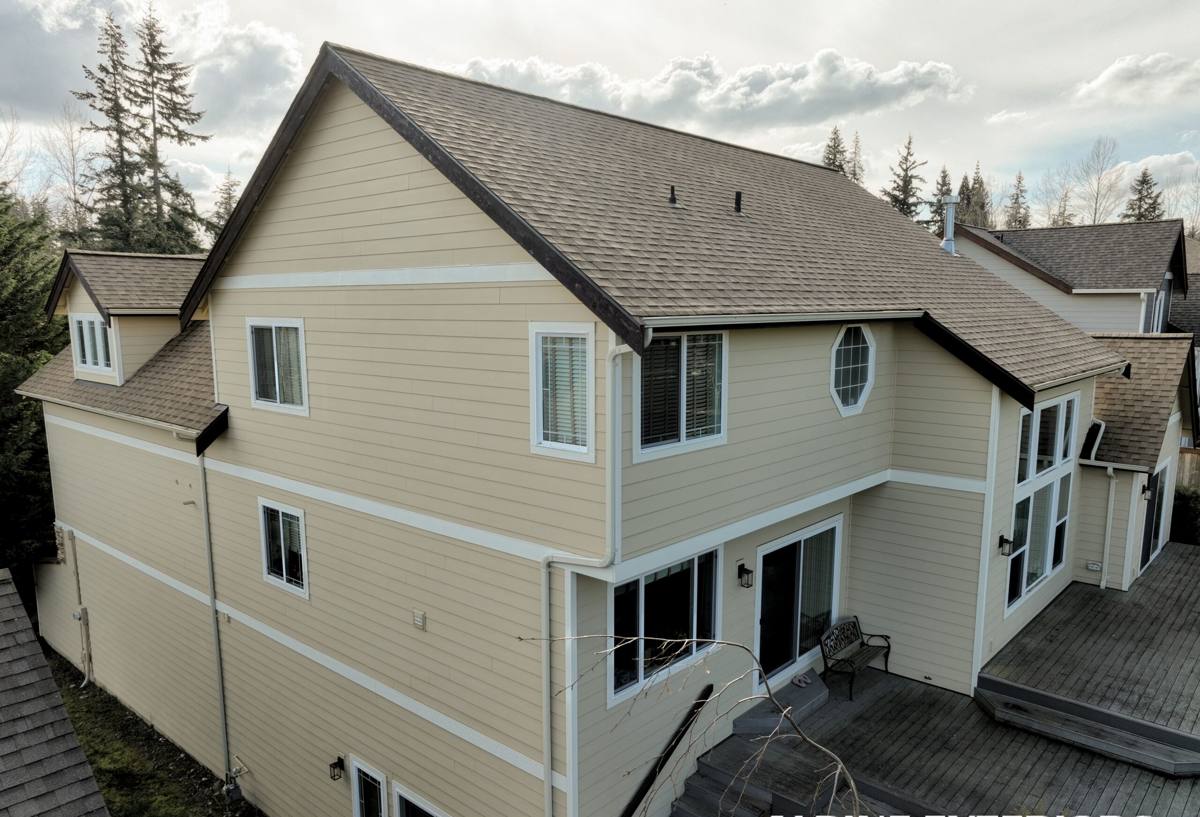
What Regional Climate Does to a Deck Over Time
Whatcom County's weather pattern is consistent enough to plan around, which is both good and bad news. Good, because we know exactly what to build for. Bad, because skipping any of it guarantees problems.
Driving Rain and Standing Moisture
Rain here doesn't just fall straight down — wind-driven rain gets pushed sideways into ledger connections, under railing posts, and into any gap where two pieces of wood meet. If a deck's framing doesn't shed water away from those joints, moisture sits there for days at a time during the wet months. That's when rot starts, usually invisibly, inside a joist or behind a post base long before it shows on the surface.
Moss and Organic Growth
Shaded decks, or decks under overhanging trees, deal with a moss and algae season that can stretch most of the year. Moss holds moisture against the decking surface, which accelerates wood decay and makes composite and even some capped products slippery. It also breaks down fastener coatings faster than most homeowners expect.
Freeze-Thaw and Footing Movement
Whatcom County doesn't get brutal winters, but it gets enough freeze-thaw cycling that shallow or undersized footings can shift slightly over a few seasons. That movement shows up as a deck that feels bouncier than it used to, or railings that have gone slightly out of plumb.
Choosing Decking Material for a Lynden Property
There's no single "best" decking material — the right call depends on how much sun and shade the deck gets, how much upkeep the homeowner wants to do, and budget. Here's how the common options actually perform under our conditions.
| Material | Moisture Performance | Moss/Algae Resistance | Maintenance |
|---|---|---|---|
| Pressure-treated pine | Good if properly sealed and re-sealed | Needs regular cleaning to keep ahead of it | Annual sealing, periodic cleaning |
| Cedar | Naturally decay-resistant, but surface still needs care | Moderate — still grows moss in shaded areas | Sealing every 1-2 years |
| Composite (capped) | Excellent — doesn't absorb water like wood | Better, though surface film can still support algae if not cleaned | Occasional washing, no sealing |
| Uncapped composite | Weaker — some older uncapped products can absorb moisture at the core | Similar issue to wood in shaded spots | Regular cleaning, some fading over time |
Our standard is to walk the site with the homeowner and talk through sun exposure and shade patterns before recommending a material — a deck tucked under trees on the shaded side of a Lynden property is a different decision than one that gets full afternoon sun.
What a Correctly Built Deck Actually Involves
The visible decking boards are the smallest part of what makes a deck last. Most of the failures we get called out to inspect trace back to the parts nobody sees.
Footings and Framing
Footings need to be sized and set below frost depth for this region, not just poured to whatever looked deep enough at the time. Joists should be sized for the actual span and load, not the minimum that happens to pass, and joist hangers and structural fasteners need to be rated for exterior, corrosion-resistant use — standard interior hardware corrodes fast once it's exposed to our wet season year after year.
Ledger Attachment
Where a deck attaches to the house, that ledger board connection is one of the most common failure points in the entire structure. It needs proper flashing to keep water from tracking behind the ledger and into the house's wall framing, along with lag bolts or through-bolts rated for the load — not just nails or undersized screws.
Drainage and Spacing
Board spacing has to account for wood movement and water runoff, and the framing below needs a clear path for water to drain rather than pool. Any structure built tight against the ground without airflow underneath is setting up a long-term moisture problem, regardless of what decking material sits on top.
Fasteners and Hardware
Every fastener from the footing up should be exterior-rated — stainless or coated hardware sized correctly for the connection. This is a small line item on an estimate and one of the easiest places for a lower bid to cut corners, because the difference doesn't show up until the hardware starts failing years later.
Our Process, Start to Finish
We keep the process straightforward so homeowners know what to expect at each stage.
- On-site estimate. We walk the property, look at sun/shade exposure, existing grade and drainage, and talk through material options and rough budget ranges.
- Design and permitting. For most deck projects in Whatcom County, permitting is required — we handle the application and make sure the design meets current building code for footings, railings, and structural spans.
- Site prep and footings. Footings are dug and poured to proper depth before any framing goes up.
- Framing. Ledger, beams, and joists go in with corrosion-resistant hardware and proper flashing at the house connection.
- Decking, railings, and stairs. Surface material and railing system are installed to code, with attention to spacing and drainage.
- Final walkthrough. We go over the finished deck with the homeowner, including basic care guidance for the material chosen.
Railings, Stairs, and Code Requirements
Railings and stairs are where a lot of deck projects run into inspection trouble if they're not planned correctly from the start. Guardrail height, baluster spacing, and stair rise-and-run all have to meet current code, and those requirements exist because they prevent real injuries — not just paperwork. We build to code as a baseline, not an upgrade, and we handle the inspection process as part of the job rather than leaving it for the homeowner to sort out.
Material choice matters here too. A railing system that looks good but traps water at the post bases or cap rail joints will show wear years before the rest of the deck does, so we pay the same attention to water shedding on railings as we do on the decking surface itself.
Maintenance Checklist for Whatcom County Decks
Whatever material a deck is built with, a little seasonal attention goes a long way toward getting the full lifespan out of it. Here's what we recommend homeowners stay on top of:
- Clear leaves and debris from between boards before the wet season sets in — trapped organic matter holds moisture against the surface
- Check for moss buildup on shaded sections and clean it before it spreads, especially on wood and uncapped composite
- Inspect the ledger board flashing annually for gaps or damage where it meets the house
- Look underneath the deck once a year for signs of moisture, soft framing, or rust on hardware
- Reseal wood decking (pressure-treated or cedar) on the manufacturer's recommended schedule, not just when it looks dry
- Confirm railings and stair connections are still tight, especially after a hard winter
- Keep gutters and downspouts near the deck clear so runoff isn't dumping directly onto the structure
Why a Crew That Already Works Lynden Makes a Difference
Deck building isn't unique to this region in a technical sense — the code requirements and construction basics are similar everywhere. What's different is knowing, without guessing, how the local wet season and moss cycle actually behave on a given lot, which sides of a house in this area tend to hold moisture longest, and what framing and hardware choices consistently hold up here versus what looks fine on paper but underperforms after a few Whatcom County winters. A crew that works this area regularly has already seen which shortcuts fail first, because we're often the ones called back out to fix them on other people's projects.
We also know the local permitting process, which keeps the project moving instead of stalling out on paperwork or code corrections partway through construction.
Getting Started
If you're planning a new deck or replacing an aging one in the Lynden area, we're happy to walk the property, talk through material options for your specific sun and shade conditions, and give you an honest, no-pressure estimate. There's no obligation — just a straightforward look at what the job actually involves and what it will cost to do it right.