 Birch Bay Siding
 Roof Replacement Built for Marietta's Coastline
Marietta sits close enough to Birch Bay and the Strait of Georgia that its homes take on a different kind of weather load than a house ten miles inland. Salt-laden air moves through on the marine wind, rain arrives sideways more often than straight down, and the shoulder seasons stay damp long enough for moss to get a foothold on anything that doesn't shed water and dry out quickly. A roof here isn't just covering the house — it's the first line of defense against a climate that never fully lets up.
When a roof in this area starts failing, it's rarely one dramatic problem. It's usually a slow accumulation: granule loss from wind-driven rain, moss holding moisture against shingles longer than they're rated for, and metal fasteners or flashing that corrode faster near the water. Replacement done right in Marietta means designing for that reality, not just swapping old material for new in the same pattern.
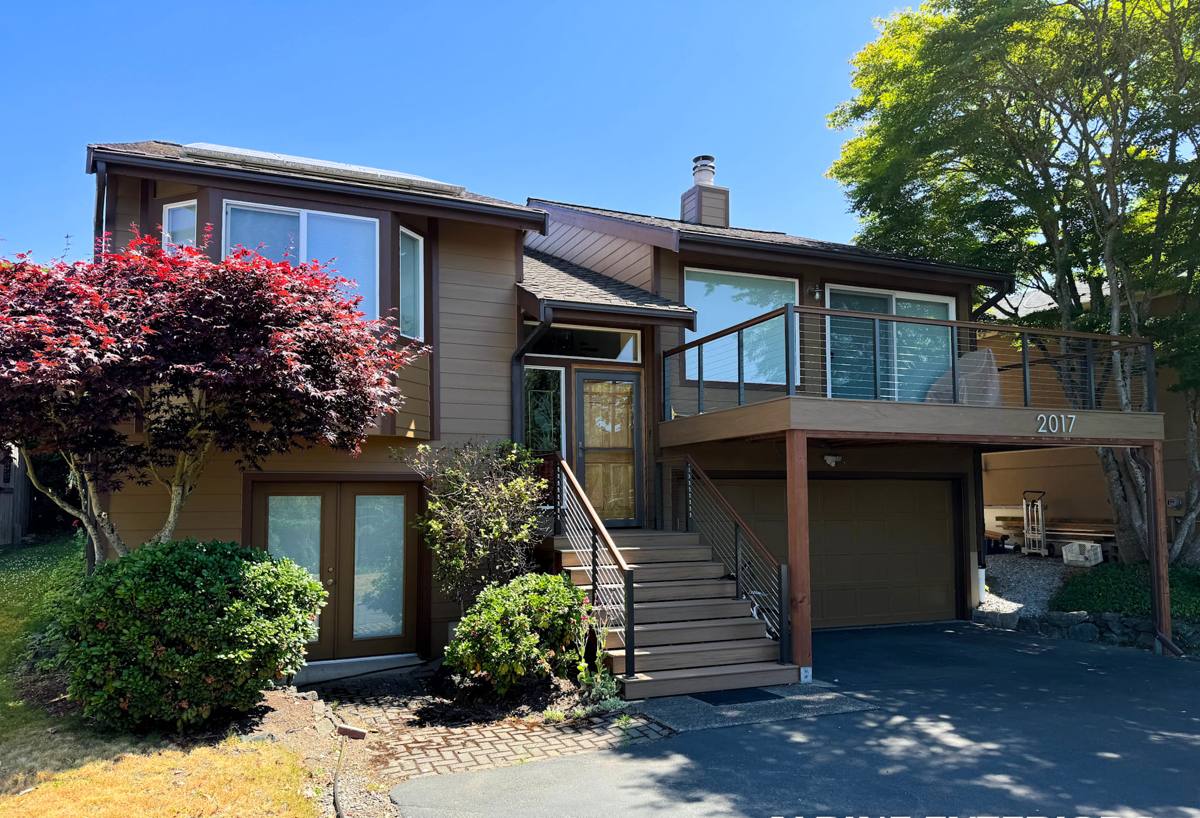
What Whatcom County's Climate Actually Does to a Roof
Salt Air and Corrosion
Homes within a few miles of Birch Bay and the Strait get a steady dose of airborne salt. Over years, that accelerates corrosion on exposed fasteners, flashing, and any metal roofing components that aren't rated for coastal exposure. It's a slow process, but it's cumulative — a roof that would last two decades inland can show flashing failure or fastener rust well before that near the water.
Driving Rain
Marietta gets weather off the water, and that means rain doesn't always fall straight down. Wind-driven rain finds its way under improperly lapped shingles, through poorly sealed penetrations, and into any gap in the underlayment that a calmer climate could get away with. Roofs here need tighter detailing at every edge, valley, and penetration than a standard install in a drier region.
Moss and Prolonged Moisture
Long, damp shoulder seasons give moss and algae time to establish on north-facing slopes and shaded sections of roof. Moss isn't just cosmetic — it holds moisture against the roofing material, works its way under shingle edges, and can lift material enough to create a path for water. A roof replacement in this area should account for airflow, shading, and material choice with moss resistance in mind, not just treat it as a maintenance afterthought.
Signs a Marietta Roof Needs Replacing, Not Patching
- Granule loss heavy enough that you can see bare, shiny patches on asphalt shingles, especially on slopes that face prevailing wind and rain
- Moss growth that keeps returning within a season or two of cleaning, even after treatment
- Soft spots, sagging, or visible deflection in the roof deck when walked or viewed from the attic
- Flashing around chimneys, vents, or skylights that's rusted, lifted, or separating from the surrounding material
- Interior water stains, especially ones that appear or worsen during wind-driven storms rather than steady rain
- A roof already past 18–20 years old for asphalt, or showing multiple layers of prior patchwork
- Daylight visible through the roof deck from inside the attic
Any one of these on its own might be a repair. Several together, especially on a roof already near the end of its expected life, usually means repair costs start competing with replacement costs without buying you much additional time.
What a Correct Roof Replacement Involves Here
A roof replacement that's built for this climate goes beyond removing old shingles and nailing down new ones. The work that actually determines how long the roof lasts happens in layers most homeowners never see once the job is done.
Tear-Off and Deck Inspection
Full tear-off lets us see the deck itself — the plywood or OSB sheathing underneath. Any section that's soft, delaminated, or water-damaged from years of slow leaks gets replaced before anything new goes down. Covering over a compromised deck is the single most common shortcut that leads to early roof failure, and it's not something you can catch from the ground.
Underlayment Suited to Wind-Driven Rain
Given how often rain arrives at an angle here, we use underlayment and ice-and-water shield detailing at eaves, valleys, and penetrations that's built for that exposure — not the minimum a drier climate would need. This is the layer that protects the house if wind ever drives moisture past the top layer of roofing.
Flashing and Penetration Detail
Every chimney, vent pipe, and skylight is a place water can get in if the flashing isn't done correctly. Near the coast, we pay particular attention to flashing material and fastener choice, since corrosion resistance matters more here than it would fifty miles inland.
Ventilation for Moss and Moisture Control
Proper intake and exhaust ventilation keeps the underside of the roof deck drier and helps shingles dry out faster after wet weather — both of which slow moss growth and extend material life. A roof replacement is the right time to correct ventilation that's undersized or poorly balanced, since it's far more invasive to fix afterward.
Material Selection
We walk homeowners through the real trade-offs between roofing materials for this specific climate — moisture behavior, moss resistance, wind rating, and long-term maintenance — rather than pushing one product. The right choice depends on the home's exposure, roof pitch, and budget.
Comparing Roofing Material Options for a Coastal Whatcom County Home
| Material | Moss/Moisture Resistance | Wind-Driven Rain Performance | Typical Lifespan | Maintenance Needs |
|---|---|---|---|---|
| Architectural Asphalt Shingle | Moderate — benefits from algae-resistant granules | Good with proper underlayment and sealing | 20–30 years | Periodic moss removal on shaded slopes |
| Standing Seam Metal | High — sheds moisture quickly, little surface for moss to grip | Very good, especially at higher pitches | 40–50+ years | Low; occasional fastener and sealant checks |
| Composite/Synthetic Shake | High when properly ventilated | Good | 30–50 years | Low to moderate |
| Wood Shake | Lower in this climate without diligent upkeep | Moderate — sensitive to prolonged moisture exposure | 20–30 years with upkeep | High — regular treatment and inspection needed |
We don't steer every homeowner toward the same product. A steep, well-shaded roof with heavy tree cover has different needs than an open, wind-exposed one closer to the water, and we'll walk through which option actually fits your roof's exposure rather than a one-size answer.
Our Process for a Marietta Roof Replacement
- On-site assessment — We inspect the existing roof, deck condition, ventilation, and flashing details, and look at how the home is oriented relative to prevailing wind and moisture exposure.
- Written estimate and material walkthrough — You get a clear breakdown of scope, material options, and cost factors before any work is scheduled, with no pressure to decide on the spot.
- Scheduling around weather windows — Roofing in this region means working around rain systems, not just calendar dates. We plan tear-off and dry-in around realistic weather windows so the deck isn't exposed longer than necessary.
- Tear-off, deck repair, and dry-in — Old material comes off, the deck is inspected and repaired as needed, and the roof is dried in with appropriate underlayment the same day whenever possible.
- Installation — New roofing material, flashing, and ventilation components are installed to the details appropriate for coastal exposure, not generic minimums.
- Final walkthrough — We go over the finished roof with you, including what routine maintenance — if any — the material will need going forward.
Cost Factors for Roof Replacement in This Area
Every roof is different, and giving a number without seeing the roof wouldn't be honest. That said, several factors consistently drive cost up or down for homes in Marietta and the surrounding Birch Bay area:
- Roof size and number of planes, valleys, and penetrations
- Deck condition — hidden rot or water damage found during tear-off adds material and labor
- Material choice, from standard asphalt shingle up through metal or composite systems
- Roof pitch and accessibility, which affect labor time and safety setup
- Ventilation upgrades needed to correct an undersized or poorly balanced system
- Flashing and underlayment upgrades appropriate for wind-driven rain and salt exposure
We provide a detailed written estimate after an on-site look at the roof, broken down clearly enough that you can see what you're paying for and why.
Why It Matters That We Already Work in Marietta
A crew that mostly works inland, drier regions can install a technically correct roof and still miss the details that matter most here — how tight the flashing needs to be against wind-driven rain, which slopes need extra moss consideration, or how much ventilation a coastal home really needs to dry out between storms. We work this stretch of Whatcom County regularly, which means we're not guessing at how the local climate behaves — we're building for weather patterns we deal with on every project, on homes with the same salt air and moss pressure yours faces.
That familiarity also shows up in smaller ways: knowing realistic weather windows for scheduling tear-off, understanding how sun and shade patterns across a given lot affect moss growth, and having a track record of work in the immediate area that neighbors can vouch for.
Get a Free, No-Pressure Estimate
If your roof is showing its age, dealing with recurring moss, or you just want an honest read on how much life it has left, we're happy to take a look. The estimate is free, there's no pressure to commit, and you'll get a straightforward assessment of what your roof actually needs — not a sales pitch. Use the form below to get started.