 Birch Bay Siding
 Roofing in Sandy Point: A Different Set of Problems
Sandy Point sits right up against the water, and that changes what a roof has to deal with compared to homes even a few miles inland in Whatcom County. The salt-laden air off the Strait of Georgia works on exposed metal fasteners and flashing year-round. Wind-driven rain off the water doesn't fall straight down — it gets pushed sideways under shingle edges and around penetrations that would stay dry on a more sheltered roof. And the tree cover and persistent damp that define this stretch of Birch Bay keep moss and moisture active on north-facing slopes for most of the year. A roof repair here isn't just patching a leak — it's addressing why that spot failed in the first place, which is usually some combination of salt corrosion, wind exposure, or moss holding water against the roofing material longer than it should sit there.
Why Location Matters More Than People Think
Two roofs of the same age and material can age very differently depending on where they sit in Sandy Point. A roof with a clear line to the water takes more salt spray and wind than one tucked behind a row of trees. A north-facing slope in a shaded lot holds moss and moisture longer than a south-facing one that gets afternoon sun. When we look at a repair here, we're not just looking at the damage — we're looking at what part of the property caused it, because that tells us whether a targeted repair will actually hold or whether it's the first sign of a bigger problem coming.
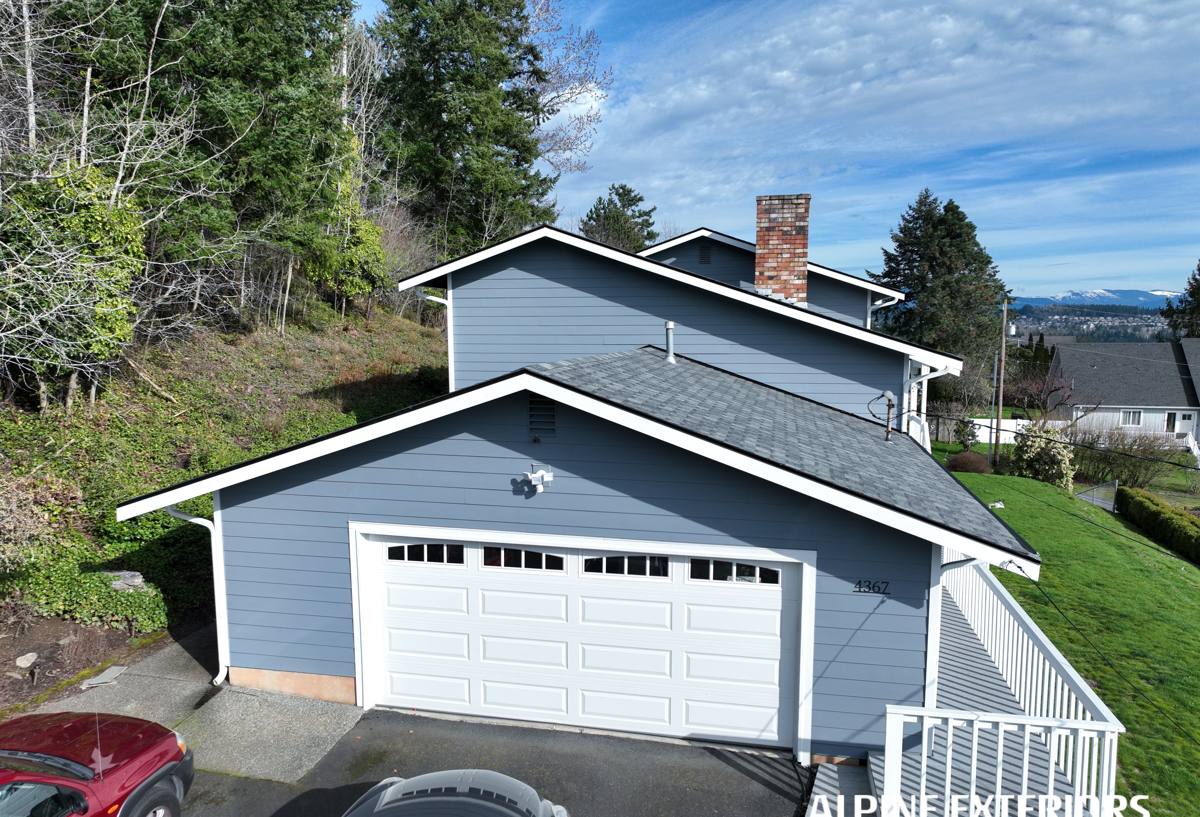
What Actually Fails First on Sandy Point Roofs
After years of working roofs in this specific part of Birch Bay, a few failure points show up over and over:
- Flashing around chimneys, vents, and skylights — salt air accelerates corrosion on lower-grade metal flashing and the fasteners that hold it, opening tiny gaps that let wind-driven rain in.
- Moss-damaged shingles on shaded, north-facing slopes — moss doesn't just look bad, it lifts shingle edges and holds water against the roof deck, which shortens the life of the shingles underneath it.
- Wind-lifted shingle edges and ridge caps — steady onshore wind gradually works shingle tabs and ridge caps loose, especially on roofs that weren't sealed or fastened with coastal exposure in mind.
- Valley and eave leaks — heavy, sustained rain finds its way into any weak point in a valley or along the eave, particularly where ice-and-water underlayment was skipped or under-installed originally.
- Gutter and drainage backups — needle and leaf debris from the surrounding tree cover clogs gutters faster here than in more open areas, and standing water backs up under the roof edge.
What a Correct Repair Actually Involves
A quick patch on a coastal roof often fails again within a season or two, because it treats the symptom and not the cause. Our process for a Sandy Point repair typically looks like this:
- Full roof inspection, not just the leak point. We walk the roof (or use a ladder and binoculars where walking isn't safe) and check the whole surface, not just the spot where the ceiling stain showed up. Water travels before it drips, so the entry point and the visible damage are often in different places.
- Identify the actual cause. Corroded flashing, moss intrusion, wind-lifted shingles, and worn underlayment all look similar from inside the attic but need different fixes. We tell you which one it is and why, in plain terms.
- Repair with materials suited to salt air. Where we're replacing flashing or fasteners, we use corrosion-resistant metal and hardware appropriate for coastal exposure — not the standard-grade materials that work fine 20 miles inland but corrode faster this close to the water.
- Address moss at the source, not just the symptom. If moss caused or contributed to the damage, we clear it properly and talk through options to slow regrowth, rather than just replacing shingles that will moss over again in the same spot.
- Check drainage as part of the job. A repair on a roof with clogged or undersized gutters is a repair that's likely to be needed again. We check that water actually has somewhere to go once it leaves the roof.
Repair vs. Replacement: How We Help You Decide
Not every roof problem in Sandy Point needs a full replacement, and not every leak is a quick fix either. The honest answer depends on the roof's age, how much of the surface is affected, and how many separate problem areas we find.
| Situation | Repair usually makes sense | Replacement worth considering |
|---|---|---|
| Roof age | Under 15-18 years, or newer architectural shingle | Approaching or past manufacturer's expected lifespan |
| Damage extent | Isolated to one slope, flashing point, or valley | Multiple slopes affected, or damage found in more than one system |
| Moss condition | Present on one area, shingles still intact underneath | Widespread moss with visible shingle granule loss or curling |
| History | First repair call for this roof | Second or third repair to the same or nearby area in a few years |
| Underlayment | Still in reasonable condition where exposed during repair | Deteriorated, missing, or clearly undersized for coastal wind-driven rain |
We'll tell you honestly which side of that table your roof falls on. If a repair will genuinely hold, that's what we'll recommend — a full replacement isn't the right call just because it's the bigger job.
Why Local Experience with Sandy Point Specifically Matters
General roofing knowledge gets you most of the way, but the last piece — knowing how a specific microclimate behaves — only comes from working that ground repeatedly. A crew that regularly works Sandy Point and the surrounding Birch Bay waterfront already knows which slopes hold moss longest, which flashing details tend to fail first in this wind pattern, and roughly how a roof of a given age and orientation here is likely to be holding up before we even get on the ladder. That's not something you get from a crew that mostly works drier, more sheltered parts of Whatcom County and treats every coastal call the same as an inland one.
It also means we're not guessing at material choices. We know which fastener and flashing grades hold up against sustained salt exposure here, because we've gone back and looked at what we installed years ago and seen how it aged.
Timing a Roof Repair Around Birch Bay's Weather
The Pacific Northwest's wet season makes certain repairs more urgent and others easier to plan around:
- Fall (before the rains settle in) is the best window to catch moss and minor flashing issues before winter storms push water through them.
- Winter repairs are often necessary rather than scheduled — active leaks during heavy rain need attention regardless of season, and we work through it, but material choices and drying time are more limited.
- Spring and summer give the most flexibility for larger repairs, moss treatment, and any work that benefits from a dry roof deck.
If you're not dealing with an active leak, a fall inspection is genuinely the most useful time to call — it catches problems while there's still a dry window to fix them properly.
Questions to Ask Before Hiring Anyone for Coastal Roof Repair
Whoever you hire, this is a reasonable checklist for a roof this close to the water:
- Do they explain what caused the damage, or just say where it's leaking?
- Do they mention corrosion-resistant fasteners or flashing for coastal exposure, or use standard materials without discussing the difference?
- Do they inspect the whole roof, or only the spot you called about?
- Are they licensed and insured to work in Washington, and willing to show it?
- Do they give you a written scope of what the repair includes, not just a price?
What to Expect When You Call Us
We start with a straightforward roof inspection and a conversation about what we find — no pressure toward a bigger job than what's actually needed. If it's a contained repair, we'll say so and explain the fix. If we see signs of a larger issue, we'll show you what we're looking at and why it matters, and let you decide how to proceed. Either way, you'll get a clear, written estimate before any work starts.
If you're dealing with a leak, visible moss buildup, or just want a roof checked before the next round of Northwest storms, we're glad to come take a look. Reach out for a free, no-pressure estimate using the form below.