 Birch Bay Siding
 Roofing in a Marine Microclimate: Point Whitehorn's Real Conditions
Point Whitehorn sits right up against the Strait of Georgia, which means homes here deal with a combination of weather stresses that inland Whatcom County properties simply don't see as often. Salt-laden air drifts in off the water almost daily, wind-driven rain comes in sideways during fall and winter storms, and the shaded, damp conditions along the bluff and wooded lots create a long moss and algae season that can run nine months out of the year. Any roof installed here has to be chosen and built with those specific conditions in mind, not just installed the same way it would be on a dry lot outside Ferndale or Lynden.
Asphalt shingle roofing remains one of the most practical choices for this area when it's specified and installed correctly. It's not about picking the cheapest shingle off the shelf — it's about matching the shingle class, underlayment system, ventilation, and flashing details to what a Point Whitehorn roof actually has to survive year after year.
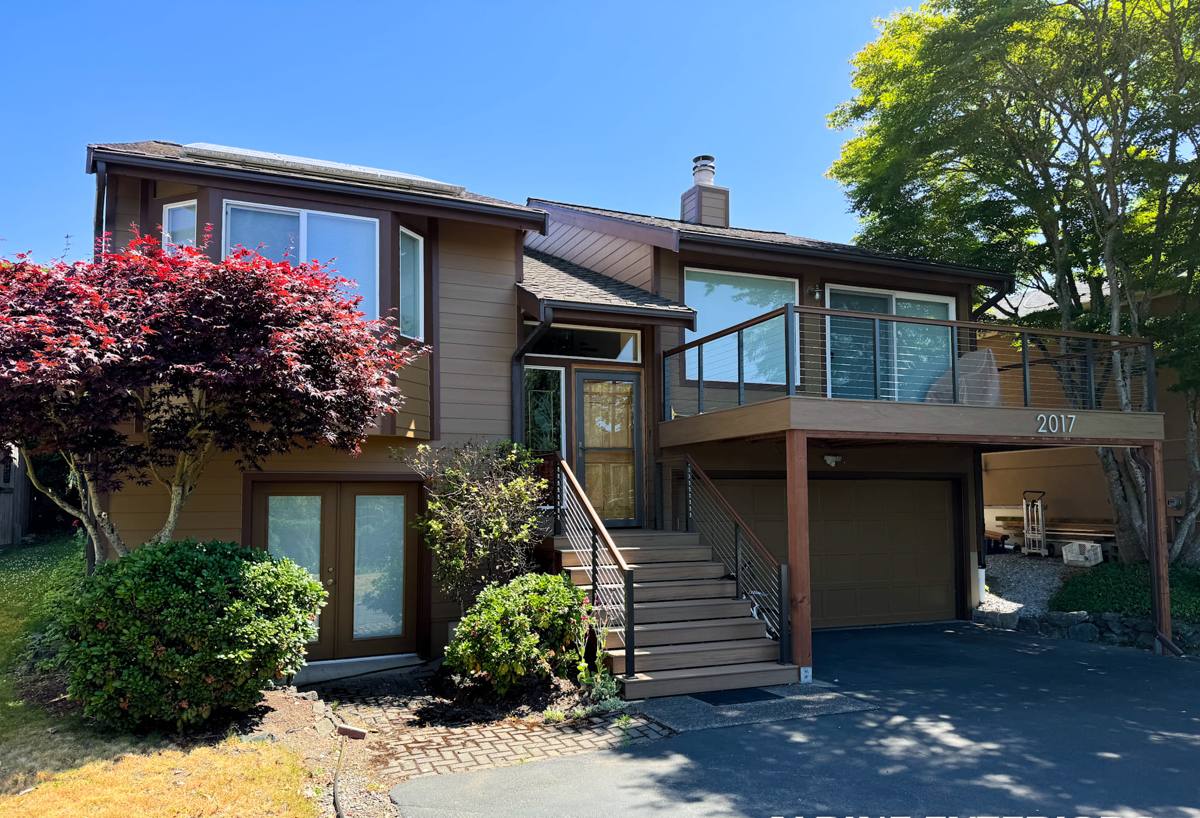
What Salt Air and Coastal Exposure Do to a Roof Over Time
Salt air is corrosive to metal, and a shingle roof has more exposed metal than most homeowners realize: drip edge, step flashing, valley flashing, pipe boots, nail heads, and often a ridge vent system. In a straight coastal exposure like Point Whitehorn, standard galvanized fasteners and lower-grade flashing can start showing surface corrosion years before they would inland. Once flashing corrodes or a nail head rusts through its coating, water finds a path underneath the shingle field, and that's when hidden leaks start.
Salt air also accelerates the breakdown of lower-quality shingle granules and adhesive strips faster than a dry, inland climate would. This doesn't mean asphalt shingles are a poor fit for Point Whitehorn — it means the fastener grade, flashing material, and shingle quality need to be selected for coastal exposure rather than treated as a one-size-fits-all decision.
Wind-Driven Rain and Sideways Weather
Storms coming off the Strait don't just drop rain straight down — they push it sideways under wind gusts, which puts real pressure on every seam, lap, and penetration on the roof. A roof that would perform fine under vertical rainfall in a sheltered inland yard can leak at Point Whitehorn if the underlayment laps, valley details, and shingle sealant strips aren't built for wind-driven moisture. This is one of the most common gaps we find on older or improperly installed roofs in this area: the shingles themselves look fine, but the water management underneath them was never built for this specific exposure.
Moss, Algae, and the Long Wet Season
Whatcom County's wet season is long, and Point Whitehorn's mix of shade from tree cover and consistent moisture off the water makes it a strong environment for moss and algae growth on roofing. Moss isn't just a cosmetic problem. As it establishes on a shingle roof, it holds moisture against the shingle surface far longer than the shingle was designed to tolerate, and its root structure can work its way under shingle tabs and lift them, breaking the seal that keeps wind-driven rain out. Over several seasons, an untreated moss problem can shorten the effective life of an otherwise sound roof by years.
Algae staining (the dark streaking many homeowners notice running down north-facing roof slopes) is a different issue — mostly cosmetic, caused by algae feeding on limestone filler in some shingles — but it's worth addressing at the material stage since it affects how the roof looks over time, especially on the shaded, damp slopes common in this neighborhood.
Choosing the Right Shingle System for This Location
Not every asphalt shingle product is built the same, and the differences matter more in a coastal, moss-prone climate than they would somewhere drier. Here's how the common options compare for a Point Whitehorn application:
| Shingle Type | Typical Lifespan Here | Best Fit For |
|---|---|---|
| Standard 3-tab | Shorter end of the range in this climate | Budget-driven projects, secondary structures |
| Architectural / laminated | Longer, better wind and impact resistance | Most Point Whitehorn homes — our default recommendation |
| Algae-resistant (copper/zinc granules) | Same base lifespan, slower streaking | Shaded, damp lots and north-facing slopes |
| High wind-rated architectural | Longer, rated for higher gust exposure | Open, exposed lots closer to the bluff or water |
For most homes in this area, we steer clients toward a mid-to-upper grade architectural shingle with algae-resistant granules and a wind rating suited to coastal gusts. It costs more upfront than a basic 3-tab, but in this specific climate the difference in performance and in how long it looks good before moss or algae discoloration sets in is significant.
Underlayment and Water-Resistive Details Matter as Much as the Shingle
We treat the underlayment system as equally important as the shingle brand, if not more so in this climate. A synthetic underlayment with strong lap performance, ice-and-water shield membrane at eaves, valleys, and penetrations, and properly lapped and sealed transitions at every roof plane change are what actually stop the wind-driven rain that standard vertical-rain-rated roofing can miss. This is the part of the roof nobody sees once it's finished, and it's also the part that determines whether the roof leaks during the first real Point Whitehorn storm or holds for its full service life.
What a Correct Installation Actually Involves
A roof replacement or new install isn't just laying shingles down in rows. For a coastal Whatcom County home, a correct job includes:
- Full tear-off and deck inspection — repairing or replacing any rotted or soft decking before new material goes down, rather than roofing over a problem
- Ice-and-water shield membrane at eaves, valleys, skylights, and chimney penetrations
- Synthetic underlayment across the full field, properly lapped against the prevailing wind and weather direction
- Corrosion-resistant drip edge and step flashing suited for salt air exposure, not bare standard galvanized where it can be avoided
- Correct nailing pattern and fastener count per shingle — under-nailing is a common shortcut that shows up as blow-offs in the first big windstorm
- Proper valley construction (closed-cut or metal-lined, depending on the roof) since valleys carry the highest water volume on the roof
- Ridge and soffit ventilation sized correctly for the attic volume
- Pipe boots, vent flashing, and penetration seals rated for long-term UV and moisture exposure
Attic Ventilation: The Often-Overlooked Half of a Roofing Job
In a wet, humid coastal climate, what happens underneath the shingles matters almost as much as the shingles themselves. Without balanced intake (soffit) and exhaust (ridge) ventilation, moist air gets trapped in the attic, condenses against the roof deck, and creates the kind of persistent damp environment that rots sheathing and feeds mold — completely independent of whether the shingles above are doing their job. We check and, where needed, correct attic ventilation as part of any full roof replacement in this area, because installing a well-built shingle roof over a poorly ventilated attic just moves the moisture problem rather than solving it.
Our Process for a Point Whitehorn Roof Project
1. On-Site Inspection and Honest Assessment
We walk the roof (not just look at it from the ground), check the attic for existing ventilation and moisture issues, and look at flashing, valleys, and any areas showing moss growth or granule loss. You get a straightforward explanation of what's actually needed — repair, partial replacement, or full replacement — not an upsell.
2. Material Selection Suited to Your Exposure
How exposed your specific lot is to wind and salt air, how much shade and moisture your roof sees, and your budget all factor into which shingle grade and underlayment system we recommend. A sheltered inland-facing lot doesn't need the same spec as an open lot closer to the water.
3. Tear-Off, Deck Repair, and Installation
Full tear-off to bare decking, repair of any compromised sheathing, correct underlayment and flashing installation, then the shingle field itself installed to manufacturer nailing and exposure specs — not shortcuts to save labor time.
4. Cleanup and Final Walkthrough
Magnetic sweep for stray fasteners, full site cleanup, and a walkthrough so you understand what was done and what routine maintenance will keep it performing well in this climate.
Why Local Experience in Point Whitehorn Specifically Matters
A roofing crew that works across Birch Bay and Point Whitehorn regularly knows which lots sit exposed to direct wind off the water and which sit sheltered by tree cover, which slopes tend to hold moss the longest, and how Whatcom County's permitting and inspection process works for roofing projects. That local pattern recognition changes real decisions — fastener grade, flashing material, valley construction, and ventilation sizing — rather than defaulting to a generic spec that may be overbuilt for one property and underbuilt for another. It also means faster response if a storm causes damage, since we're not traveling in from outside the area.
Maintenance That Actually Extends Roof Life Here
Asphalt shingle roofs in this climate last longest when they get modest, regular attention rather than being ignored until there's a leak. A practical maintenance rhythm for a Point Whitehorn home looks like:
- Visual roof check each fall before the heavy rain season sets in, and again after any major windstorm
- Gutter and downspout cleaning at least twice a year so water isn't backing up under the eave line
- Moss treatment or gentle removal before growth establishes and lifts shingle tabs — not pressure washing, which can strip granules
- Keeping overhanging branches trimmed back to reduce shade, debris buildup, and abrasion on the shingle surface
- Prompt attention to any missing or curling shingles rather than waiting for a full leak to appear
What Drives the Cost of a Point Whitehorn Roofing Project
Every roof is different, but a few factors consistently move the price on projects in this area:
| Factor | Why It Matters |
|---|---|
| Roof pitch and complexity | Steeper, multi-plane roofs take longer and require more safety setup |
| Number of existing layers | Tear-off of multiple old layers adds labor and disposal cost |
| Deck condition | Rotted or soft sheathing found during tear-off requires repair before shingles go on |
| Shingle grade chosen | Architectural and algae-resistant products cost more than basic 3-tab but perform longer here |
| Access and site conditions | Tree cover, slope, and staging space affect labor time on wooded Point Whitehorn lots |
| Ventilation upgrades needed | Adding or correcting ridge/soffit ventilation adds scope but protects the whole roof system |
We walk through these factors on-site so the estimate reflects your actual roof, not a generic per-square number that doesn't account for Point Whitehorn's exposure and moisture conditions.
Get a Free, No-Pressure Estimate
If your roof is showing moss buildup, granule loss, curling shingles, or you're just planning ahead for a replacement, we're happy to take a look and give you a straightforward assessment built around what this specific climate does to a roof. Use the form below to request a free estimate — no pressure, just an honest read on where your roof stands.