 Birch Bay Siding
 Why Decks in Bellingham Take More Punishment Than People Expect
Bellingham sits close enough to Bellingham Bay and the Salish Sea that salt-laden air is a constant, low-grade factor on anything built outdoors — including decks. Add Whatcom County's long, wet stretch of driving rain from fall through spring, and a moss season that can run half the year on shaded or north-facing lots, and you've got conditions that expose weak decking work fast. A deck that would hold up fine in a dry inland climate can start showing problems within a couple of seasons here if it wasn't built with this specific environment in mind.
Composite decking exists partly to solve wood's rot and maintenance problems, but composite is not immune to bad installation. Trapped moisture, poor ventilation under the boards, and fasteners that aren't rated for a marine-influenced climate cause just as many callbacks on composite decks as on wood ones. The material helps. It doesn't replace correct building practice.
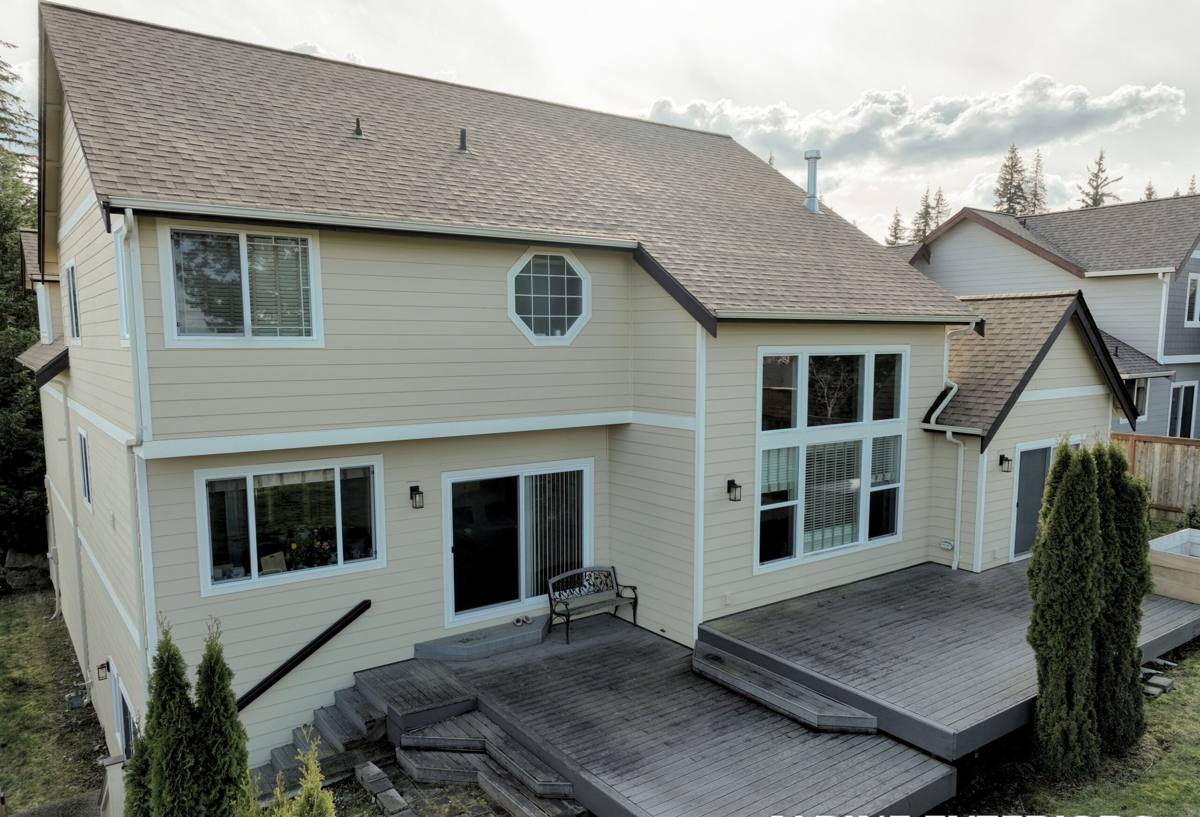
What a Correct Composite Deck Install Actually Involves
A composite deck is really two systems: the structure underneath (framing, joists, ledger, footings) and the decking surface itself. Most of the failures we get called out to inspect trace back to the structure, not the composite boards. Getting this right, especially in a wet climate, means paying attention to details that don't show up in a sales brochure.
Substructure and drainage
Joists need to be spaced correctly for the specific composite product (manufacturer spec sheets vary, and spacing that's fine for one board can cause sagging or excess deflection in another). Just as important is making sure water has somewhere to go. Flat, poorly sloped decks that sit against a house wall are where we see the worst moisture damage in this area — water pools instead of running off, and it finds its way into the ledger board connection or down into end-grain cuts in the framing.
Ventilation under the boards
Composite decking doesn't rot the way wood does, but the framing underneath it still can, and trapped moisture under low-clearance decks accelerates mold and moss growth on the underside of the boards themselves. Adequate airflow beneath the deck surface matters more here than in a dry climate, where the same low-clearance build might never cause a problem.
Fasteners and hardware
Salt air corrodes standard hardware faster than people expect, even at a few miles' distance from open water. Structural connectors, ledger bolts, and hidden fastener systems should be rated for coastal or marine exposure. This is a small cost difference at time of install and a significant difference in how the deck performs ten and fifteen years out.
Flashing at the house connection
Where the deck ledger meets the house is the single most common point of water intrusion on any deck, composite or wood. Proper flashing, correctly lapped with the house's weather-resistive barrier or siding, is not optional — it's the difference between a deck that protects the structure behind it and one that quietly feeds moisture into the wall assembly for years before anyone notices.
Composite vs. Wood vs. PVC: An Honest Comparison for This Climate
Every decking material has trade-offs. In a climate with this much rain and moss pressure, some of those trade-offs matter more than they would elsewhere.
| Material | Moisture Behavior | Moss/Mildew Resistance | Maintenance | Typical Lifespan |
|---|---|---|---|---|
| Pressure-treated wood | Absorbs water, prone to warping and checking | Low — needs regular cleaning and sealing | Annual staining/sealing recommended | 10-15 years before major repair |
| Capped composite | Core resists moisture; cap sheds water | Moderate to good, varies by board texture | Periodic washing, no staining/sealing | 25-30+ years, manufacturer-dependent |
| PVC/cellular decking | Fully moisture-resistant, no wood content | Good, smooth surfaces resist buildup best | Occasional washing | 25-30+ years |
We install composite most often because it lands in a sweet spot for this area: strong moisture performance without the higher material cost of full PVC, and none of the annual sealing burden that pressure-treated wood demands here. We're upfront that composite still needs periodic cleaning in a moss-prone climate — it's not a zero-maintenance product, just a much lower-maintenance one than wood.
A note on board texture and color
Darker, heavily wood-grained composite boards hide dirt and biofilm better in photos, but in a shaded, damp yard they can also mask early moss growth until it's established. Lighter colors and boards with a less aggressive grain pattern tend to show buildup sooner, which sounds like a downside but actually means problems get caught and cleaned off earlier. We'll talk through this trade-off based on how much sun and airflow your specific yard actually gets.
Our Process, Start to Finish
- Site walk and drainage assessment — we look at grading, existing water paths, and how much sun/shade the deck footprint gets before recommending a layout or clearance height.
- Structural plan — footings, joist spacing, and ledger attachment are specified to the actual composite product going down, not a generic framing plan.
- Flashing and waterproofing at the house — done before any decking goes down, not patched around afterward.
- Framing and ventilation check — clearance and airflow underneath confirmed before boards are installed.
- Composite board installation — hidden or face-fastened per manufacturer spec, with coastal-rated hardware.
- Final walkthrough — we go over care and cleaning specific to your deck's sun exposure and surroundings.
What Causes Early Deck Failures Around Here
Most of the composite deck problems we're asked to look at fall into a short list of causes, all of them avoidable at the framing stage:
- Ledger boards attached without proper flashing, letting water track into the house wall
- Decks built flat or sloped toward the house instead of away from it
- Insufficient clearance or airflow underneath, trapping moisture and encouraging moss and algae on the board undersides
- Standard hardware used instead of coastal-rated fasteners, leading to corrosion and staining
- Joist spacing that doesn't match the specific composite product, causing sag or bounce over time
Living With a Composite Deck Through a Long Moss Season
Composite decking's biggest maintenance advantage over wood is that it doesn't need sealing or staining. It still benefits from a simple seasonal routine in a climate where moss and algae have months to establish themselves.
What actually helps
Keeping the deck surface clear of wet leaves and debris, especially in shaded corners, prevents the organic buildup that moss needs to take hold. A periodic wash with a soft-bristle brush and a mild composite-safe cleaner handles most of what accumulates over a wet Bellingham fall and winter. Pressure washing is possible but should be done carefully — too much pressure can damage the cap layer on some composite products, so we always point clients to the manufacturer's specific cleaning guidance for the board they have.
What doesn't help
Sealing composite decking, unlike wood, is unnecessary and in some cases can trap moisture against the cap layer rather than shed it. Skip products marketed as composite deck sealers unless your specific manufacturer recommends one.
Why a Crew That Already Works Bellingham Matters
Decking rules and permit requirements, drainage expectations, and typical lot conditions vary enough between jurisdictions that experience in one area doesn't always transfer cleanly to another. A crew that regularly works Bellingham and the surrounding Whatcom County area already has a working sense of local permitting expectations, typical soil and grading conditions, and how exposed a given lot is to weather off the bay versus more sheltered inland ground. That local familiarity shortens the planning phase and reduces the chance of surprises once footings go in.
It also means the crew has seen how different composite products actually perform here over multiple wet seasons, not just what a manufacturer's spec sheet claims. That's the difference between a deck built to a generic standard and one built for the specific conditions it has to survive.
Questions to Ask Before You Hire
- Will the framing and joist spacing be specified to the exact composite product I'm choosing, not a generic standard?
- What fastener and hardware rating will be used, given the coastal exposure here?
- How will the ledger-to-house connection be flashed and waterproofed?
- What clearance and ventilation will the deck have underneath, given my yard's sun and shade?
- What's the manufacturer's warranty, and does the installer follow its specific fastening and spacing requirements closely enough to keep that warranty valid?
If you're weighing composite decking for a home in Bellingham, we're happy to walk the site, look at your drainage and sun exposure, and give you a straight answer on what a correctly built deck would involve for your specific lot. Fill out the form below for a free, no-pressure estimate.