 Birch Bay Siding
 Deck Building in Sumas: Built for This Climate, Not Just Any Climate
A deck in Sumas has to earn its keep in a way that decks in drier parts of the country simply don't. Salt-tinged air moving in off the water, driving rain that comes sideways as much as down, and a moss season that seems to stretch longer every year all put real, ongoing stress on wood, fasteners, and finishes. A deck built to a generic national spec, or one thrown together by a crew that normally works somewhere dry and mild, tends to show its weaknesses here within a few seasons: soft spots at the ledger, rust streaks bleeding from screw heads, green film creeping across the boards by the second winter. We build decks specifically for Whatcom County conditions, and that shapes almost every decision from the footings up.
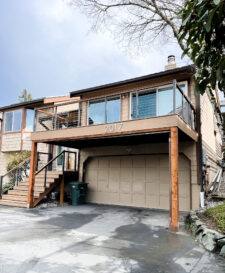
What Sumas Homes Actually Need From a Deck
Standing Up to Salt Air and Moisture
Salt in the air accelerates corrosion on anything metal — fasteners, joist hangers, railing hardware, even the heads of nails if the wrong grade was used. It also speeds up the breakdown of untreated or poorly sealed wood fibers. None of this happens overnight, which is exactly why it's easy for a corner-cutting install to look fine on handoff day and start failing quietly a year or two later.
Shedding Rain Instead of Trapping It
Driving rain doesn't just fall on a deck, it gets pushed sideways into gaps, under boards, and behind ledger connections. A deck that isn't detailed to shed that water — proper slope, board spacing, flashing where the deck meets the house — will trap moisture in exactly the places you can't see it: framing, ledger bolts, the top of posts. That's where rot starts, not on the visible surface.
Living With a Long Moss Season
Moss and algae need shade, moisture, and time, and this area gives them plenty of all three for a good chunk of the year. A deck that sits low, gets little sun, or backs up to trees is going to grow moss no matter what material it's built from. The goal isn't to pretend that won't happen — it's to choose materials, spacing, and orientation that make it manageable instead of a slip hazard and a maintenance headache.
What a Correctly Built Deck Involves
Footings and Framing Sized for Real Conditions
Footings need to reach proper bearing depth and be sized for the actual loads the deck will carry, not the minimum that happens to pass a quick inspection. Framing lumber should be rated for ground contact or exterior exposure where it's called for, and joist spacing should account for whatever decking material goes on top — composite and PVC boards often have different span requirements than solid wood.
Ledger Board Attachment and Flashing
The ledger — the board that attaches the deck to the house — is the single most common failure point on decks in wet climates. It needs proper flashing that directs water away from the house wall, correct fastener type and spacing, and a gap or flashing detail that keeps water from wicking between the ledger and the siding. Get this wrong and the damage happens inside the wall assembly, out of sight, long before anyone notices a problem outside.
Fasteners and Hardware That Match the Environment
Not all screws, nails, and structural hardware are created equal. In a salt-air environment, using the wrong coating or grade of fastener means visible rust streaks within a year or two, and eventually a weakened connection. We match fastener and connector hardware to both the wood treatment and the coastal exposure, not just whatever's cheapest at the yard that week.
Choosing a Decking Material for Sumas Conditions
There's no single "best" decking material — every option is a trade-off between upfront cost, appearance, maintenance, and how it handles moisture and moss. Here's how the common choices stack up for this specific climate.
| Material | Moisture & Salt Air Behavior | Moss/Algae Tendency | Maintenance |
|---|---|---|---|
| Pressure-treated wood | Good if properly sealed and re-sealed on schedule; untreated cut ends are a weak point | Moderate — porous surface holds moisture | Annual cleaning, periodic re-staining/sealing |
| Cedar | Naturally decay-resistant but still needs sealing in wet, shaded spots | Moderate to high in shaded areas | Regular cleaning and re-oiling to keep it from silvering and softening |
| Composite decking | Doesn't absorb water or rot, but surface can stay damp longer than wood | Can be higher in shaded, low-airflow spots since moisture sits on the surface | Periodic washing; no sealing or staining needed |
| PVC/capped polymer | Fully moisture and salt resistant, most stable option long-term | Lower than composite in most cases due to denser, non-porous surface | Occasional washing; least maintenance overall |
We're honest about the trade-offs rather than pushing whatever has the best margin. A well-built wood deck, properly maintained, can serve a home for decades — it just asks more of the owner in upkeep. Composite and PVC ask less upkeep but cost more up front and have their own installation sensitivities, particularly around fastening and expansion gaps, that matter more in a climate with this much moisture cycling.
Railings, Stairs, and Code Compliance
Guardrail height, baluster spacing, stair rise and run, and footing depth are all governed by Washington building code, and Whatcom County permitting will check for them on any deck above a certain height or size. Beyond the legal minimum, we build railings and stairs to hold up to the same weather everything else on the deck faces — that means the same attention to fastener choice and moisture management at every post and connection point, not just the structural frame.
How We Approach a Deck Build in Sumas
The process is straightforward, and we keep it that way on purpose:
- Site visit and assessment — we look at sun exposure, drainage, existing structure (for replacements), and how the house's siding and ledger area are holding up before we ever talk materials.
- Design and material conversation — an honest walk-through of the trade-offs above, based on your budget, how much upkeep you want to take on, and how the space will actually be used.
- Permitting — we handle the paperwork with Whatcom County so the project is inspected and legal from the start, not something you have to explain to a future buyer.
- Build — footings, framing, ledger and flashing work, decking, railings, and stairs, in that order, with attention to the moisture details at every stage rather than just the parts that show.
- Final walkthrough — we go over the finished deck with you, including what maintenance it will need and roughly when, so there are no surprises down the road.
Keeping a Sumas Deck Healthy Year After Year
Even a well-built deck needs some regular attention in this climate. A short seasonal checklist covers most of it:
- Sweep debris and standing leaves off the boards regularly, especially in fall — trapped organic matter feeds moss and holds moisture against the surface.
- Clean visible moss or algae buildup before it gets thick and slick, particularly on stairs and shaded sections.
- Check railing posts and ledger connections yearly for any looseness, soft spots, or rust staining.
- Re-seal or re-stain wood decking on the schedule appropriate to the product — don't wait until it's visibly gray and dry.
- Make sure gutters and downspouts near the deck are directing water away from it, not onto it.
- Confirm deck drainage and any under-deck areas aren't holding standing water after heavy rain.
Why a Crew That Already Works in Sumas Makes a Difference
A contractor who works this area regularly already knows what a ledger attachment needs to survive here, which fastener grades hold up and which don't, and how much moss exposure to plan for based on a yard's sun and tree cover. That's not something you can fully substitute with a generic install checklist. It also means faster, more realistic answers when you're deciding between materials, and a crew that's still around and reachable if something needs a look years down the line — which matters more with decks than with almost any other exterior project, since most problems start invisibly and grow slowly.
Mistakes We Commonly See on Existing Decks
When we're called out to look at an aging or failing deck, the same handful of issues show up again and again: ledger boards attached without proper flashing, undersized or mismatched fasteners left to rust, decking laid without enough gap for water to shed and moss to dry out, and framing that was never rated for the exposure it's sitting in. These aren't exotic problems — they're the result of building to a generic standard instead of this specific climate, and they're exactly what we design around from the first site visit.
If you're planning a new deck or need an honest look at one that's showing its age, we'd be glad to take a look. Fill out the form below for a free, no-pressure estimate — we'll walk the site, talk through your options plainly, and give you a straight answer on what it'll take.