 Birch Bay Siding
 Why Siding Fails Faster in Blaine Than Most Places Inland
Blaine sits right on the edge of Semiahmoo Bay, and that location matters more to your siding than most homeowners realize. Salt-laden air moves in off the water and settles on exterior surfaces every day, not just during storms. Combine that with the driving rain that rolls through Whatcom County for much of the year and a moss season that can stretch from fall through spring, and you have three separate stressors working on your siding at once, year-round.
Salt air is corrosive to exposed fasteners and metal trim, and it accelerates the breakdown of paint films and caulk joints faster than the same products would wear in a drier inland climate. Driving rain — rain pushed sideways by wind rather than falling straight down — finds its way into laps, seams, and butt joints that would stay dry in a calmer climate. And moss doesn't just sit on the surface; it holds moisture against the siding face and traps it there, which is exactly the condition that rots wood-based products and stains or degrades weaker siding materials.
None of this means Blaine homes are doomed to constant siding trouble. It means repairs here have to account for conditions that a generic siding crew working a dry, inland job might not think twice about.
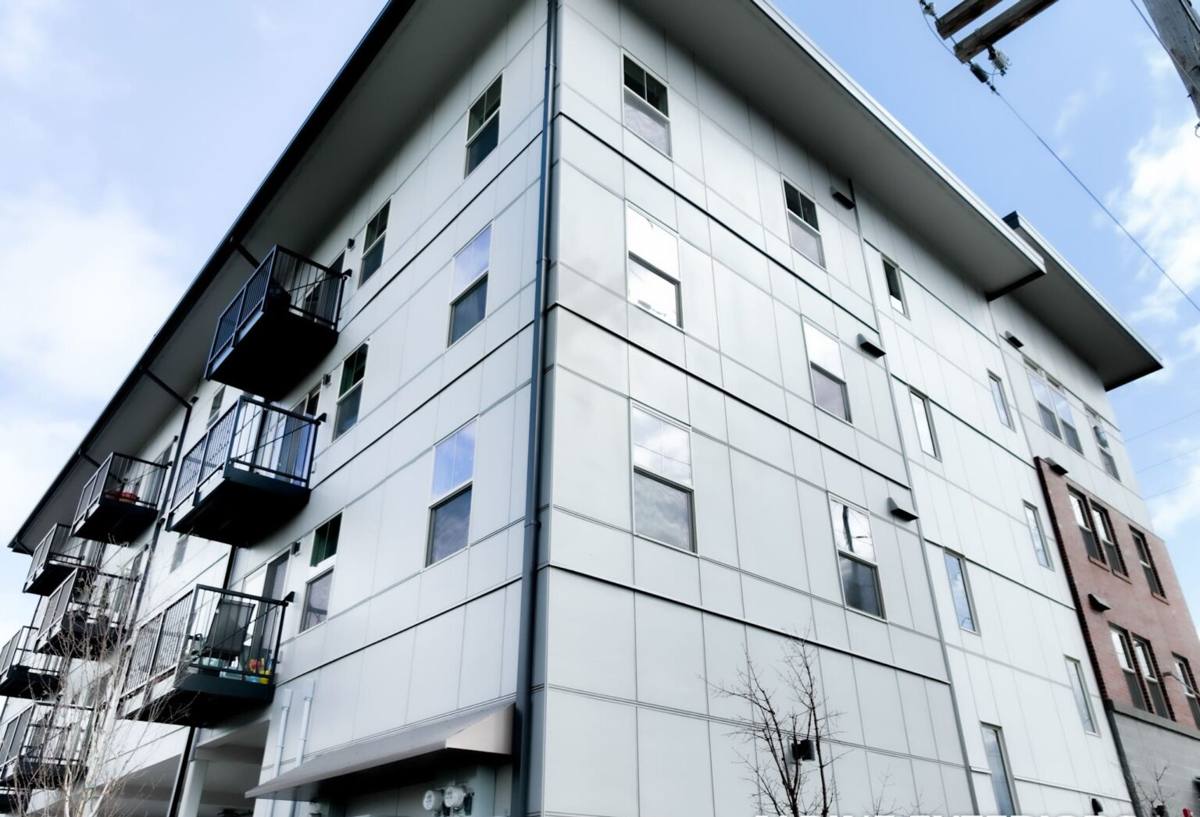
Signs Your Siding Needs Repair, Not Full Replacement
Most siding problems we see in Blaine start small and stay small — if they're caught and addressed correctly. Here's what typically signals a repair job rather than a full re-side:
- Isolated soft spots or visible swelling in one or two boards, usually near ground level, under windows, or at corners
- Cracked or split panels from impact damage, settling, or age, with the surrounding siding still sound
- Persistent moss or algae growth concentrated on the north or shaded side of the house, especially where tree cover blocks sun and airflow
- Gaps opening up at seams, corner boards, or trim where caulking has failed and pulled away
- Paint that's peeling or bubbling in specific patches rather than uniformly across the whole elevation
- Discoloration or staining that follows a seam or fastener line, which usually points to water tracking behind the siding rather than just a surface issue
The common thread in a true repair situation is that the damage is localized. When rot, warping, or moisture intrusion shows up broadly across multiple elevations, that's usually a sign the underlying material or the original installation has reached the end of what a patch can fix — and that's a different conversation.
What a Correct Siding Repair Actually Involves
Diagnosing Before Touching Anything
The first mistake in siding repair is treating it as a cosmetic fix. A board that looks bad on the surface can be hiding a wet, compromised area behind it. Before we replace or patch anything, we check what's happening underneath — whether the water-resistive barrier is intact, whether sheathing has softened, and whether the damage is contained or has spread further than the visible symptom suggests.
Matching Materials the Right Way
Repairing siding on an older Blaine home often means working with a material that isn't produced anymore, or matching a profile, reveal, and paint color closely enough that a patch doesn't stand out. This takes more care than swapping in whatever's on hand. When the existing siding is too far gone to patch invisibly in a given section, we'll walk you through honest options rather than forcing a mismatch.
Sealing It Correctly, Not Just Caulking Over It
A lot of siding "repairs" amount to smearing caulk over a problem and calling it done. In a climate with this much driving rain, that approach fails again within a season or two. Correct repair means re-establishing proper water-shedding laps, flashing where needed at penetrations and trim, and only using sealant where it's actually supposed to be doing the work — not as a substitute for correct overlap and drainage.
Checking What's Behind the Siding
Any time we open up a section of wall for repair, we take the opportunity to check the condition of the house wrap or building paper and the sheathing behind it. Catching a small moisture problem at this stage is far cheaper than discovering it later as structural rot.
Repair vs. Replacement: How We Help You Decide
| Factor | Points Toward Repair | Points Toward Replacement |
|---|---|---|
| Extent of damage | Limited to one or two areas | Spread across multiple elevations |
| Cause | Impact damage, isolated seal failure | Systemic moisture intrusion behind the wall |
| Material condition elsewhere | Rest of the siding is sound and holding paint well | Widespread cracking, warping, or delamination |
| Age of existing siding | Well within expected service life | At or past the end of its realistic lifespan |
| Match availability | Material or a close match is available | Discontinued profile with no reasonable match |
We'll always tell you honestly which side of that table your home falls on. A lot of Blaine homes we look at genuinely just need a repair — we're not in the business of upselling a full re-side when a targeted fix will hold.
When Repair Isn't Enough: Why We Rebuild With James Hardie
When a repair assessment turns up damage too widespread to patch honestly, or the existing siding material simply isn't holding up to this coastline anymore, we only rebuild with James Hardie fiber cement. That's a deliberate standard, not a sales preference. Hardie's fiber cement is non-combustible, doesn't absorb moisture the way wood-based sidings do, and holds its factory-applied ColorPlus finish through the kind of salt air and driving rain that strips paint off other materials year after year. We don't install vinyl, LP SmartSide, or cedar as a full re-side, because we've seen what this specific coastal climate does to them over time — and we'd rather build something once that holds up than come back and repair the same failure points every few years.
For an existing home with non-Hardie siding, that doesn't mean we won't repair what's there. It means that when the conversation shifts from "patch this section" to "this needs a new skin," Hardie is what we recommend and what we install.
Our Process for a Blaine Repair Call
- Walk the exterior. We look at every elevation, not just the spot you called about — problems in this climate rarely stay isolated for long.
- Check behind the damage. Any suspect area gets opened up enough to confirm what's happening at the sheathing and water barrier level.
- Give you a straight assessment. Repair, partial replacement, or full re-side — we tell you which one your house actually needs and why.
- Match or replace correctly. Repairs are done with proper laps, flashing, and fastening, not just cosmetic patching.
- Clean up and walk you through it. You'll know what was found, what was fixed, and what to keep an eye on going forward.
Why a Crew That Already Works Blaine and Birch Bay Matters
Coastal Whatcom County siding work isn't the same job as siding work forty miles inland. A crew that's spent time on homes along this stretch of the county knows where moss tends to build up fastest, which elevations take the worst of the driving rain, and what salt exposure does to fasteners and trim over a few winters. That's the kind of judgment that shows up in a diagnosis, not just in a repair. It also means we're not learning the local permitting and inspection expectations on your dime, and we're realistically able to get to your home and follow up without treating Blaine as an out-of-the-way stop.
Keeping Repaired Siding From Becoming a Repeat Job
A repair done correctly should hold — but a little maintenance keeps it that way, especially given how much moss and moisture pressure this area sees:
- Rinse moss and algae off shaded or north-facing walls at least once a year before it has a chance to hold moisture against the siding
- Trim back vegetation and tree branches that keep a wall shaded and damp longer than the rest of the house
- Re-check caulking at trim, corners, and penetrations every couple of years — it's cheaper to redo a bead of sealant than to repair what happens when it fails unnoticed
- Keep gutters and downspouts clear so runoff isn't sheeting down a wall section repeatedly
- Walk the exterior after major windstorms to catch impact damage or lifted panels early
What Affects the Cost of a Repair
| Factor | Why It Matters |
|---|---|
| Extent of hidden moisture damage | Determines whether sheathing or framing repair is needed, not just siding |
| Material match difficulty | Discontinued profiles or colors take more time to source or blend in |
| Access and elevation | Second-story or hard-to-reach sections take longer and need more setup |
| Number of separate repair areas | Multiple small spots across the house add mobilization time versus one contained area |
| Trim and flashing involved | Repairs that touch window, door, or corner flashing require more careful sequencing |
We give straightforward, written assessments so you know what you're paying for and why — no vague "it depends" left unexplained.
If you're seeing soft spots, cracked panels, persistent moss, or gaps opening up on your Blaine or Birch Bay home, we're happy to take a look. The estimate is free, there's no pressure attached to it, and you'll get an honest answer about whether your siding needs a repair or something more.