 Birch Bay Siding
 Roofing a Home Near the Water at Cottonwood Beach
Cottonwood Beach sits close enough to Birch Bay and the Strait of Georgia that homes here take on a different kind of weather stress than a roof ten miles inland. Salt-laden air corrodes metal fasteners and flashing faster than most manufacturers' warranties assume. Wind-driven rain off the water pushes moisture sideways into laps and seams that would stay dry on a calmer site. And the shaded, moisture-heavy tree cover common around Whatcom County means moss and algae get a long head start every year, sometimes never fully drying out between storms. A new roof installed here needs to be specified and built with those three things in mind from day one, not treated the same as a roof going on a house in a drier part of the state.
This page covers what a correct new roof installation looks like specifically for Cottonwood Beach properties: material choices that hold up to salt and moss, the underlayment and ventilation details that actually matter in this microclimate, and how our process works from first look to final walk-through.
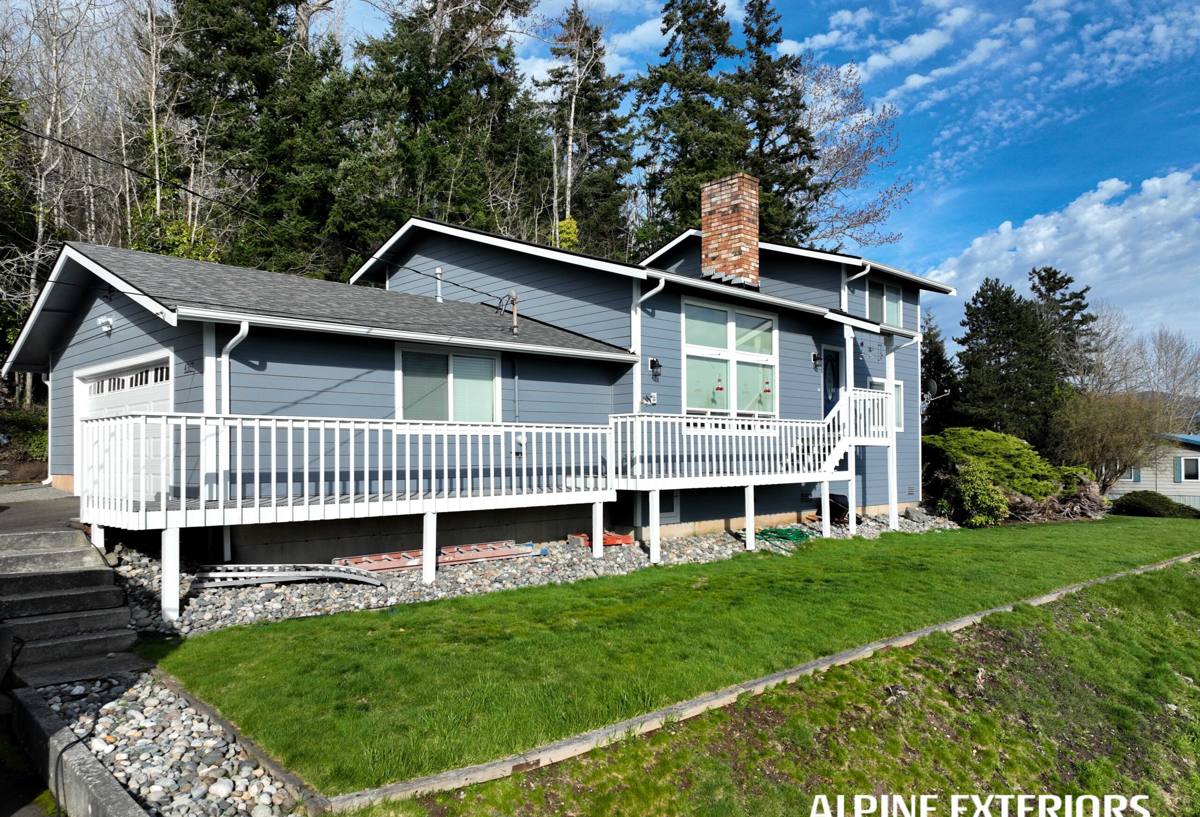
Why Coastal Exposure Changes the Job
Salt Air and Metal Components
Every roof has metal in it somewhere — flashing, drip edge, fasteners, vent stacks, sometimes a standing-seam panel. Near the water, plain galvanized steel corrodes noticeably faster than it does even a few miles inland. We spec corrosion-resistant flashing and fastener packages for Cottonwood Beach jobs rather than defaulting to whatever is standard for a drier inland install. It costs a little more up front and saves the homeowner a flashing failure a decade sooner than expected.
Driving Rain and Wind Uplift
Storms coming off open water tend to drive rain at an angle instead of straight down, which stresses roof edges, ridge lines, and valleys — the places most vulnerable to wind-driven water intrusion. It also means wind uplift at eaves and rakes is a real consideration, not a formality. We pay close attention to fastening patterns and edge detailing on homes with direct or partial water exposure, because that's where a marginal install shows its weakness first.
Moss, Algae, and Shade
Whatcom County's tree cover and marine humidity give moss an unusually long growing season. Once moss establishes on a roof, it holds moisture against the surface, lifts shingle edges, and accelerates granule loss. A new roof installation is the best opportunity to get ahead of this — through material selection, proper ventilation that helps surfaces dry faster, and, where the homeowner wants it, algae-resistant shingle options.
What a Correct Roof Installation Includes
A new roof is more than shingles nailed to plywood. The parts that actually determine how long it lasts — and whether it leaks — are mostly things you won't see once the job is done.
- Full tear-off and inspection of the roof deck, with any soft, delaminated, or water-stained plywood replaced before anything new goes down
- Ice-and-water shield or self-adhered membrane at eaves, valleys, and any low-slope transitions, sized appropriately for a coastal-humidity climate
- Synthetic underlayment across the full deck as a secondary water barrier
- Corrosion-resistant drip edge and step/counter flashing at every wall, chimney, and roof-to-roof intersection
- Balanced intake and exhaust ventilation, sized to the attic volume, not just a couple of vents added for looks
- Correct fastening pattern and nail placement for the specific shingle or panel product, matched to the manufacturer's high-wind installation instructions where applicable
- Valley detailing built for heavy water volume, not a minimum-code shortcut
- Final cleanup including magnetic nail sweep of the yard and driveway
Skip any one of these and the roof might still look fine from the street for a few years. The failures that show up later — soft decking, leaking valleys, rusted flashing, premature granule loss — almost always trace back to one of these steps being rushed or skipped.
Roofing Material Options for Cottonwood Beach
There isn't one "correct" material for every home — it depends on budget, roof pitch, architectural style, and how much maintenance the homeowner wants to take on. Here's how the common options stack up for a coastal, moss-prone site like this one.
| Material | Coastal/Salt Performance | Moss Resistance | Typical Lifespan | Maintenance |
|---|---|---|---|---|
| Architectural asphalt shingle | Good with corrosion-resistant flashing package | Better with algae-resistant (SBS/copper-infused) product line | 25–30 years | Periodic moss/debris removal |
| Standard 3-tab asphalt shingle | Fair; shorter-lived in wind-driven rain exposure | Standard, no built-in resistance | 15–20 years | More frequent moss removal |
| Standing-seam metal | Excellent when specified in a coastal-rated finish | Very good — sheds moisture, little surface for moss to grip | 40–50+ years | Low |
| Cedar shake | Requires diligent maintenance near salt air and shade | Poor without regular treatment | 20–25 years with upkeep | High |
For most Cottonwood Beach homes, a mid-to-upper-tier architectural shingle with an algae-resistant rating and a properly upgraded flashing package hits the right balance of cost, appearance, and durability. Standing-seam metal is worth a serious look for homes with more direct wind or salt exposure, or for owners who want to minimize maintenance over the long run.
Ventilation: The Detail That Gets Overlooked
A roof that can't breathe traps moisture underneath the deck, which shortens the life of the roofing material from below while also feeding the exact algae and moss growth problem from above. In a humid, tree-shaded coastal environment, proper intake ventilation at the eaves paired with exhaust at the ridge isn't optional — it's one of the biggest factors in whether a new roof reaches its full expected lifespan. When we quote a new roof installation, we look at the existing attic ventilation as part of the job, not as an afterthought, and we'll tell you plainly if it needs to be corrected.
Our Process for a Cottonwood Beach Roof Replacement
1. On-Site Assessment
We walk the roof and attic, check deck condition, existing ventilation, flashing details, and any signs of past leaks or moss damage. We also look at the home's specific exposure — how much direct wind and salt spray it's likely getting given its position and tree cover.
2. Written Scope and Material Recommendation
You get a clear, itemized scope: tear-off, deck repair allowance, underlayment type, flashing package, material choice, and ventilation work if needed. No vague line items and no pressure toward the most expensive option — we'll tell you honestly where you can save money and where it's not worth cutting corners for this location.
3. Installation
Tear-off, deck inspection and repair, underlayment, flashing, roofing material, and ventilation, installed in that order with each step checked before moving to the next. We protect landscaping and driveways during tear-off and haul debris off site as part of the job.
4. Final Walk-Through
We walk the finished roof and attic ventilation with you, answer questions about care and warranty coverage, and make sure the yard is clean before we consider the job done.
Maintenance After Installation
Even a well-built roof in this climate benefits from basic upkeep. This isn't about babying the roof — it's a short list that meaningfully extends its life on a shaded, coastal lot.
- Clear gutters and valleys of needles and debris at least twice a year, more often under heavy tree cover
- Have moss treated or removed before it establishes rather than after it's visibly thick
- Keep overhanging branches trimmed back to reduce shade and debris buildup
- Have flashing and sealant points checked periodically, especially after major windstorms
- Address any interior ceiling staining or attic moisture signs promptly rather than waiting
Why Local Experience on This Site Matters
A contractor who hasn't worked this specific stretch of coastline can spec a roof that's technically code-compliant and still underperform here — using standard flashing where corrosion-resistant hardware belongs, or skipping the ventilation upgrade that keeps moss from taking over within a few years. We've installed and repaired roofs across Whatcom County and know how differently a home a few blocks from the water behaves compared to one further inland. That local pattern recognition is part of what you're paying for when you hire a crew that already knows the area, not just the roofing trade in general.
Get a Free, No-Pressure Estimate
If your Cottonwood Beach home needs a new roof or you're not sure whether repair or full replacement makes more sense, we're happy to take a look and give you a straightforward assessment. Use the form below to request a free estimate — there's no obligation and no pressure, just an honest read on where your roof stands and what it would take to get it right.