 Birch Bay Siding
 Fiber Cement, Installed for Custer's Specific Conditions
Custer sits close enough to the water and the Canadian border that its siding problems aren't hypothetical — they show up as chalky, faded south walls, moss creeping up from the foundation line, and trim that's gone soft from years of wind-driven rain finding its way behind a joint that should have been sealed better the first time. When we talk about fiber cement siding for a Custer home, we're not talking about a generic upgrade. We're talking about a specific material choice, installed a specific way, to handle three conditions that this stretch of Whatcom County deals with more consistently than most: salt-laden air, rain that rarely falls straight down, and a moss season that runs most of the year on shaded lots.
This page is about that one job — fiber cement siding, done right, on a Custer property — not a general rundown of siding options. If you want the fuller case for why we install James Hardie exclusively and nothing else, that's a separate conversation. Here, the focus is narrower: what your house actually needs, what a correct install looks like, and how our process works from first walk-through to finished wall.
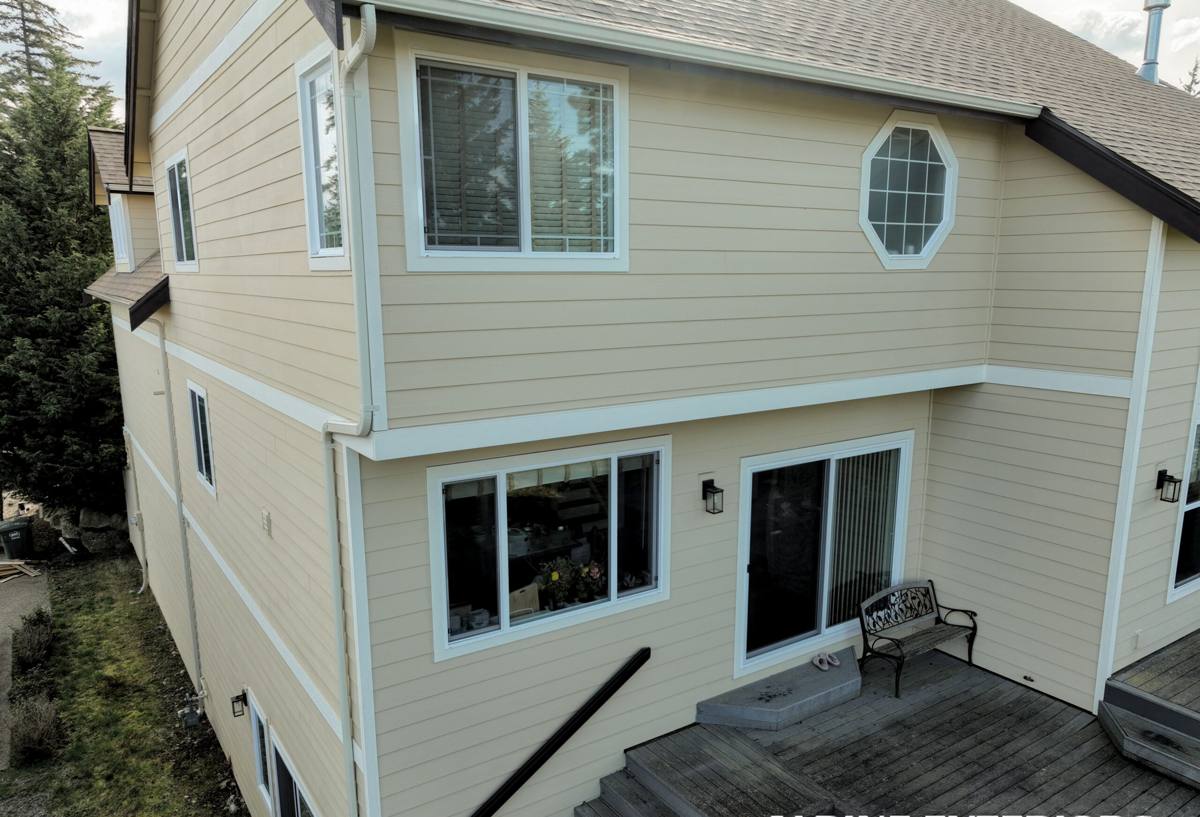
What Custer Homes Are Actually Up Against
None of the three conditions below is unusual for western Washington. What's unusual is how consistently they stack together in Custer, given its proximity to the water and the amount of tree cover on a lot of residential lots in the area.
Salt Air
Airborne salt doesn't stay confined to waterfront lots. It moves with the wind, and in a town this close to the coast, it reaches siding, fasteners, and trim hardware on properties that don't have a water view at all. Salt exposure speeds up the breakdown of lower-grade finishes and accelerates corrosion on fasteners that aren't rated for it — a slow process that shows up as fading, chalking, or rust streaking years after installation, not right away.
Driving Rain
Rain that comes in sideways is a different engineering problem than rain that falls straight down. It gets pushed into lap joints, under trim, and into any seam where flashing or caulking isn't done to spec. A siding system that only has to shed water vertically has an easier job than one that has to keep wind-pushed water out of horizontal seams, which is the reality for most walls on a Custer home for a good portion of the year.
A Long Moss Season
Mild temperatures combined with steady moisture mean moss and mildew don't take a season off here the way they do in drier climates. Shaded, tree-lined lots — common throughout Custer — stay damp longer after a rain, and that's exactly the condition moss needs to establish itself on a siding surface. Once organic growth takes hold, it holds moisture against the wall behind it, which is where a lot of long-term siding problems actually start.
Why Fiber Cement Is the Right Match
Fiber cement is a blend of Portland cement, sand, and cellulose fiber, cured into rigid boards. It's inorganic, which means it doesn't have a wood-based or petroleum-based core that can absorb water and swell, rot, or feed insects. That single structural fact is why it holds up differently than wood-based or vinyl siding under sustained coastal moisture exposure — the core itself isn't the weak point the way it can be with other materials.
We install James Hardie's HZ5 product line specifically, which is engineered for climates with freeze-thaw cycles and sustained moisture rather than for hot, dry regions. That distinction matters more than it sounds like on paper: a fiber cement product engineered for the wrong climate zone doesn't perform the same way here as it would in the market it was actually designed for.
How Fiber Cement Compares Under Custer's Conditions
| Material | Salt Air Behavior | Wind-Driven Rain Behavior | Moss/Moisture Behavior |
|---|---|---|---|
| James Hardie fiber cement (HZ5) | Factory ColorPlus finish resists salt-accelerated fading better than field-applied coatings | Rigid boards and correct flashing detail hold up to sideways rain when installed to spec | Inorganic core doesn't feed moss growth; surface can still need periodic washing |
| Vinyl | Coating and material can chalk and become brittle faster under salt exposure over time | Lapped, non-sealed joints aren't built to resist sustained wind-driven rain | Won't rot, but moss and mildew still colonize the surface in shaded, damp spots |
| Engineered wood | Performance depends on the factory coating and every cut edge staying fully sealed | Wood-fiber core is vulnerable if water gets past a compromised seam or edge | Organic core is a real liability if moisture gets past the surface for any length of time |
| Cedar / primed wood | Salt air speeds up finish breakdown, requiring more frequent repainting or staining | Dependent entirely on an intact paint or stain film to keep water out | Organic surface is highly hospitable to moss and mildew in a damp climate |
This isn't a claim that every other material fails here — it's a summary of the trade-offs, and why fiber cement, specifically engineered for this climate zone, is the material we recommend and the only one we install.
What a Correct Fiber Cement Install Actually Involves
Fiber cement's real-world performance depends heavily on installation quality. A rushed or out-of-spec install can undercut a good material, and that's especially true in a climate where the margin for error on water management is thin.
| Installation Detail | Why It Matters in Custer |
|---|---|
| Manufacturer-specified clearances from grade, roofline, and decks | Keeps splash-back and standing moisture off the bottom edge of the board |
| Correct fastener type, spacing, and depth | Prevents cracking and keeps the water-resistive barrier behind the siding intact |
| Flashing at every window, door, and penetration | Directs wind-driven rain away from seams instead of letting it collect there |
| Factory-cut edges used wherever the layout allows | Preserves the factory finish's protection; field cuts get sealed per spec |
| Rain screen or drainage plane behind the siding | Lets any moisture that does get past the surface drain and dry instead of sitting against the sheathing |
| Corrosion-resistant fastener and trim hardware | Salt-laden air accelerates corrosion on hardware that isn't rated for it |
Every one of these details is available in James Hardie's published installation specifications, and every one of them is a place where a crew can cut a corner without it being obvious for years. That's part of why manufacturer certification and local experience both matter more than they might seem to on a quick estimate.
Our Process, Start to Finish
A siding job on a Custer home generally moves through the same sequence, though the details shift depending on what's underneath the existing siding once it comes off.
- Walk-through and estimate. We look at the current siding, note problem areas — moss buildup, soft trim, past water intrusion — and talk through what we'd expect to find once we open the wall up.
- Tear-off and sheathing inspection. Old siding comes off and we inspect the sheathing and water-resistive barrier underneath for rot or prior moisture damage before anything new goes up.
- Repairs and drainage plane installation. Any compromised sheathing gets addressed, and a rain screen or drainage plane goes in behind the new siding so moisture that gets past the surface has somewhere to go.
- Flashing and trim detailing. Windows, doors, and any wall penetrations get flashed before siding installation begins, since this is the step that determines how well the wall handles wind-driven rain long-term.
- Fiber cement installation to manufacturer spec. Boards go up with correct clearances, fastener placement, and factory-cut edges wherever the layout allows.
- Final inspection and walk-through. We walk the finished job with you, point out anything worth knowing for future maintenance, and answer questions before calling it done.
Choosing a Profile for a Custer Home
Most homes in the area go with HardiePlank lap siding, which gives the traditional horizontal reveal most buyers expect in this region. HardiePanel vertical siding shows up as an accent on gables or more modern builds, and HardieShingle is an option where a homeowner wants a shingle look without the maintenance burden of actual cedar shingles. The right choice usually comes down to the home's existing architecture and what's already on neighboring properties, more than any performance difference between the profiles themselves — all three carry the same HZ5 core engineering.
Maintenance That Actually Fits This Climate
Fiber cement is genuinely lower-maintenance than wood-based siding, but "low-maintenance" doesn't mean "no maintenance," particularly with a moss season that runs most of the year here. A short, realistic maintenance routine keeps a correctly installed system performing the way it's supposed to.
- Rinse the exterior gently once or twice a year to clear pollen, dust, and early moss growth before it establishes — a garden hose or low-pressure wash, not a high-pressure sprayer that can force water behind trim.
- Check caulked joints around windows and trim annually for cracking or gaps, and have them redone before they become an entry point for wind-driven rain.
- Keep gutters clear and downspouts directed away from the foundation so runoff isn't sheeting down the siding face.
- Trim back vegetation and tree limbs that keep a wall shaded and damp longer than the rest of the house — this is often the single biggest factor in where moss establishes first.
- Watch for any soft spots, discoloration, or staining near the bottom courses, which can indicate a drainage or flashing issue worth having looked at before it spreads.
Why It Matters That We Already Work in Custer
A lot of what determines whether a fiber cement install holds up here isn't in the manufacturer's spec sheet — it's judgment calls about a specific lot: how much shade a wall gets, how exposed a property is to salt air given its distance from the water, whether the existing trim details need extra attention before new siding goes over them. A crew that's already worked on homes in this town has seen those patterns repeat across different properties and knows where to look before problems start, rather than learning the area's quirks on your job.
There's also a practical side: permitting requirements, typical sheathing conditions in older Custer homes, and realistic weather windows for tear-off work are all things that go smoother with local experience behind them. None of that shows up on a glossy brochure, but it shows up in how the job actually goes.
What to Ask Before You Commit
Whether you end up hiring us or someone else, these are worth asking any contractor bidding a fiber cement job in this area:
- Are you a manufacturer-certified installer for the specific product line you're proposing?
- What HZ climate zone is the board engineered for, and does it match this region?
- What does the installation spec call for at clearances, flashing, and fastener placement — and will that be in writing?
- Is a rain screen or drainage plane included, or is the siding going straight over the existing barrier?
- What does the warranty actually cover, and does it transfer if you sell the home?
If you're weighing a re-side or new install in Custer and want a straight answer about what your home's siding actually needs, we're glad to come take a look. Reach out using the form below to schedule a free, no-pressure estimate.