 Birch Bay Siding
 Building Decks for Lynden Homes in a Wet, Salt-Touched Climate
Lynden sits inland from the water compared to Birch Bay proper, but it shares the same Whatcom County weather pattern: long stretches of steady rain, a marine air mass that carries moisture and salt off the Strait of Georgia and Puget Sound, and a moss season that can run from fall through spring. A deck built here doesn't fail because the design was wrong — it fails because the materials, fasteners, or framing details weren't matched to what this specific climate does to wood and metal over time.
We build custom decks for homeowners throughout the Birch Bay area, including Lynden, and we've seen what holds up and what doesn't. This page covers what a Lynden deck actually needs, what a correct build involves, and how we approach the job from first estimate to final walkthrough.
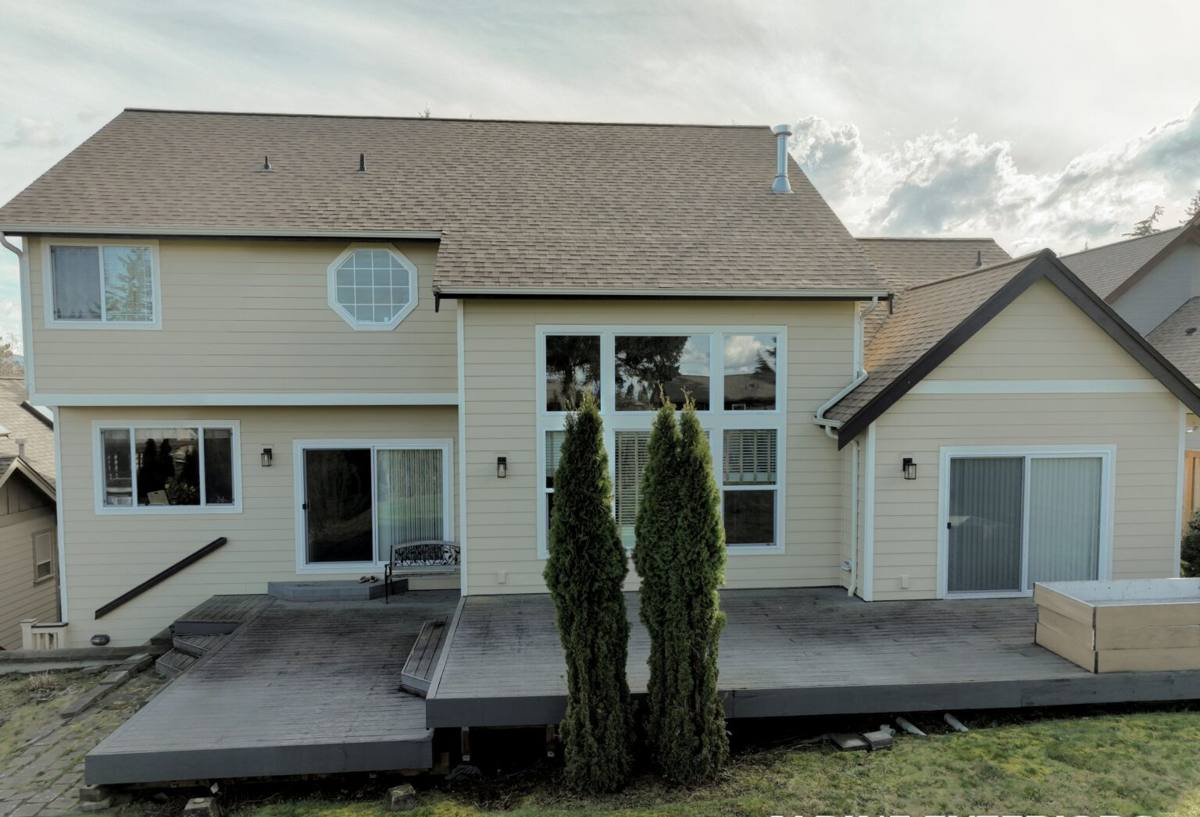
What This Climate Does to an Unprotected Deck
Before talking about materials or process, it helps to understand the specific stresses a deck in this region faces. None of these are dramatic on their own, but they compound year after year:
- Constant low-grade moisture — not just rain events, but fog, dew, and humidity that keep wood damp longer than in drier climates, which is what actually drives rot, not rainfall totals alone.
- Moss and algae growth — shaded decks, north-facing decks, and decks under tree cover stay damp long enough for moss to take hold, and moss holds water against the surface even longer.
- Salt-laden air — even set back from the water, prevailing marine winds carry enough salt to accelerate corrosion on unprotected metal fasteners, hinges, and hardware.
- UV exposure between rain systems — Whatcom County isn't sunny year-round, but the summer stretches are enough to dry out and check wood that wasn't sealed or finished correctly.
Individually, none of these will destroy a deck in a season. Together, over ten or fifteen years, they're exactly why some decks in this area are still solid decades later and others are soft, mossy, and structurally questionable after less than ten.
Choosing the Right Decking Material for a Lynden Property
There's no single "best" decking material — there's a best material for your budget, your maintenance appetite, and how much sun or shade your deck actually gets. Here's how the common options compare for this climate specifically:
| Material | Upfront Cost | Maintenance | Moisture/Moss Resistance | Typical Lifespan Here |
|---|---|---|---|---|
| Pressure-treated wood | Lowest | Annual cleaning, periodic sealing/staining | Fair — needs upkeep to stay ahead of moss and checking | 10–15 years before major repairs |
| Cedar | Moderate | Regular oiling or sealing to hold color and resist moisture | Good natural rot resistance, but still needs care | 15–20 years with consistent maintenance |
| Composite decking | Higher | Occasional washing, no staining or sealing | Very good — won't rot, but caps can still host surface moss if not cleaned | 25–30 years |
| Capped PVC decking | Highest | Lowest — soap and water | Excellent — fully sealed surface resists moisture and staining | 25–30+ years |
For a Lynden deck that gets real shade from mature trees or the house itself, we lean homeowners toward composite or capped PVC, simply because those surfaces don't give moss the same foothold that raw wood grain does. For a deck in more open sun with good airflow, a well-maintained cedar or treated-wood deck can perform just fine and costs less to build.
Why We Don't Push Bare Untreated Wood
Some lower-grade or reclaimed lumber shows up in budget deck quotes because it's cheap upfront. Our standard is to avoid it for structural or surface use in this climate — untreated wood simply doesn't have the moisture resistance to justify the labor cost of building it, and the maintenance burden it creates isn't a fair trade for the initial savings. If budget is the priority, pressure-treated lumber with a proper finish schedule gets you a lower cost without that same risk.
Framing and Structure: What's Underneath Matters More Than the Decking
The boards you walk on get all the attention, but the framing underneath is what determines whether a deck is safe and long-lasting. A few details we treat as non-negotiable on every build:
Ledger Attachment and Flashing
Where a deck attaches to the house is the single most common failure point we see on older decks in this region — a poorly flashed ledger board lets water track behind the siding and into the rim joist, which can rot both the deck structure and the wall framing behind it before it's ever visible from outside. Correct flashing detail here isn't optional.
Joist Protection
Cut ends and drilled holes in treated lumber expose untreated wood underneath. We seal cut ends and use joist tape on top of joists so fasteners and standing moisture don't have a direct path into the framing.
Footings and Post Bases
Whatcom County's wet ground means posts sitting directly on or near soil are asking for trouble. Post bases that hold the post above grade, combined with footings set to the correct depth, keep the structural wood out of standing moisture.
Fasteners and Hardware: The Detail Most Decks Get Wrong
This is where the salt-air factor really shows up. Standard coated screws and joist hangers can start showing corrosion streaks within a few years in a marine-influenced climate — and once a fastener is compromised, the connection it's holding is compromised too. We use stainless steel or high-grade coated fasteners and hardware rated for exterior, coastal-adjacent use throughout the structural connections, not just the visible surface screws. It costs more per fastener; it's not a place to cut corners on a deck that's supposed to last decades.
Our Process for a Custom Deck Build in Lynden
- On-site walkthrough and estimate — we look at sun/shade exposure, drainage, existing structure (if replacing a deck), and how you actually plan to use the space before recommending materials.
- Design and material selection — sizing, layout, railing style, and decking material matched to your budget and the site's specific exposure.
- Permitting — deck permits are handled through the applicable local jurisdiction; we manage that paperwork so you don't have to.
- Demolition and site prep (if replacing an existing deck) — including an honest look at whether the ledger and framing behind the old deck need repair before we build on top of it.
- Framing — footings, posts, ledger flashing, and joists built to the structural detail described above.
- Decking, railing, and finish work — installed to manufacturer spec for whichever material you've chosen.
- Final walkthrough — we go over the finished deck with you, including what maintenance (if any) it needs going forward.
Keeping a Lynden Deck in Good Shape Year-Round
Even the right materials and correct framing benefit from basic seasonal care. This is the maintenance rhythm we recommend to homeowners in this climate:
- Sweep leaves and debris off the deck surface regularly through fall — trapped organic matter is what starts moss and mildew growth fastest.
- Rinse or wash the deck surface at least once or twice a year to clear early moss and pollen buildup before it gets established.
- For wood decks: inspect the finish annually and plan to reseal or restain on the schedule appropriate to that product, typically every 1-3 years.
- For composite or PVC decks: an occasional soap-and-water wash is usually all that's needed — avoid pressure washing at close range, which can damage the surface texture.
- Check railings and stair connections once a year for any looseness — this is often the first sign of a fastener or framing issue worth addressing early.
- Keep gutters and downspouts near the deck clear so runoff isn't draining directly onto or under the structure.
Why Hiring a Crew That Already Works This Area Matters
A deck built to a generic national spec sheet isn't necessarily built for Whatcom County. A crew that regularly works Birch Bay, Lynden, and the surrounding area already knows which fastener grades hold up, which decking materials handle moss exposure well, and how local ledger and flashing details need to be handled given how wet this region stays for most of the year. That local experience shows up in the parts of the deck you can't see — the framing, the flashing, the hardware — years before it would ever show up as a problem on the surface.
We're not guessing at what this climate does to a deck. We're building around it, on every project, because it's the same climate every time.
Get a Free Estimate for Your Lynden Deck Project
If you're planning a new custom deck or need to replace one that's showing its age, we're happy to come take a look and give you an honest, no-pressure estimate — including a straight answer on whether your existing structure can be built on or needs to start fresh. Use the form below to get started.