 Birch Bay Siding
 Windows Built for a Salt Air, High-Rain Climate
Homes in and around Birch Bay Village sit close enough to the water that salt air is a daily fact of life, not an occasional nuisance. Add Whatcom County's long wet season, frequent wind-driven rain off the Strait, and the moss and algae growth that comes with months of overcast, damp weather, and you have a climate that is genuinely harder on windows than most inland parts of the state. Standard big-box windows and generic installation methods are not built with this combination in mind, and it shows up as failed seals, fogged glass, corroded hardware, and soft trim within a few years instead of decades.
Custom windows for this area aren't about fancy shapes or upgraded trim packages for their own sake — though we do that too. They're about matching the frame material, glazing, flashing, and installation detailing to what a Birch Bay Village home actually has to withstand: salt-laden air, sideways rain, and a shoulder season that stays wet longer than a typical Puget Sound calendar suggests.
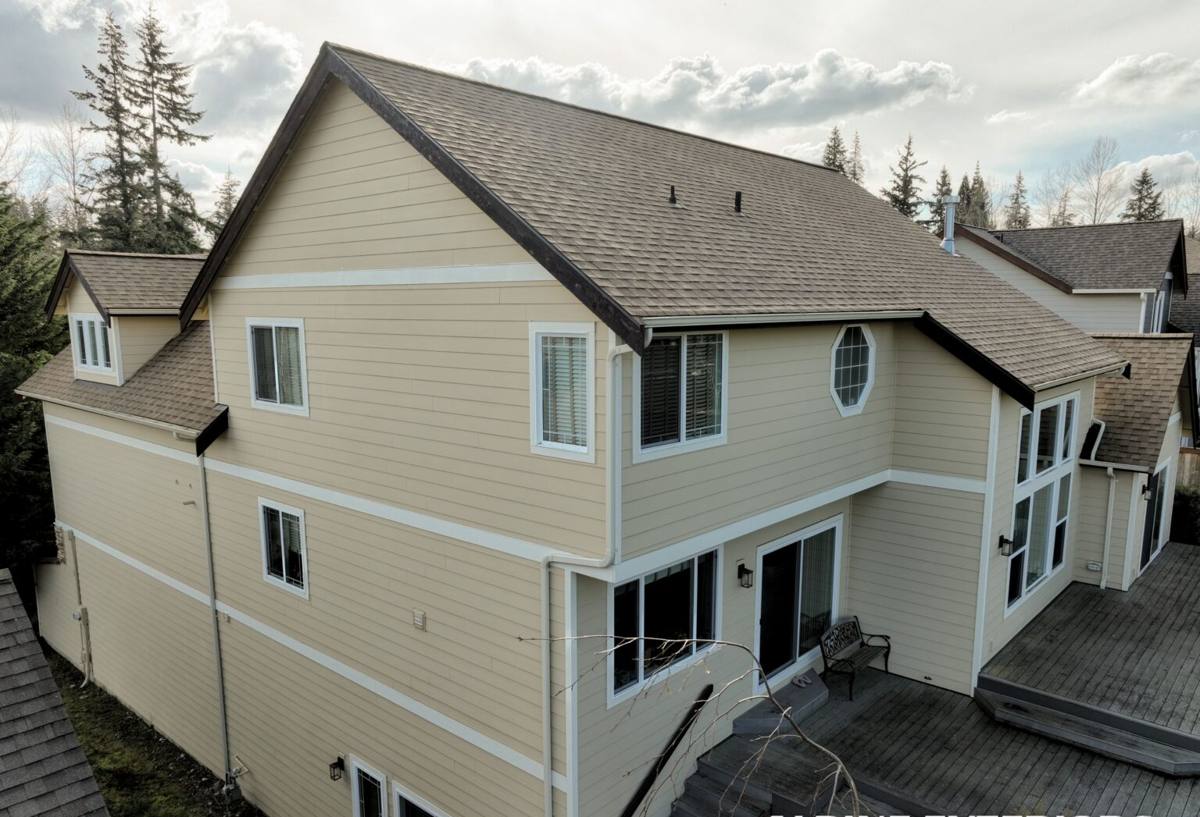
What Salt Air, Driving Rain, and Moss Season Actually Do to Windows
Salt Air
Airborne salt is corrosive to metal hardware — hinges, locks, balance systems, and screen frames — even on homes that aren't technically waterfront. It settles into weep holes and tracks, where it mixes with moisture and accelerates pitting on lower-grade aluminum components. Over time this shows up as stiff or seized hardware, streaking on the frame finish, and weep systems that no longer drain properly.
Driving Rain
Wind off the water doesn't just bring rain straight down — it pushes it sideways and up under trim, sills, and poorly lapped flashing. A window that would perform fine in a calmer inland location can leak here if the head flashing, sill pan, and weather-resistive barrier tie-in aren't detailed correctly. Most water intrusion problems we find aren't a bad window — they're a window installed without proper flashing sequence for a wind-driven-rain environment.
Moss Season
Whatcom County's wet season runs long, and shaded or north-facing walls stay damp for extended stretches. That moisture supports moss and algae growth on sills, trim, and cladding around window openings. Left unmanaged, that constant dampness works into any gap in the caulking or trim and can lead to wood rot in the framing around the window — a much more expensive repair than the window itself.
What a Correct Custom Window Installation Involves
"Custom" starts with measuring and fabrication, but the part that actually determines how the window performs in this climate is the installation detailing. A correct job includes:
- Removing the old window and inspecting the rough opening and sheathing for hidden rot or water staining before anything new goes in
- Installing a sloped sill pan so any water that does get past the exterior seal drains back outside instead of sitting in the frame
- Properly lapped flashing tape and integration with the home's weather-resistive barrier, in the correct shingle-style sequence so water always sheds downward and outward
- Backer rod and high-quality exterior sealant at the perimeter, sized and applied for movement and UV exposure — not just a bead of caulk around the trim
- Correct shimming and fastening so the window operates smoothly and doesn't rack the frame, which is what causes premature seal failure
- Interior air-sealing with low-expansion foam or backer rod, separate from the exterior seal, so the assembly manages moisture in both directions
Skip any one of these steps and the window itself — no matter how good — is working against a compromised installation.
Choosing the Right Frame Material for This Location
Frame material matters more here than in a drier, calmer climate, because it determines how the window handles years of salt exposure and moisture cycling.
| Frame Material | Salt/Corrosion Resistance | Maintenance | Typical Cost Tier |
|---|---|---|---|
| Vinyl | Good — doesn't corrode, but hardware quality varies by manufacturer | Low; occasional track and weep cleaning | Lower to mid |
| Fiberglass | Excellent — very stable, resists warping and corrosion | Low | Mid to higher |
| Wood-clad | Good on the exterior clad side; interior wood needs protection from any moisture intrusion | Moderate; relies on the seal staying intact | Higher |
| Bare Aluminum | Weakest in this climate without a quality finish; prone to corrosion and condensation | Higher; hardware and finish need monitoring | Lower to mid |
We don't push one material on every job. A vinyl or fiberglass window with quality hardware and a proper glazing package is a sound, cost-effective choice for most Birch Bay Village homes. Wood-clad windows can be the right call for a specific architectural look, as long as the homeowner understands the seal has to be maintained. We're generally cautious about bare aluminum in this location — not because it can't be made to work, but because the corrosion resistance and condensation performance require a higher-grade product and finish than what's typically offered, and the maintenance burden falls on the homeowner over time.
Glass and Weatherstripping Considerations
Dual-pane, low-E glass is the practical baseline for this climate — it manages heat loss on cold, damp days and cuts down on condensation on the interior pane. Triple-pane glass adds further insulation and sound dampening, which is worth considering for homes closer to the water where wind noise is more noticeable, though it comes at a higher cost and added weight. Whichever glass package you choose, compression-style weatherstripping holds up better to salt air and driving rain than lighter-duty fin seals, because it maintains a tighter seal as the frame expands and contracts with temperature and moisture.
Signs Your Current Windows Are Already Losing the Fight
Because salt air and moisture-related failures happen gradually, many homeowners don't notice until the damage has spread beyond the window itself. Watch for:
- Fogging or moisture between panes — a sign the seal has failed and the insulating gas has escaped
- Hardware that's stiff, hard to lock, or visibly corroded
- Soft or discolored trim and sill material around the window opening
- Drafts or a noticeable temperature difference near the window on windy days
- Visible moss, algae, or persistent dampness on the sill or surrounding trim
- Paint or finish that's bubbling or peeling near the window frame
Any one of these on its own may just mean the window needs attention. Several together, especially soft trim combined with fogging, usually means moisture has already gotten into the wall assembly and the fix needs to go beyond just swapping the glass unit.
What Drives the Cost of a Custom Window Project
Every home and opening is different, so we don't quote in general ranges over the phone — but these are the factors that most affect the price of a given project:
| Factor | Why It Matters |
|---|---|
| Full-frame vs. insert replacement | Full-frame replaces the entire unit including flashing and is necessary when there's existing rot or a frame upgrade; insert replacement reuses the existing frame and is faster but only appropriate when that frame is sound |
| Frame material and glass package | Fiberglass and triple-pane glass cost more upfront than vinyl and dual-pane, but may offer better long-term performance in this climate |
| Number and size of openings | Larger openings and specialty shapes require more custom fabrication and labor |
| Condition of the existing rough opening | Hidden rot or water damage found during removal adds repair scope before the new window can go in correctly |
| Trim and exterior detailing | Matching existing trim profiles or upgrading exterior detailing adds time and material |
We walk every project in person before quoting so the estimate reflects the actual opening and its condition, not a generic per-window price.
Our Process, Start to Finish
- On-site assessment — We look at each window opening, check for existing moisture or rot damage, and talk through what you're trying to solve (efficiency, comfort, appearance, or a known leak).
- Product selection — We walk through frame material, glass package, and finish options suited to a coastal Whatcom County home, matched to your budget and the home's style.
- Written estimate — A clear, itemized quote with no surprise add-ons once work starts.
- Installation — Old windows removed, openings inspected and repaired if needed, new units installed with correct flashing, sill pan, and sealant detailing.
- Final walkthrough — We check operation, seals, and cleanup with you before calling the job done.
Why a Crew That Already Works Birch Bay Village Matters
A window installer who mostly works drier, inland jobs can put in a technically fine window and still get a callback in a year because they didn't detail the flashing for wind-driven rain, or they didn't think twice about hardware finish near the water. Working regularly in this area — with its combination of salt exposure, coastal wind, and a long moss season — means we're not guessing at how a given product or installation method holds up here. We've seen what fails and why, and we build the job around avoiding those failure points from the start rather than fixing them later.
It also means we understand the practical side of working on homes in this community: coordinating access, protecting landscaping and finished surfaces during removal, and keeping the work site clean and secure, especially on jobs that take more than a day.
Get a Straight Answer for Your Home
If you're dealing with drafty, fogged, or aging windows on a Birch Bay Village home, we're happy to take a look and give you an honest read on what's going on and what it would take to fix it right. There's no pressure and no obligation — fill out the form below and we'll set up a time to come take a look and put together a written estimate.