 Birch Bay Siding
 Deck Repair Built for Lynden's Weather, Not a National Checklist
Lynden sits inland from the water, but it's still Whatcom County — which means long wet winters, a real moss season, and enough freeze-thaw cycling in the cold snaps to work fasteners loose and split boards that were already weakened by standing water. Decks here don't fail because of one dramatic event. They fail slowly, from moisture that never fully dries out between rains, and from maintenance that got put off one season too many.
A deck built or repaired for a dry climate assumption doesn't hold up out here. We repair decks in Lynden the way the local conditions actually demand: proper drainage, the right fastener metal, and attention to the spots where wood sits wet longest.
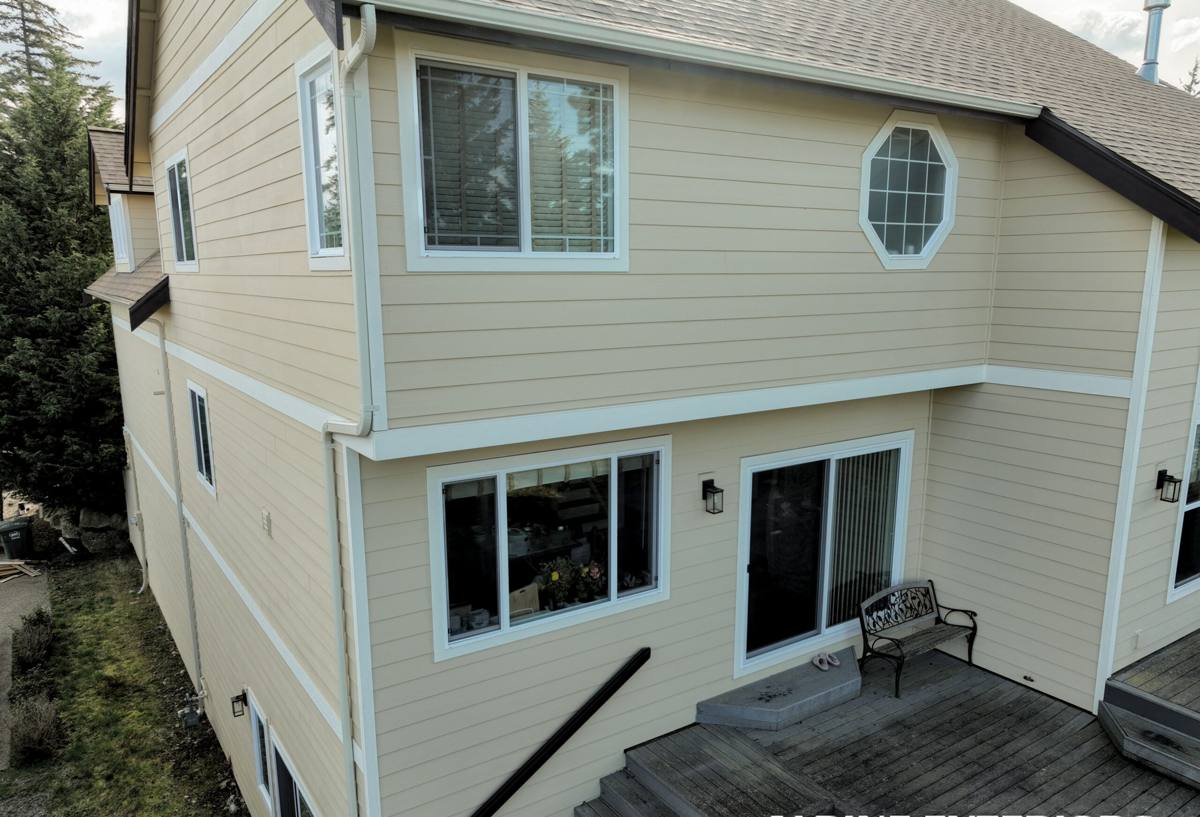
Why Local Decks Wear the Way They Do
Lynden isn't right on the water the way Birch Bay is, so it doesn't take the direct salt spray that coastal decks deal with. But it shares the same regional pattern of driving rain and a stretch of months where surfaces rarely get a full dry-out. That combination is what actually does the damage over time — not one bad storm, but months of dampness sitting in joints, under boards, and around fasteners.
- Moss and algae: Shaded decks, north-facing decks, and anything under trees stay damp longer and grow moss that holds moisture against the wood surface.
- Ledger board rot: Where the deck attaches to the house is the single most common failure point we find — water gets behind flashing that was never installed or was installed wrong.
- Fastener corrosion: Standard coated screws and nails corrode faster than people expect in this climate, especially in contact with treated lumber.
- Freeze-thaw cycling: Water that gets into a crack and then freezes expands the crack. It doesn't take extreme cold — Whatcom County gets enough freeze days to matter over several winters.
Why This Matters More Than It Looks
A soft board is easy to spot. A rotting ledger board or a corroded joist hanger usually isn't — it's hidden under decking, and by the time it shows itself (a bounce in the deck, a gap opening up where the deck meets the house), the damage has often been building for a couple of seasons.
Signs a Deck Needs Repair — And What They Usually Mean
| What You Notice | Likely Cause | Urgency |
|---|---|---|
| Soft or spongy boards | Trapped moisture, rot starting | Address this season |
| Deck feels bouncy or springy | Weakened joists or under-spec framing | High — structural |
| Gap or separation at the house wall | Ledger board pulling away or rotting | High — structural |
| Green or black film on boards | Moss/algae growth, poor drying | Moderate — prevents worse damage |
| Rust streaks around screws | Wrong-grade fasteners corroding | Moderate to high depending on spread |
| Loose or wobbly railing/posts | Post base rot or loosened connections | High — safety |
| Stairs that flex or creak more than before | Stringer wear or loose connections | High — safety |
What a Correct Deck Repair Actually Involves
"Deck repair" covers a wide range, from swapping a handful of boards to rebuilding the structural frame underneath. Doing it right means diagnosing the cause, not just replacing the symptom.
Structural Inspection First
Before we touch a board, we check the ledger board connection, the joists, the beam and post system, and the footings if they're accessible. A deck can look fine on the surface and still have a compromised frame underneath — and replacing boards over bad framing just hides the problem for another season.
Ledger Board and Flashing
This is where most of the serious rot starts. If the ledger board is compromised, we address the flashing and waterproofing at the house connection at the same time we fix the wood — otherwise the repair fails again from the exact same cause.
Framing and Fasteners
Joists, hangers, and posts get inspected for rot and corrosion. Where fasteners have failed or corroded, we replace them with hardware rated for exterior, high-moisture use — not the cheapest option, but the one that won't need redoing in three years.
Decking Surface
Individual board replacement, full resurfacing, or a material change, depending on what the substructure can support and what the homeowner wants going forward.
Railings and Stairs
Both take a lot of stress and are the parts most tied to safety. We check post attachment points and stringer condition even when they weren't the original complaint, since they're common secondary failure points on an older deck.
Repair or Rebuild? How We Make That Call
| Factor | Repair Usually Makes Sense | Rebuild Usually Makes Sense |
|---|---|---|
| Framing condition | Solid, dry, no significant rot | Soft joists, compromised ledger, widespread rot |
| Age of deck | Under 15–20 years, maintained | Older, neglected, or unknown build history |
| Extent of damage | Isolated to specific boards or areas | Spread across multiple structural components |
| Code compliance | Built to a standard still adequate | Undersized framing or missing modern connectors |
| Homeowner goals | Keep current size/layout as-is | Wants a different footprint, material, or feature |
Most decks we're called out to don't need a full rebuild — but we won't tell a homeowner a repair is fine just to land the smaller job. If the frame is compromised, patching the surface is money spent on a problem that's still there underneath.
Material Choices: What We Recommend and Why
Homeowners usually land on one of two paths: repair with matching or comparable wood, or use the repair as an opportunity to switch part or all of the deck to composite decking.
- Pressure-treated wood: Lower upfront cost, familiar look, but requires ongoing sealing and staining to hold up against the region's moisture — skipping that maintenance is exactly what leads to the rot we get called out for.
- Cedar: Naturally more rot-resistant and a common regional choice, but still benefits from periodic sealing, especially on shaded or damp sections of a deck.
- Composite decking: Higher upfront cost, no staining or sealing required, and much more resistant to moss and moisture damage on the surface — a good fit for homeowners who want to stop doing annual maintenance. It's not immune to substructure problems, though; the framing underneath still needs to be sound and properly ventilated.
We don't push one material over another as a default — it comes down to budget, how much upkeep the homeowner wants to do, and the condition of what's already there.
Our Repair Process
- On-site inspection: We look at the full structure, not just the area you're concerned about, since problems are often connected.
- Written scope and estimate: You'll know what's being repaired, why, and what it involves before any work starts.
- Repair or rebuild work: Framing, flashing, fasteners, and decking addressed in the right order so later work isn't undone by an unresolved earlier issue.
- Finish and seal: Wood repairs get sealed appropriately for the material; composite repairs are checked for proper drainage and airflow underneath.
- Final walkthrough: We show you what was done and flag anything worth watching going forward.
Maintenance That Actually Extends Deck Life Here
A lot of repair calls could have been smaller jobs — or no job at all — with a bit of seasonal attention. This is the short list we'd give any Lynden homeowner:
- Clear leaves and debris out of gaps between boards before they trap moisture through winter.
- Scrub moss and algae off the surface at the start of the wet season, before it spreads and holds water against the wood.
- Check the ledger board area at the house connection once a year for gaps, soft spots, or peeling flashing.
- Reseal or restain wood decking on the manufacturer's recommended schedule — don't wait until it visibly needs it.
- Look under the deck once a year, if accessible, for signs of standing water, sagging joists, or corroded hardware.
- Tighten or replace any visibly rusted or loosening screws before they fail and let a board shift.
Why a Crew That Already Works Lynden and Birch Bay Makes a Difference
Deck problems in this part of Whatcom County follow patterns — the same ledger board weak points, the same shaded corners that hold moss, the same fastener corrosion issues — because the weather here is consistent, even though Lynden itself is a bit removed from the coastal air Birch Bay gets directly. A crew that repairs decks across this region regularly recognizes those patterns fast instead of treating every job as a first-time diagnosis. That's fewer surprises mid-repair and fewer repeat calls for the same problem a year later.
If you've got a soft board, a bouncy spot, or a deck that just doesn't feel as solid as it used to, we'll come take a look and give you a straight answer on what it needs. Estimates are free, there's no pressure, and you'll get a clear scope before any work begins — just fill out the form below to get started.