 Birch Bay Siding
 New-Construction Windows for California Creek Homes
California Creek sits close enough to Birch Bay and the Strait of Georgia that homes here take the same weather the rest of the bay does: salt-laden marine air, wind-driven rain off the water, and long stretches of gray, damp months where moss and algae get a foothold on anything that stays wet. When you're building new or opening up exterior walls for a major remodel, the window installation itself is one of the biggest long-term weak points in the building envelope — and it's also one of the easiest things to get permanently right, if it's done correctly the first time.
"New-construction" windows are different from the replacement windows most homeowners are familiar with. They have a nailing flange around the perimeter that gets integrated directly into the wall's weather-resistive barrier (WRB), sill pan flashing, and siding — as opposed to retrofit or pocket windows, which slide into an existing frame without disturbing the surrounding wall. New-construction installs are the standard for ground-up builds, additions, and any remodel where the siding and sheathing are already open. Done right, they create a continuous drainage path that sheds water before it ever reaches your framing. Done wrong, they're one of the most common sources of hidden rot in Whatcom County homes.
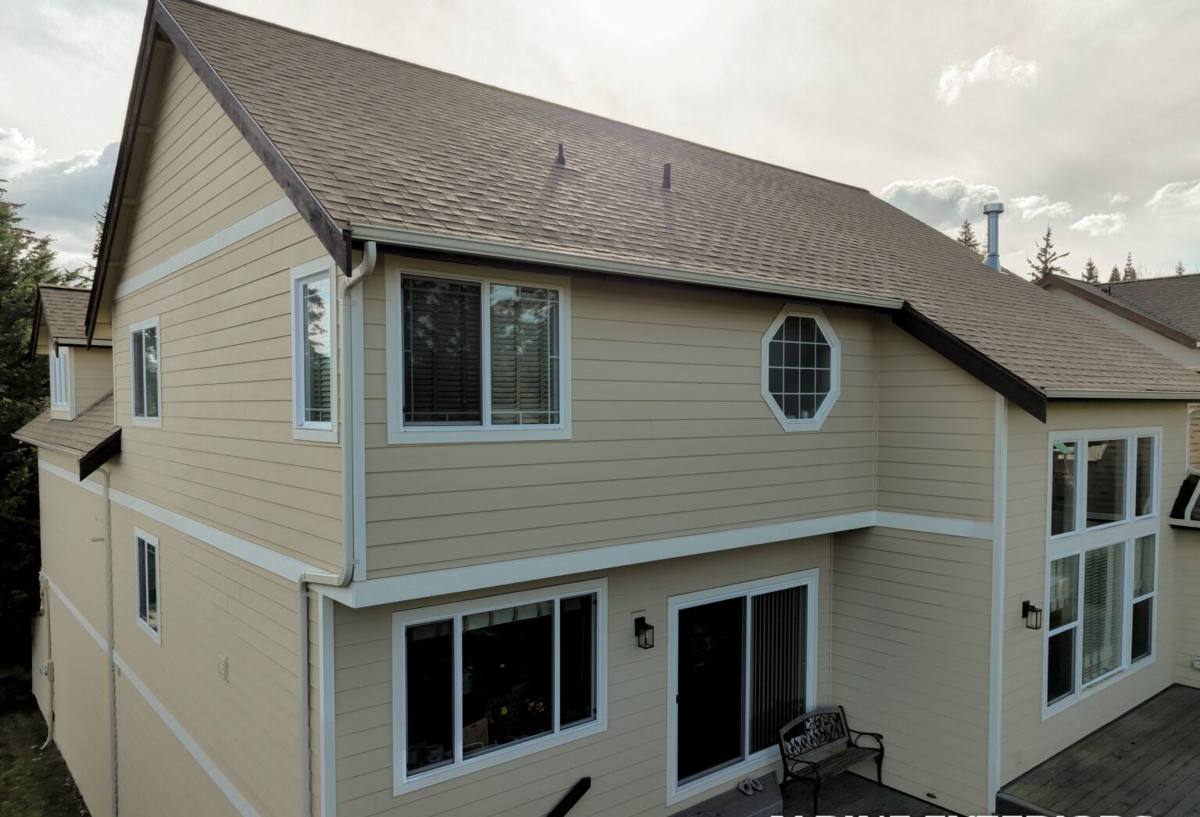
Why This Detail Matters More Near the Water
Every coastal Whatcom County property deals with more moisture exposure than homes further inland, but the specifics vary lot to lot depending on tree cover, wind exposure, and how close you sit to the shoreline. A few things we account for on California Creek jobs specifically:
- Wind-driven rain: Storms coming off the water push rain sideways into window openings, not just straight down. Flashing sequencing has to account for water moving horizontally, not just dripping off a sill.
- Salt air corrosion: Fasteners, flashing metal, and window hardware near the bay corrode faster than the same materials would inland. Fastener and flashing material selection isn't optional here — it's the difference between a window that's solid in ten years and one that's staining and sticking.
- Moss and algae season: Shaded north- and west-facing walls, common on tree-lined California Creek lots, stay damp for months at a stretch. Any flashing detail that traps water instead of shedding it becomes a moss farm — and eventually a rot problem — faster here than it would on a sunnier, more exposed site.
None of this means the job is exotic. It means the ordinary steps of a correct install — sill pan, WRB lap sequencing, flashing tape, and drainage — have to be followed exactly, with no shortcuts, because the climate here doesn't forgive gaps the way a drier region might.
What a Correct New-Construction Window Install Actually Involves
The Sequence That Keeps Water Out
Water management in a window opening is all about layering — each material has to lap over the one below it, like shingles on a roof, so water always moves outward and down, never inward. The basic sequence we follow:
- Rough opening is checked for square, level, and correct size before anything else happens.
- A sloped sill pan flashing goes in first, so any water that gets past the window has a built-in path back outside instead of pooling on the sill.
- Jamb flashing laps over the sill pan on both sides.
- The window is set, shimmed level and plumb, and fastened through the nailing flange per the manufacturer's schedule.
- Head flashing goes on last, lapping over the WRB above the opening so water sheds down and over the window, not behind it.
- The WRB is integrated back over the flanges in the correct shingle-lap order, and seams are taped.
- Interior and exterior gaps are sealed and, where called for, insulated — without blocking any weep or drainage path built into the sill.
Skip or reverse any one of those laps and you've built a funnel instead of a drainage plane. It won't show up as a leak on day one — it shows up two or three winters later as staining, soft trim, or a musty smell near the window, by which point the fix involves opening the wall back up.
Fasteners and Flashing Material
Given the salt air, we don't treat fastener choice as a minor detail. Stainless steel or coated fasteners rated for coastal exposure cost more up front than standard galvanized, but standard galvanized fasteners can start showing corrosion streaks on light-colored siding within a few years this close to the water. Same logic applies to flashing metal and tape — we use products rated for long-term UV and moisture exposure, not whatever's cheapest at the yard.
Choosing the Right Window for This Climate
Material and glazing choice matter as much as the installation. Whatcom County's marine climate — mild temperatures but constant moisture and salt exposure — narrows down what actually performs well long-term.
| Frame Material | How It Handles This Climate | Maintenance |
|---|---|---|
| Vinyl | Good moisture resistance, no corrosion risk from salt air, budget-friendly | Low — occasional cleaning |
| Fiberglass | Excellent dimensional stability, handles temperature swings and moisture well, strong long-term coastal performer | Low |
| Aluminum-clad wood | Attractive, but cladding seams and exposed wood interior need careful detailing near salt air | Moderate to high |
| Bare wood | Classic look, but highest moisture sensitivity — needs consistent upkeep in a damp marine climate | High |
We'll walk through NFRC performance ratings — U-factor (how well the window resists heat loss) and SHGC (how much solar heat it lets in) — for whatever product line you're considering, and explain what those numbers actually mean for a Birch Bay-area home rather than just handing you a spec sheet.
Our Process on California Creek Jobs
Every new-construction window job we run follows the same shape, whether it's a handful of openings on a remodel or a full house of them on new construction:
- Walkthrough and measure: We confirm rough opening sizes, discuss window selection, and flag anything site-specific — wind exposure, shading, roofline interactions.
- Written estimate: Materials, flashing details, and labor spelled out before anything is ordered.
- Prep and flashing: Openings are prepped and flashed per the sequence above, inspected before the window ever goes in.
- Install: Windows set, shimmed, fastened, and integrated into the WRB.
- Trim and seal: Interior and exterior trim work, final sealant, and a walkthrough with you before we call it done.
Whatcom County permitting and inspection requirements apply to new construction and most structural remodel work, and we coordinate around those inspection points rather than treating them as an afterthought.
Quick Checklist: What to Confirm Before Your Windows Go In
- Sill pan flashing is sloped and installed before the window, not skipped
- Flashing laps in the correct shingle order — sill, jamb, then head
- Fasteners and flashing metal are rated for coastal/salt-air exposure
- WRB is properly taped and integrated back over the nailing flange
- Weep paths or drainage details at the sill aren't blocked by sealant or insulation
- Window is shimmed level and plumb before final fastening
- NFRC label details (U-factor, SHGC) match what was quoted
Why a Crew That Knows California Creek Matters
A window flashing detail that works fine in a dry inland climate can fail within a few years on a shaded, wind-exposed California Creek lot. Crews who don't regularly work this close to the water sometimes treat coastal flashing and fastener specs as optional upgrades rather than the baseline. We work Birch Bay and the surrounding Whatcom County coastline regularly, so the sill pan, fastener grade, and WRB integration described above aren't extra steps we upsell — they're just how we build every opening, because we've seen what happens on the ones that skip them.
We're also familiar with the practical side of building here: typical lot conditions, tree cover and shading patterns common to the area, and how local permitting and inspection timelines run. That local familiarity shortens the learning curve on your project and reduces surprises mid-job.
What This Typically Involves Cost-Wise
Pricing on new-construction window installs depends on several factors, and we'll always give you a specific number after seeing the actual openings — but here's what tends to move the price:
| Factor | Why It Affects Cost |
|---|---|
| Number and size of openings | More or larger openings mean more flashing, labor, and material |
| Frame material and glazing package | Vinyl, fiberglass, and clad-wood windows carry different unit costs and performance levels |
| Wall height and access | Second-story or hard-to-reach openings take more time and equipment |
| Flashing complexity | Openings near rooflines, decks, or wall transitions need extra detailing |
| New construction vs. remodel | Open-wall new construction is generally more straightforward than working around existing finished interior or exterior surfaces |
If you're planning new construction or a remodel in California Creek and want the window openings done in a way that actually holds up to Birch Bay's weather, we're happy to take a look and put together a free, no-pressure estimate — no obligation, just a straight answer on what your project needs.