 Birch Bay Siding
 Cherry Point's Roofs Work Harder Than Most
Homes along Cherry Point sit close enough to the water that salt-laden air is a daily fact of life, not an occasional nuisance. Add Whatcom County's long wet season, driving rain off the Strait, and the shaded, moisture-holding conditions that let moss take over a north-facing slope in a matter of months, and you have a roofing environment that's noticeably tougher than what you'd find twenty miles inland. A roof that would hold up fine in a drier part of the state can show fastener corrosion, granule loss, and moss-driven shingle lift here years ahead of schedule.
That doesn't mean Cherry Point homes need exotic materials or gimmicks. It means the installation details that a lot of crews treat as optional — fastener grade, underlayment choice, ventilation balance, moss-resistant shingle coatings — are not optional here. They're the difference between a roof that looks tired at year eight and one that's still doing its job at year twenty-five.
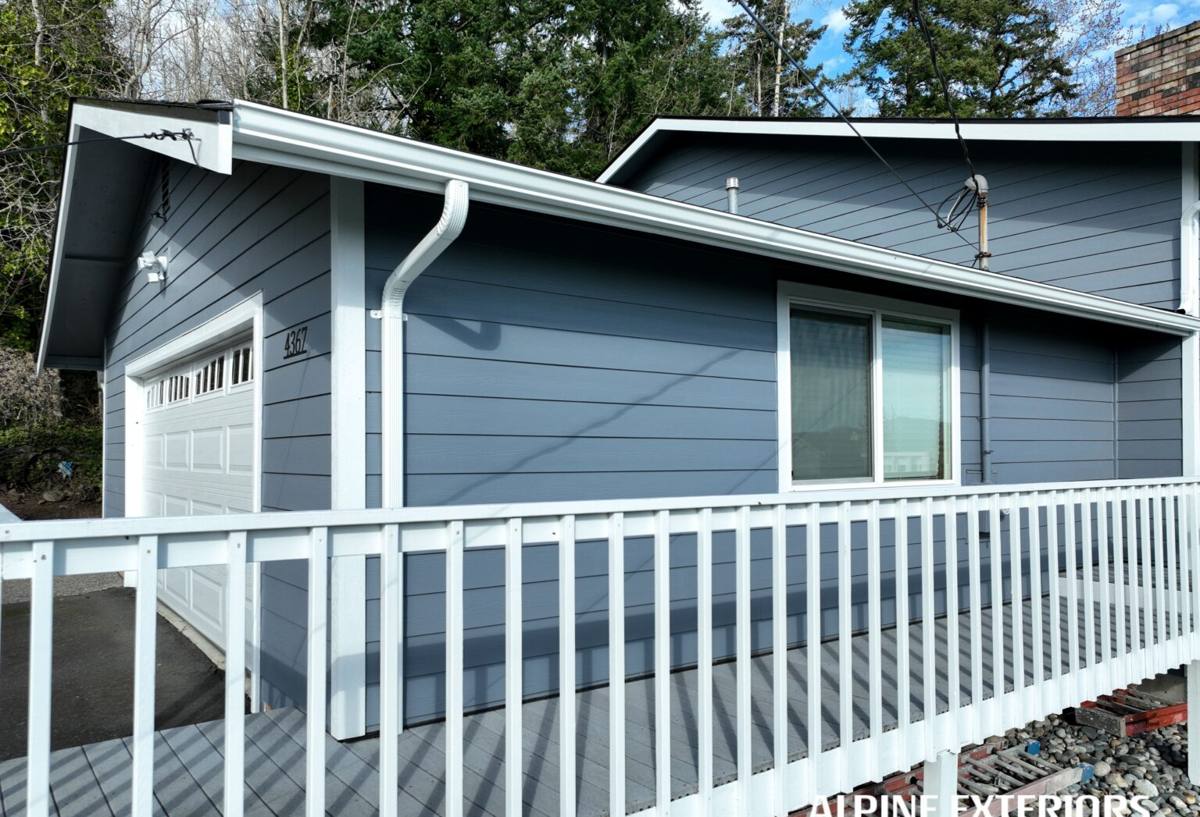
What Salt Air and Moss Actually Do to a Roof
It helps to understand the specific failure modes we're designing against, rather than just treating "coastal roof" as a vague label.
Salt Air and Corrosion
Airborne salt accelerates corrosion on anything metal — nail heads, flashing, ridge vent fasteners, gutter hangers. Standard electro-galvanized fasteners can start rusting at the head within a few years this close to the water, and a rusted nail head eventually loses its grip on the shingle, which is how wind gets underneath a roof that's otherwise in decent shape.
Driving Rain and Wind-Driven Water
Rain here doesn't always fall straight down. Wind off the water pushes it sideways and under shingle tabs, which is why underlayment quality and how flashing details are lapped matter more here than in calmer inland microclimates.
Moss and Shade
Tree cover and marine humidity keep north- and east-facing slopes damp longer after every rain. Moss doesn't just look bad — its root structure lifts shingle edges as it grows, creating an entry point for water, and a moss mat holds moisture against the roof deck far longer than bare shingle would.
What a Correct Roof Replacement Involves
A proper tear-off and replacement here isn't just "new shingles on the old deck." Done right, it includes:
- Full tear-off to bare deck — never a layover — so we can actually see and fix what's underneath
- Deck inspection and repair of any soft, delaminated, or water-stained sheathing
- Ice-and-water shield at eaves, valleys, and penetrations, sized generously given our rain volume
- Corrosion-resistant fasteners rated for coastal exposure, not standard electro-galvanized nails
- Balanced intake and exhaust ventilation, matched to the home's actual attic geometry
- Algae- and moss-resistant shingle products on shaded slopes, where standard shingles green up fastest
- New flashing at every valley, chimney, skylight, and wall intersection — reused flashing is a common shortcut we don't take
Material Options for This Climate
Most Cherry Point homes land on one of three roofing paths. Each has real trade-offs worth understanding before you decide.
| Material | Typical Lifespan Here | Coastal Considerations |
|---|---|---|
| Standard 3-tab asphalt | 15-20 years | Lowest upfront cost; least algae resistance; shows granule loss fastest in salt air |
| Architectural (laminate) asphalt | 25-30 years | Heavier, better wind rating, available with algae-resistant granules — our default recommendation for most Cherry Point roofs |
| Standing seam metal | 40-50+ years | Excellent wind and rain performance; higher upfront cost; needs marine-grade fastener and coating specs to avoid coastal corrosion issues |
We don't push metal on every homeowner — it's a great product, but it's a bigger investment, and a well-built architectural asphalt roof with the right underlayment and algae-resistant shingles will serve most Cherry Point homes well for decades. We'll walk you through the honest trade-offs for your specific roof rather than steering you toward whatever's easiest for us to install.
Our Installation Process
1. On-Site Assessment
We walk the roof, check the attic for existing ventilation and moisture signs, and look at slope orientation to identify which sections need extra moss and shade consideration.
2. Written Scope and Material Selection
You get a clear, itemized plan — tear-off scope, deck repair allowance, underlayment type, shingle or metal product, ventilation changes, and flashing work — before anything is scheduled.
3. Tear-Off and Deck Inspection
We remove the existing roofing down to bare sheathing and inspect every section of deck before covering any of it back up. Any soft or damaged sheathing is replaced, not papered over.
4. Underlayment and Flashing
Ice-and-water shield goes down at eaves, valleys, and around every penetration first, followed by synthetic underlayment across the field. New flashing is formed and installed at every transition.
5. Roofing Installation
Shingles or panels go on with coastal-rated fasteners, following manufacturer nailing patterns exactly — under-driven or over-driven fasteners are one of the most common causes of early wind and water failures.
6. Ventilation and Final Walkthrough
We confirm intake and exhaust venting are balanced, clean the site, and walk the finished roof with you before calling the job done.
Ventilation and Moisture Control
An under-ventilated attic traps warm, moist air against the underside of the roof deck, which accelerates deck rot from the inside and can fog up insulation performance. In a marine climate, that trapped moisture has fewer chances to dry out between rain events than it would somewhere drier. Getting intake (soffit vents) and exhaust (ridge or box vents) properly balanced isn't a cosmetic add-on — it directly affects how long the deck and shingles underneath your new roof will last. We check this on every replacement, not just when a homeowner asks.
Signs a Cherry Point Roof Needs Attention
Because moss, salt corrosion, and wind-driven rain all work slowly before they cause a visible problem, it's worth knowing what to watch for between inspections:
- Moss or dark streaking concentrated on shaded, north-facing slopes
- Granules collecting in gutters or at downspout outlets
- Curling, cupping, or lifted shingle edges, especially near valleys and eaves
- Rust staining around nail heads, vents, or flashing
- Daylight visible through the roof deck from inside the attic
- Water stains on ceilings following a wind-driven rain event, not just heavy downpours
What Drives the Cost
Every roof is a little different, but the biggest cost swings on Cherry Point jobs tend to come from the same handful of factors.
| Factor | Why It Matters Here |
|---|---|
| Roof size and slope complexity | More valleys and hips mean more flashing and labor, and more spots where wind-driven rain can find a weak seam |
| Deck condition | Homes with long-neglected moss growth often need more sheathing replacement than expected |
| Material choice | Architectural asphalt vs. metal is typically the largest single cost variable |
| Ventilation upgrades | Older homes often need added soffit or ridge venting to meet a balanced system |
| Access and site conditions | Tree cover, steep pitch, or tight lot access affect staging and labor time |
We give you real numbers for your roof after a site visit rather than a rough phone quote — coastal roofs vary too much house to house for a fair estimate without seeing the deck and slopes in person.
Why Local Experience Matters
A crew that's replaced roofs elsewhere in Whatcom County but hasn't spent time specifically around Cherry Point can still do competent work — but they're learning the coastal details on your dime. Knowing which slopes on a given street orientation take the worst of the wind-driven rain, which fastener and flashing upgrades are worth the extra cost here versus inland jobs, and how aggressively to plan for moss on shaded roofs comes from doing this work in this specific microclimate repeatedly. That local pattern recognition is what keeps a roof performing for its full expected lifespan instead of needing early repairs.
After Your New Roof Goes On
A new roof still benefits from basic upkeep, especially here. Keep gutters clear so water isn't backing up under the eave line, trim back overhanging branches that keep shaded slopes wet longer than they need to be, and have the roof looked at after any major windstorm. None of this is heavy maintenance — it's a few minutes of attention a couple times a year that meaningfully extends the life of the investment you just made.
If your Cherry Point roof is showing moss, granule loss, or you're just planning ahead of a known problem, we're happy to take a look and give you a straightforward, no-pressure estimate — use the form below to get started.