 Birch Bay Siding
 Why Terrell Creek Roofs Age Differently Than Roofs Inland
Terrell Creek sits close enough to Birch Bay and the Strait of Georgia that homes here take on a specific combination of weather stresses most inland Whatcom County roofs never see. Salt-laden air moves in off the water and settles on shingles, flashing, and fasteners. Driving rain, pushed sideways by wind off the bay, finds any weak point in a roof system rather than simply running off the surface the way it would in a calmer climate. And the long, damp shoulder seasons here give moss and algae months at a time to take hold on north-facing slopes and shaded valleys. None of these factors are dramatic on their own, but stacked together year after year, they shorten the useful life of a roof that was installed without them in mind.
A roof built for a dry inland subdivision and a roof built for Terrell Creek should not look the same under the surface, even if the shingles on top look identical. The difference is in the underlayment, the fastening pattern, the flashing details, and the attic ventilation — the parts of the job a homeowner never sees once it's finished, but that determine whether the roof is still doing its job in fifteen or twenty years.
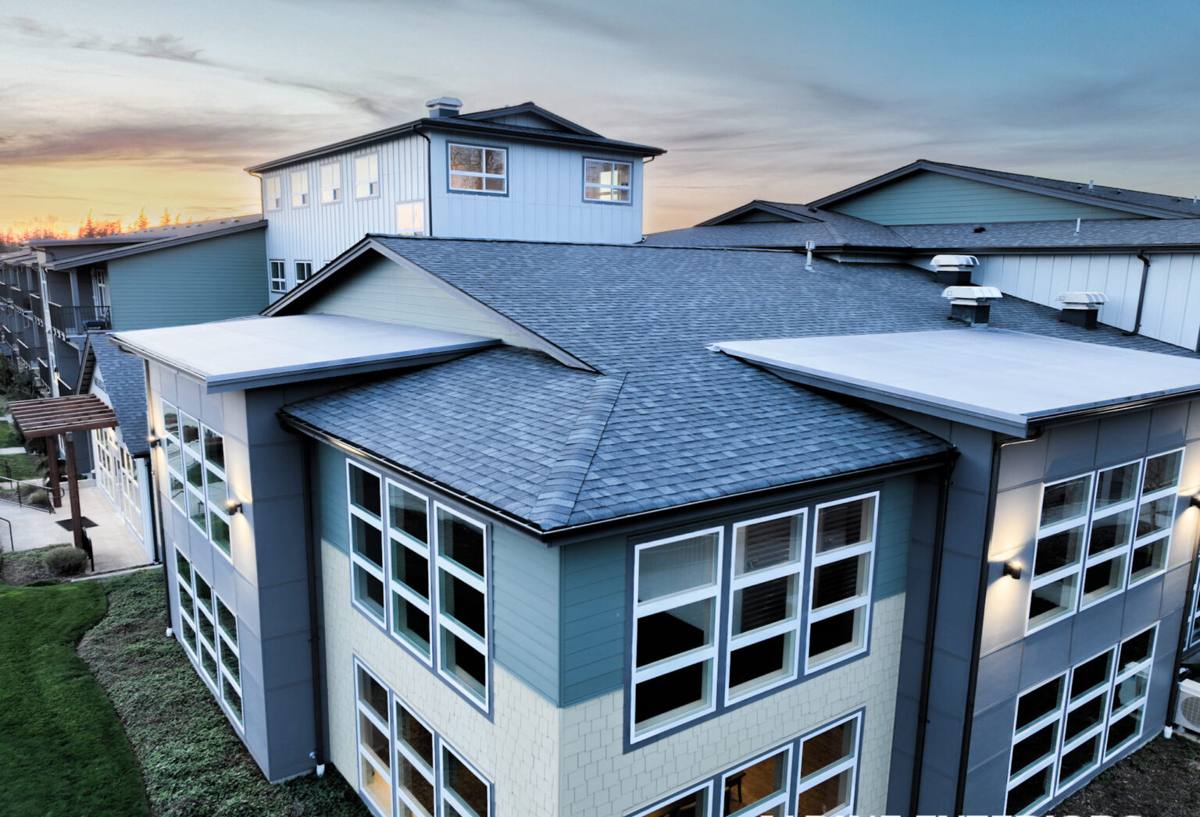
Signs a Terrell Creek Roof Needs Attention
Because moisture-related roof problems tend to develop slowly, most homeowners don't catch them until there's a leak. By then, some amount of damage to the decking or interior has usually already happened. Some earlier warning signs to watch for on a Terrell Creek home include:
- Granules collecting in gutters or at the base of downspouts, a sign the shingle surface is wearing thin
- Dark streaking or a green-black tint on north-facing or shaded slopes — early algae and moss growth
- Shingles that look cupped, curled at the edges, or slightly lifted, especially after a windy stretch
- Soft or discolored patches on interior ceilings, particularly near exterior walls or plumbing vents
- Rust staining or gaps around flashing at chimneys, skylights, and roof-wall intersections
- Visible daylight or drafts in the attic, which often points to gaps in the roof deck or flashing
Any one of these on its own might not mean a full replacement is due. But on a home in this area, they're worth taking seriously earlier rather than later, since salt air accelerates corrosion of exposed metal fasteners and flashing once a weak point opens up.
What a Correct New Roof Installation Actually Involves
A new roof is more than laying shingles over the old ones or stripping the roof down and putting the same components back. Done correctly for a home in Terrell Creek, the installation addresses every layer of the system, not just the visible surface.
Tear-Off and Deck Inspection
We remove the existing roofing down to the deck rather than layering over it. This lets us actually see the plywood or OSB sheathing underneath, which is where hidden moisture damage from a slow leak usually shows up first. Any soft, delaminated, or water-stained decking gets replaced before anything new goes down — installing new roofing over compromised decking just hides the problem for a while longer.
Underlayment Built for Wind-Driven Rain
In an area where rain regularly comes in at an angle rather than straight down, the underlayment layer matters as much as the shingle itself. We use a synthetic underlayment across the full roof, with self-adhered ice-and-water membrane at the eaves, valleys, and any low-slope transitions where wind-driven water is most likely to find a way underneath the shingles.
Flashing Details
Most roof leaks trace back to flashing, not the shingles. Chimneys, skylights, vent pipes, and any place where the roof meets a wall are the highest-risk spots. We install new flashing at every one of these transitions rather than reusing old pieces, and we favor corrosion-resistant materials given how much salt exposure this area sees over the life of a roof.
Fastening and Wind Resistance
Shingles are fastened according to the manufacturer's high-wind pattern, with additional nails in exposed or corner areas of the roof. This matters more here than it would on a fully sheltered inland lot, since gusts off the bay put more uplift stress on a roof edge than most manufacturers' baseline installation instructions assume.
Choosing the Right Roofing Material for This Climate
There isn't one universally "best" roofing material — the right choice depends on the home's structure, the budget, and how much long-term maintenance the homeowner wants to take on. Here's how the common options compare for a coastal Whatcom County property:
| Material | Coastal Durability | Moss/Algae Resistance | Maintenance |
|---|---|---|---|
| Standard asphalt shingle | Good with proper underlayment and flashing | Moderate; benefits from algae-resistant granules | Periodic moss removal recommended |
| Algae-resistant (AR) asphalt shingle | Good | Improved over standard asphalt | Lower than standard shingle, still needs occasional checks |
| Standing seam metal | Very good when properly fastened and flashed | Low moss/algae adhesion due to smooth surface | Low; occasional fastener and seam checks |
| Composite/synthetic shake | Good | Depends on product; varies by manufacturer | Moderate |
For most Terrell Creek homes, a quality algae-resistant architectural asphalt shingle offers the best balance of upfront cost and long-term performance. Metal roofing is a strong option for homeowners who want to minimize moss maintenance and are planning to stay in the home long-term, since the higher upfront cost is offset by a longer service life and less recurring upkeep.
Ventilation: The Part of the Roof Most Homeowners Never Think About
Proper attic ventilation is just as important as the roofing material itself, and it's frequently overlooked on older homes in this area. A roof needs balanced intake at the eaves and exhaust at the ridge so air actually moves through the attic space instead of sitting still. Without it, moisture from everyday household activity — showers, cooking, laundry — gets trapped in the attic, condenses on the underside of the decking, and creates the exact damp conditions that rot wood and encourage mold, regardless of how good the shingles above are. In a climate with as much ambient humidity as Birch Bay sees for much of the year, this isn't optional. Whenever we install a new roof, we evaluate the existing ventilation and correct any imbalance as part of the job, not as an upsell afterward.
Moss and Algae: Prevention, Not Just Removal
Given the tree cover and moisture common around Terrell Creek, moss is close to unavoidable on a roof with no preventive measures in place. Rather than treating it only after it appears, we build prevention into the installation itself:
- Algae-resistant shingles on shaded or north-facing slopes where moss pressure is highest
- Zinc or copper strips at the ridge on request, which release trace metals that inhibit moss growth as rain washes over them
- Proper flashing and drainage so water doesn't pool in valleys or behind debris, which is where moss tends to establish first
- A recommendation on gutter and debris-clearing frequency specific to the tree cover on the property
None of these steps make a roof moss-proof forever, but together they significantly extend the time between cleanings and reduce the risk of moss working its way under shingle edges, which is how it eventually causes real damage rather than just a cosmetic issue.
Our Installation Process
Homeowners generally want to know two things before committing to a new roof: what exactly is going to happen, and how long their property will be disrupted. Here's the general sequence for a Terrell Creek installation:
- On-site assessment. We inspect the existing roof, attic ventilation, and any visible problem areas, and take measurements for an accurate estimate.
- Written estimate and material selection. We walk through material options and pricing so the decision is based on clear information, not pressure.
- Scheduling and material delivery. Materials are ordered and delivered ahead of the start date so the crew isn't waiting on supplies mid-job.
- Property protection. Landscaping, siding, and outdoor living areas are protected before tear-off begins.
- Tear-off and deck inspection. Old roofing is removed and the deck is inspected and repaired as needed.
- Underlayment, flashing, and shingle installation. Installed in the sequence and detail described above.
- Ventilation check and cleanup. Attic airflow is verified, and the property is walked and swept for debris and stray fasteners using a magnetic sweep.
- Final walkthrough. We review the completed roof with the homeowner before considering the job done.
Most standard residential roof replacements in this area are completed in one to a few days depending on roof size and complexity, weather permitting.
What Affects the Cost of a New Roof in Terrell Creek
Every roof is priced based on its own specifics, but the main variables that move the number up or down are fairly consistent:
| Cost Factor | Why It Matters |
|---|---|
| Roof size and number of slopes | More square footage and complexity means more material and labor time |
| Pitch and accessibility | Steep or hard-to-access roofs require more safety setup and slower work |
| Material choice | Standard asphalt, algae-resistant asphalt, and metal all carry different material costs |
| Deck condition | Rotted or delaminated sheathing found during tear-off adds repair cost |
| Flashing and penetrations | Chimneys, skylights, and multiple vents each add flashing work |
| Ventilation upgrades | Correcting inadequate intake or exhaust airflow adds a modest cost but protects the investment |
Broadly speaking, homeowners in this area should expect a range that reflects a mid-size residential roof with standard architectural asphalt shingles on the lower end, up to a notably higher figure for larger, steeper roofs or premium materials like standing seam metal. An accurate number always comes from an on-site look at the specific roof.
Why It Matters to Hire a Crew That Already Works in This Area
Roofing crews that mainly work drier, more sheltered parts of the county don't always build in the extra underlayment coverage, flashing detail, and ventilation correction that a Terrell Creek roof needs to hold up long-term. It's not that the workmanship is careless — it's that the roof they're used to building doesn't face the same combination of salt exposure, wind-driven rain, and moss pressure every season. A crew that regularly works in and around Birch Bay knows which slopes on a given lot tend to hold moss, which flashing details fail first in this wind pattern, and how much ventilation correction a typical older home here actually needs. That familiarity shows up in fewer callbacks and a roof that performs the way it's supposed to for its full expected lifespan, not just for the first few dry seasons.
Questions to Ask Before Hiring a Roofing Contractor
Whoever you choose to install your new roof, a few questions will tell you a lot about whether they're set up to do the job right in this climate:
- Do they install new flashing at every penetration, or reuse existing flashing to save cost?
- Do they use ice-and-water membrane at eaves and valleys, or standard underlayment throughout?
- Will they inspect and correct attic ventilation as part of the job, not as a separate add-on?
- Are they licensed and insured to work in Washington, and can they provide proof on request?
- Do they provide a written estimate that breaks down materials and scope, not just a lump total?
- What warranty covers their labor, separate from the manufacturer's material warranty?
A contractor who answers these clearly and without hesitation is generally one who's confident in how they build a roof, not just in how they sell one.
Get a Free, No-Pressure Estimate
If your Terrell Creek home has a roof that's showing its age, or you're weighing your options after noticing a leak or heavy moss growth, we're happy to take a look and walk you through what we find — no obligation attached. Use the form below to request a free estimate, and we'll get back to you with a straightforward assessment of what your roof actually needs.