 Birch Bay Siding
 Building Decks for One of the Toughest Coastlines in Whatcom County
Semiahmoo sits right where saltwater exposure, wind, and Pacific Northwest rain all overlap, and that combination is hard on outdoor structures. A deck built to a generic spec — the kind you'd see inland or in a drier climate — will show problems here faster than almost anywhere else in Whatcom County. Salt-laden air corrodes hardware that would last decades elsewhere. Driving rain off the water finds every gap in flashing and fastening. And the long stretch of damp, low-light months each year gives moss and algae months to establish themselves on any surface that doesn't shed water and dry out quickly.
None of that means a deck can't last. It means the build has to account for those conditions from the framing up, not just at the surface. This page covers what that actually looks like for a Semiahmoo property, and why the details matter more here than they do a few miles inland.
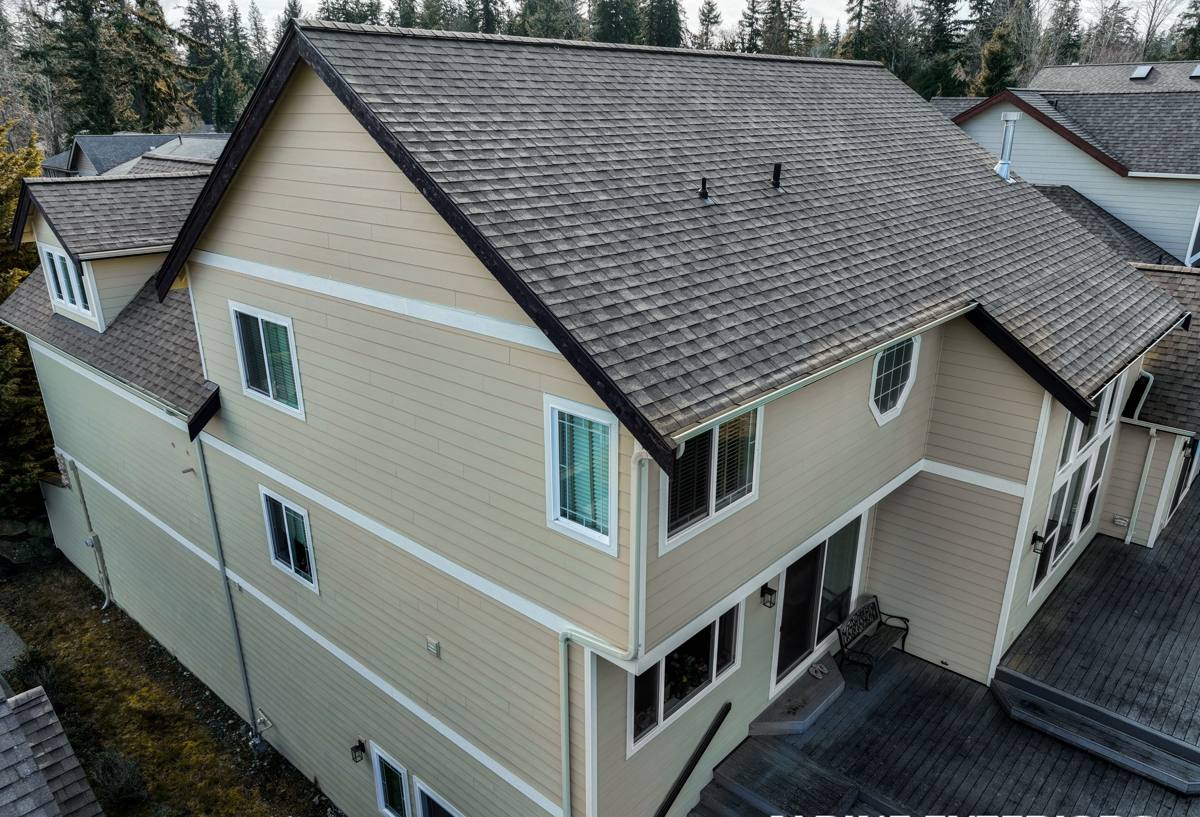
What Local Conditions Actually Do to a Deck
Salt Air and Corrosion
Airborne salt accelerates corrosion on fasteners, brackets, and any exposed metal hardware. Standard coated screws or basic galvanized nails can start showing rust streaks and weakening well before a deck's wood or composite surface shows its age. Once fasteners corrode, they lose holding strength — and on a deck, that's a structural issue, not a cosmetic one.
Driving Rain
Rain that comes in sideways off open water behaves differently than a straight-down rainfall. It gets pushed under railings, behind ledger boards, and into any seam that isn't properly flashed or sealed. Over time, water that gets trapped behind a ledger board or pools on an unsloped surface is one of the most common causes of rot in coastal deck framing.
Moss and Algae Season
Whatcom County's damp season stretches long, and a deck surface that stays shaded or doesn't drain well will grow moss and algae well before summer. Beyond looking neglected, moss holds moisture against the decking surface and creates a slip hazard on stairs and walking surfaces — a real concern on a waterside property where decks often see bare feet and wet conditions.
What a Correctly Built Deck Needs to Get Right
- Ledger flashing that actually sheds water away from the house band board, not just a bead of caulk
- Corrosion-resistant fasteners and connectors rated for coastal or treated-lumber exposure
- Proper board spacing and slope so water drains instead of pooling
- Joist and beam sizing that accounts for real Whatcom County snow and wind loads, not just minimum code
- Ventilation underneath the deck so framing can dry out between rain events
- Stair and railing hardware that won't loosen as metal fatigues from repeated wet-dry cycles
Skipping any one of these doesn't show up on day one. It shows up in year three or four, usually as soft decking, a wobbly railing post, or rust bleeding through paint at every screw head.
Choosing a Decking Material for This Environment
There's no single "correct" decking material for every Semiahmoo home — it depends on budget, how much upkeep you want to do, and how exposed the deck is to wind and salt spray. Here's how the common options actually perform under these specific conditions.
| Material | How It Handles Salt Air | Moss/Algae Resistance | Upkeep |
|---|---|---|---|
| Pressure-treated wood | Good if fasteners are upgraded; wood itself holds up but needs sealing | Needs regular cleaning and re-sealing to resist moss buildup | Annual cleaning, periodic staining/sealing |
| Cedar | Naturally rot-resistant; still benefits from corrosion-resistant hardware | Better natural resistance than treated pine, but still needs cleaning | Periodic oiling or sealing to maintain appearance |
| Composite decking | Doesn't corrode or absorb salt; hardware still needs to be rated properly | Resists moisture absorption well; still needs occasional washing | Low — mostly periodic washing |
| PVC decking | Fully synthetic, doesn't absorb moisture or salt | Sheds water well but can still grow surface algae without cleaning | Low — occasional washing |
Composite and PVC products generally mean less maintenance over time in this climate, but they cost more up front and the fasteners, clips, and framing underneath still have to be built correctly — the decking surface is only one part of a deck's durability.
Framing and Hardware: The Part You Don't See
Most of what determines whether a Semiahmoo deck lasts 10 years or 25 years is buried under the decking boards. We build with hot-dip galvanized or stainless hardware in fastener locations that see the most moisture exposure, and we flash ledger connections the way they should be flashed on a coastal property — not the minimum a building inspector will pass. This is also where corners get cut on lower-bid jobs, because it's the part a homeowner won't see until something fails.
Ledger Attachment
The ledger board — where the deck attaches to the house — is the single most common failure point on decks in wet climates. It needs proper flashing, correct fastener spacing, and a gap that lets water drain rather than collect against the house band board.
Post Bases and Connectors
Posts set in concrete need bases that keep the wood off standing water, and every structural connector should be rated for the exposure, not just whatever is cheapest at the supply yard.
Design Considerations for Semiahmoo Properties
Homes in this area are often positioned to take advantage of water views and prevailing breezes, which is great for enjoying a deck but also means more direct wind and spray exposure than a sheltered inland lot. We factor that into railing choice, board orientation, and how much of the structure sits exposed versus tucked against the home. Whatcom County's building code sets minimum requirements for railing height, guard spacing, and stair geometry, and any custom deck we build meets or exceeds those regardless of the design.
Our Process for a Semiahmoo Deck Project
- On-site assessment — we look at sun exposure, wind direction, drainage, and how the deck ties into the existing structure before discussing design.
- Design and material discussion — honest conversation about tradeoffs between wood and composite/PVC options based on your budget and how much maintenance you want to take on.
- Permitting — we handle the paperwork for Whatcom County permitting requirements so the project is built and signed off correctly.
- Demolition of the old deck (if applicable) — done carefully to protect landscaping and the surrounding structure.
- Framing with upgraded, corrosion-resistant hardware — this is where the long-term durability of the deck is actually decided.
- Decking, railing, and stair installation — with attention to drainage slope and fastener spacing.
- Final walkthrough — we go over care and maintenance specific to the material you chose.
What Moss Season Actually Requires From You
Even a well-built deck needs some seasonal attention in this climate. The good news is that it's manageable if you stay ahead of it rather than waiting until moss has taken hold.
- Sweep leaves and debris off the deck surface regularly through fall, since trapped organic material is what moss and algae feed on
- Give the deck a light wash before the wet season sets in, and again in early spring
- Check that gaps between boards haven't filled with debris that traps moisture
- Look at fastener heads and metal connectors once a year for early rust staining
- Reseal wood decking on the schedule appropriate to the product — usually every one to two years depending on sun and rain exposure
Cost Factors for a Custom Deck
Every project is different, but the biggest cost drivers on a Semiahmoo deck tend to be the same handful of factors.
| Factor | Why It Affects Cost |
|---|---|
| Decking material | Treated wood costs less up front than composite or PVC, which cost more but need less long-term upkeep |
| Deck size and height | Larger decks and elevated decks require more framing, more footings, and more labor |
| Railing style | Cable, glass, or custom railing systems cost more than standard baluster railing |
| Site access and demolition | Removing an old deck or working on a tight or sloped lot adds labor time |
| Hardware upgrades | Corrosion-resistant fasteners and connectors cost more than standard hardware but pay off in longevity here |
We give straightforward, itemized estimates so you can see exactly where the money is going and where there's room to adjust the scope to fit your budget.
Why It Matters to Hire a Crew That Already Works This Area
A contractor who mostly builds decks inland, away from salt air, isn't necessarily used to specifying the hardware, flashing details, and material choices that hold up on a property like this. We work throughout Birch Bay and the surrounding Whatcom County coastline, and we've seen firsthand what generic deck construction looks like a few years after it's exposed to this environment. That experience shapes the material recommendations, fastener choices, and framing details on every project we build here — not as an upsell, but because it's what actually lasts in this climate.
If you're planning a new deck or replacing one that's showing its age, we're happy to take a look and give you a straightforward, no-pressure estimate. Use the form below to get started.