 Birch Bay Siding
 Why Sandy Point Roofs Take a Different Kind of Beating
Sandy Point sits right up against the water, and that location cuts both ways. It's part of what makes the area a great place to live, but it also means roofs here deal with a combination of stresses that inland Whatcom County homes simply don't see as often. Salt-laden air from the Strait, wind-driven rain that comes in sideways during winter storms, and a moss season that runs longer than most homeowners realize all work on a roof at the same time, year after year. None of these forces alone is unusual for Western Washington. Stacked together, on a shoreline lot, they shorten the life of flashing, fasteners, and shingle mat faster than the manufacturer's warranty numbers assume.
When we get called out to Sandy Point after a windstorm or a heavy blow off the water, we're rarely looking at one clean, obvious problem. It's usually a mix of new damage sitting on top of older wear that salt air and moss have already been chipping away at quietly for a few seasons. That's the context that matters for repair work here — not just what broke this week, but what condition the roof was already in before the storm hit it.
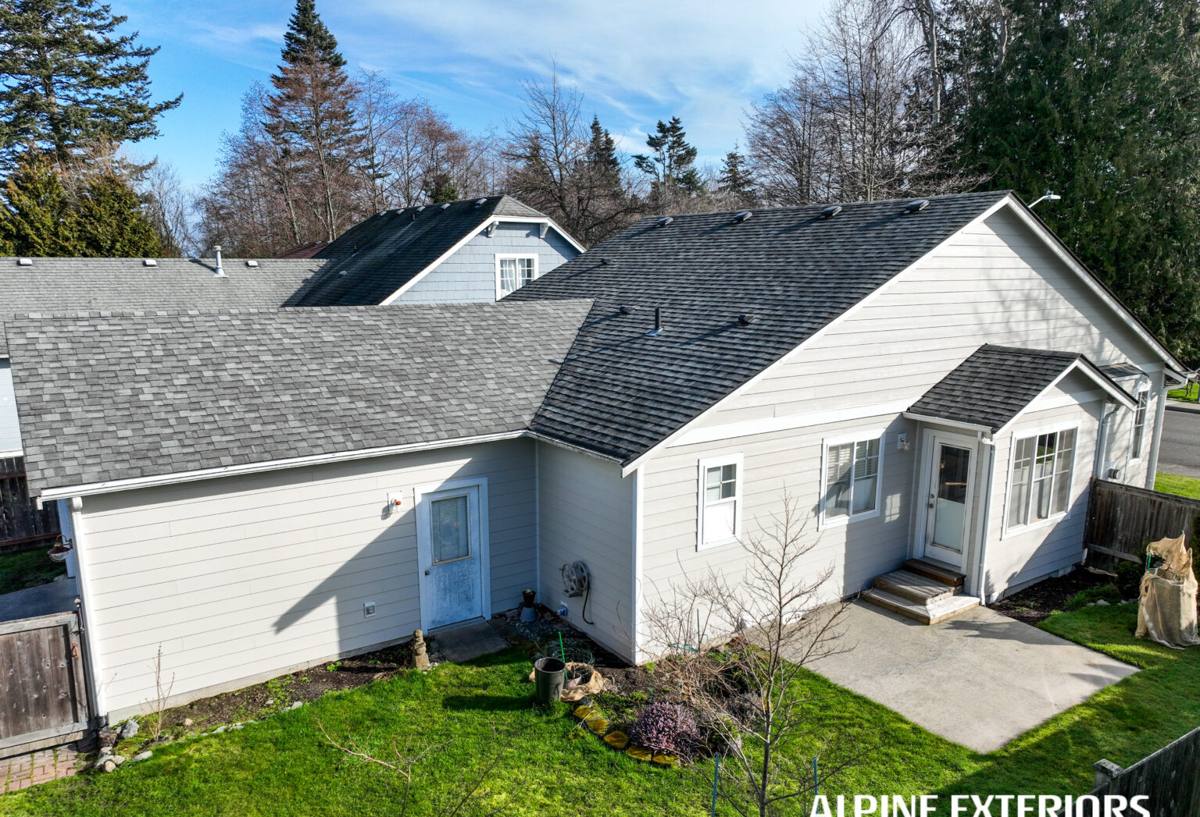
What Storm Damage Actually Looks Like on This Stretch of Coast
Wind and Wave-Driven Rain
Storms coming off the water don't just bring strong gusts — they push rain horizontally into roof edges, ridge caps, and any flashing detail that wasn't sealed with that exposure in mind. Uplift at eaves and rake edges is common, and it's often the first place shingles let go because that's where wind gets underneath the tab and starts prying.
Moss and Trapped Moisture
Whatcom County's damp, mild climate keeps moss active for most of the year, and Birch Bay's shoreline humidity extends that season further than you'd get a few miles inland. Moss doesn't cause storm damage directly, but it sets the stage for it — moss mats hold water against the shingle surface, lift tabs slightly, and rot the edges of wood decking underneath over time. A roof with heavy moss growth is a roof that fails faster once wind and rain actually go to work on it.
Debris Impact
Mature trees near the water take a lot of wind load, and broken limbs — sometimes whole tops — are a routine cause of storm calls in this neighborhood. Impact damage can range from a few cracked or punctured shingles to torn decking, and it's not always visible from the ground.
Signs Your Roof Needs a Post-Storm Inspection
You don't need to get on the roof yourself to know something's worth checking. After any significant wind or rain event, look for:
- Shingle pieces, granules, or moss clumps in gutters, downspouts, or on the ground around the house
- Visible lifted, curled, or missing shingle tabs, especially along eaves, ridges, and valleys
- New water stains on interior ceilings or upper walls, even faint ones
- Sagging or soft spots when you look along the roofline from the yard
- Flashing that looks bent, pulled away, or separated around chimneys, vents, or skylights
- Any daylight visible through the attic roof deck (checked safely from inside, not from a ladder in the rain)
Any one of these on its own might be minor. A few together after a storm usually means it's worth having someone look before the next round of weather rolls through.
What a Correct Storm Damage Repair Involves
Not every storm-damaged roof needs the same scope of work, and part of doing this right is being honest about which category a given roof actually falls into rather than defaulting to the most expensive option.
| Repair Type | When It Fits | What's Involved |
|---|---|---|
| Spot repair | Isolated damage, roof otherwise sound and not near end of life | Replace damaged shingles and immediate flashing, re-seal affected area, match existing material |
| Section replacement | Concentrated damage to one slope or area, or decking rot found underneath | Tear off affected section down to deck, replace damaged sheathing, new underlayment and shingles for that area |
| Full re-roof | Roof already near end of service life, widespread moss/moisture damage found during repair, or damage spread across multiple slopes | Complete tear-off, deck inspection and repair, new underlayment, flashing, and roofing system |
The honest answer for a lot of Sandy Point homes falls into the middle category more often than homeowners expect, simply because moss and moisture have usually been working on the decking longer than the storm damage has been visible from the outside.
Our Sandy Point Storm Repair Process
- Inspection first, quote second. We get on the roof (or use a safe close-up method when conditions don't allow it) and document the actual condition — not just the obvious storm damage but the surrounding shingle, flashing, and decking condition around it.
- Straight explanation of what we find. You get a plain description of what's damaged, what's just worn, and what can reasonably wait, with photos.
- Tarping when needed. If there's active exposure — a hole, missing section, or torn flashing — we get it covered right away so the interior isn't taking on more water while repairs are scheduled.
- Matching materials. For spot and section repairs, we match shingle type, color, and exposure as closely as the market allows so repairs don't stand out as a patch job for the next twenty years.
- Flashing and underlayment done properly. This is where most storm repairs actually fail down the road — cutting corners on flashing details to save time. We replace flashing rather than re-caulking over damaged pieces.
- Final walk-through. We show you what was done and where, and flag anything we think is worth keeping an eye on before it becomes its own repair call.
Materials and Methods We Use for This Climate
Underlayment and Flashing
Given the wind-driven rain exposure this close to the water, we treat underlayment quality and flashing detail as non-negotiable rather than an upgrade option. Self-adhered underlayment at eaves, valleys, and around penetrations gives a roof a second line of defense when wind pushes water past the shingle surface — which it will, eventually, on a shoreline lot.
Moss and Algae Considerations
We don't oversell moss-resistant shingles as a cure — no shingle stops moss from landing and growing in a shaded, damp environment like Birch Bay's. What we do recommend, where it makes sense for the roof and budget, are algae-resistant granule shingles and zinc or copper strips near the ridge, which reduce regrowth over time and cut down how often the roof needs manual moss removal. We're upfront that this is a maintenance-reduction measure, not a maintenance-elimination one.
Fasteners and Metal Components
Salt air accelerates corrosion on standard fasteners and exposed metal flashing faster than it does a few miles inland. We use fasteners and flashing rated for coastal exposure on repair work in this neighborhood specifically because we've seen what standard-grade hardware looks like after a few seasons this close to the water.
Insurance Claims and Documentation
Most storm damage repairs in this area involve a homeowner's insurance claim, and the single biggest factor in how smoothly that goes is documentation. We photograph damage before any tarping or repair work begins, note the likely cause (wind, impact, or age-related failure — insurers treat these differently), and can provide a written estimate broken out by scope for your adjuster. We're not a public adjuster and don't represent you in the claim, but we'll give you the documentation a legitimate claim needs and answer an adjuster's questions about the scope of work directly if that's helpful.
Why Hiring a Crew That Already Works Sandy Point Matters
Storm response work rewards familiarity with a specific area more than most people expect. A crew that's already worked roofs in Sandy Point knows which slopes tend to catch the worst of the wind off the water, what moss buildup looks like on homes with similar tree cover and shade, and what a normal amount of coastal wear looks like versus what's genuinely storm-caused. That matters when you're trying to get an honest scope of work rather than a worst-case estimate padded because the crew isn't sure what's normal for the area.
It also matters for response time. After a significant storm, roofing crews get backed up fast, and out-of-area contractors are often working from a much longer list with much longer drive times. A local crew can usually get a tarp on an active leak faster, which is often the difference between a contained repair and a much bigger interior damage claim.
What Storm Repair Costs Depend On
We don't publish flat prices for storm repair because the range genuinely depends on scope, but the main cost drivers are consistent from job to job:
| Factor | Why It Matters |
|---|---|
| Extent of decking damage | Rotted or soaked sheathing found under the surface adds material and labor beyond the visible shingle repair |
| Roof pitch and access | Steeper slopes and limited ground access near the shoreline can affect equipment needs and labor time |
| Shingle age and availability | Matching older shingle lines can require sourcing time or accepting a visible color difference on spot repairs |
| Flashing scope | Full flashing replacement around chimneys, skylights, or valleys costs more up front but prevents repeat leaks |
| Moss and moisture history | A roof with a history of heavy moss often needs deck repair beyond the storm damage itself |
Broadly, a straightforward spot repair on an otherwise sound roof is a modest expense measured in a few hours of labor and materials. Section replacement with decking repair runs meaningfully higher, and a full re-roof is a different budget conversation entirely. We'll tell you plainly which category your roof falls into before any work starts.
Get a Straight Answer on Your Roof
If your Sandy Point home took a hit in the last storm, or you're just not sure whether that moss buildup and a few missing shingles add up to a real problem, we'll come take an honest look. The estimate is free, there's no pressure to book anything on the spot, and you'll get a clear explanation of what we find — use the form below to get on the schedule.