 Birch Bay Siding
 Roofing in Terrell Creek: A Different Set of Problems
Terrell Creek sits close enough to Birch Bay and the Strait of Georgia that homes here take a beating most inland Whatcom County properties never see. It isn't one big storm that wrecks a roof out here — it's the slow grind of salt-laden air, near-constant winter rain, and long stretches of shade and dampness that never quite dry out. An asphalt shingle roof installed without that reality in mind will look fine for a year or two and then start failing from the inside out: soft decking, rusted fasteners, and moss working its way under the shingle edges.
We work on roofs in this area regularly, and the patterns repeat. Understanding why they happen is the first step to building a roof that actually holds up here, not just one that looks good on installation day.
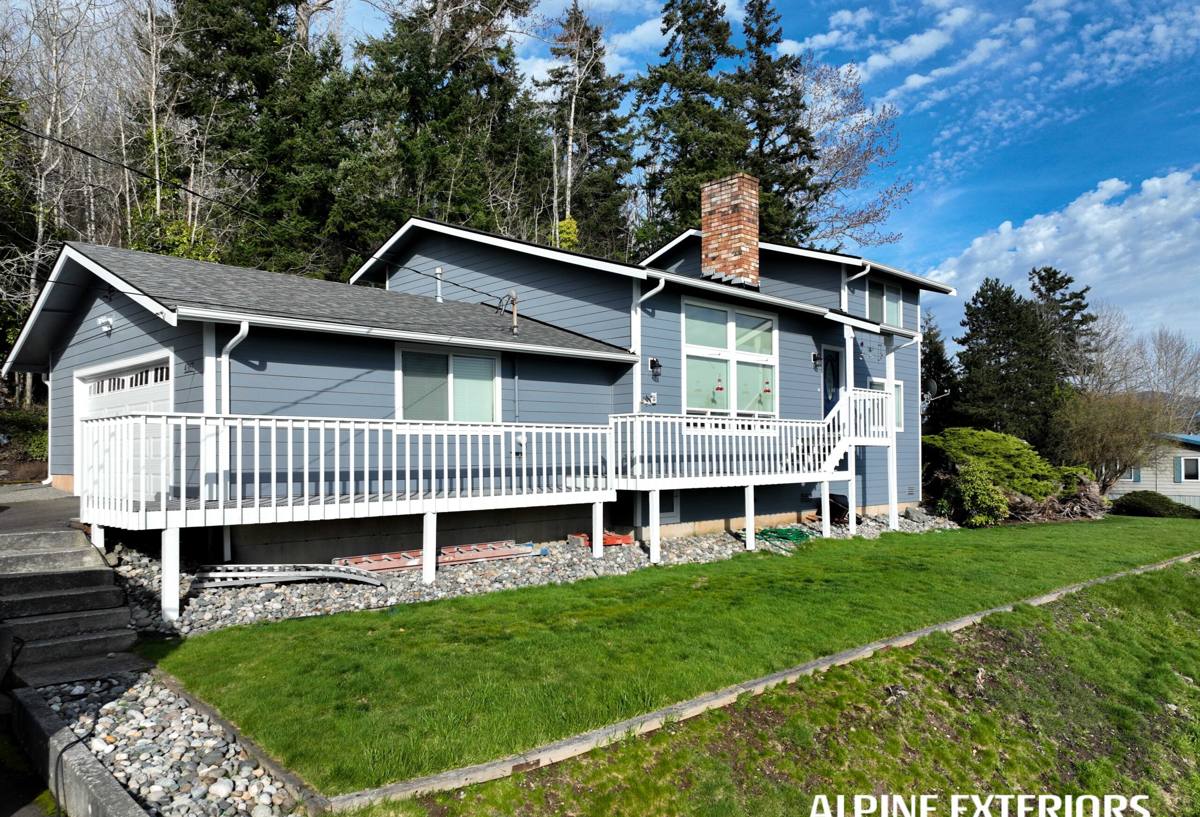
What Salt Air, Rain, and Moss Actually Do to a Roof
Salt Air and Metal Fatigue
Airborne salt from the Strait accelerates corrosion on anything metal — nails, flashing, valley metal, and ridge vents. Standard galvanized fasteners can start showing rust streaks years before they would inland. Once a fastener corrodes, it loses holding power, and shingles in that area become vulnerable to wind lift during winter storms.
Driving Rain and Wind-Driven Water
This area gets rain that doesn't just fall straight down — wind off the water pushes it sideways and up under shingle laps, especially at eaves, valleys, and any place two roof planes meet. A roof built to a minimum-code standard, with minimal underlayment overlap and no attention to wind direction, will eventually let water find a seam.
Moss: The Slow Damage Nobody Notices
Terrell Creek has plenty of tree cover and shaded roof sections that stay damp for days after a rain. That's exactly what moss needs. Moss doesn't just look bad — it holds moisture directly against the shingle surface, lifts shingle edges as it grows, and works granules loose over time. A roof that stays wet and shaded through a long moss season ages faster than the same roof in full sun, even if both are the same age and material.
Why Asphalt Shingles Still Make Sense in This Climate
Asphalt shingles remain the most practical choice for the majority of homes in this area, and there's a straightforward reason: when installed correctly with the right underlayment and ventilation, they handle wind-driven rain and freeze-thaw cycling well, they're serviceable (a damaged section can be repaired without redoing the whole roof), and the cost-to-lifespan ratio is hard to beat for typical residential structures.
We do get asked about metal roofing and other alternatives, and there are legitimate cases for them — steep pitches, specific architectural styles, or homeowners planning to stay 30+ years. But for most Terrell Creek homes, a well-installed architectural asphalt shingle system, matched to the right underlayment package for a coastal, moss-prone lot, is the more practical and cost-effective decision. Our job is to size the product to the specific roof, not to sell whatever carries the best margin.
What a Correct Asphalt Shingle Job Actually Involves
A lot of roofing problems in this area trace back to shortcuts taken during installation that aren't visible once the shingles are down. Here's what we consider non-negotiable on a Terrell Creek re-roof:
- Full tear-off to the deck — layering new shingles over old traps moisture and hides deck damage that needs to be addressed before it spreads.
- Deck inspection and repair — any soft, delaminated, or water-stained sheathing gets replaced, not shingled over.
- Ice-and-water shield at vulnerable zones — eaves, valleys, and roof-to-wall transitions get a self-adhering membrane, not just standard felt, because these are exactly where wind-driven rain and moss moisture concentrate.
- Synthetic underlayment across the field — more tear-resistant and more water-resistant than old-style felt during the exposure period before shingles go on.
- Corrosion-resistant fasteners — given the salt air here, standard galvanized nails are a weak point; we account for that in material selection.
- Balanced intake and exhaust ventilation — proper attic airflow keeps the underside of the deck dry, which matters as much as what's happening on top of the shingles.
- Metal flashing at every penetration and valley — pipe boots, chimneys, skylights, and valleys are where most leaks actually originate, not the open shingle field.
Our Process for a Terrell Creek Re-Roof
1. On-Site Assessment
We walk the roof and the attic, not just the roof. Attic moisture, insulation condition, and existing ventilation tell us as much about a roof's real condition as the shingle surface does. We also look specifically for moss growth patterns and shaded zones that will need extra attention.
2. Scope and Material Plan
Based on that assessment, we put together a scope that specifies underlayment type, flashing details, ventilation changes if needed, and shingle class — in writing, before any work starts.
3. Tear-Off and Deck Repair
Old material comes off, the deck gets inspected board by board, and any compromised sheathing is replaced before anything new goes down.
4. Underlayment and Flashing First
This is the layer that actually keeps water out — the shingles are the wear surface on top of it. We install ice-and-water membrane at eaves and valleys, synthetic underlayment across the field, and new metal flashing at every penetration and transition.
5. Shingle Installation
Shingles go down to the manufacturer's nailing pattern and exposure spec, with corrosion-resistant fasteners given the coastal exposure here.
6. Final Walkthrough
We review the finished roof with the homeowner, including basic guidance on moss monitoring and what to watch for seasonally.
Choosing the Right Shingle for a Coastal, Shaded Lot
Not every asphalt shingle product is built the same way, and the right choice depends on the specific roof — pitch, shade exposure, and how much wind the site sees.
| Shingle Type | Wind Performance | Moss Resistance | Typical Lifespan Here |
|---|---|---|---|
| 3-Tab | Adequate on sheltered slopes | Lower — flatter profile holds moisture longer | Shorter end of range |
| Architectural / Dimensional | Better — heavier, layered construction | Improved with algae-resistant granules | Longer end of range |
| Impact-Rated Architectural | Strongest — reinforced mat | Same granule technology as standard architectural | Comparable to standard architectural, with added durability |
For most Terrell Creek homes, especially those with shaded northern or tree-covered slopes, we lean toward architectural shingles with algae-resistant granules. The upgrade cost is modest relative to the improved resistance to the moss and moisture issues that are common in this specific area.
Moss Prevention and Roof Maintenance Checklist
A correctly installed roof still needs seasonal attention in this climate. Homeowners who stay ahead of these items consistently get more usable life out of their roof:
- Clear overhanging branches to reduce shade and let sections dry between rains
- Keep gutters and valleys free of needles and debris that hold moisture against the shingles
- Address visible moss early with proper treatment rather than pressure washing, which can strip granules
- Check attic ventilation isn't blocked by insulation, especially after any attic work
- Have flashing and pipe boots checked periodically — these seal points wear before the shingle field does
- Watch for granules collecting in gutters, which signals accelerated shingle wear
Signs a Roof in This Area Needs Attention
Because damage here often starts underneath the shingles rather than on the surface, it's worth knowing what to watch for before a leak actually shows up inside the house:
- Dark streaking or thick moss growth concentrated on shaded slopes
- Granules building up in gutters or at downspout outlets
- Curling or lifted shingle edges, especially near valleys and eaves
- Rust staining around flashing, vents, or fasteners
- Any soft spots noticeable when walking the attic floor
- Daylight visible through the roof deck from inside the attic
Any one of these on its own may not be urgent, but they're worth a professional look before the next wet season sets in.
Why a Local Terrell Creek Crew Makes a Difference
A roofing crew that works this specific stretch of Whatcom County coastline knows which slopes on a given lot tend to hold moss, how far wind-driven rain typically pushes under an eave in a winter storm, and which underlayment and flashing details are worth the extra cost versus which are optional elsewhere but not here. That's not something a crew unfamiliar with this coastline picks up on a single job — it comes from doing roofs in this area repeatedly and seeing which details actually hold up over time.
It also means straightforward accountability. We're not driving in from out of the area for one job and then gone — we're working roofs throughout Birch Bay and the surrounding Whatcom County coastline on an ongoing basis, which is exactly the kind of contractor relationship that matters when a roof problem shows up two winters after installation.
If you're dealing with moss, curling shingles, or just want an honest read on where your roof stands, we're happy to take a look. Reach out using the form below for a free, no-pressure estimate on your Terrell Creek asphalt shingle roof.