 Birch Bay Siding
 Windows Built for the Terrell Creek Microclimate
Terrell Creek sits just inland from the Birch Bay shoreline, and that location matters more than most homeowners realize when it comes to windows. You're close enough to the Salish Sea to catch salt-laden air on windy days, but the creek corridor itself adds a second layer of moisture — tree cover, low-lying wetland ground, and shade that keeps siding, trim, and window frames damp longer after every rain. In Whatcom County, that combination adds up over a full year to a lot of wet-dry cycling on anything installed around your window openings.
Windows are one of the first places that shows. A window that was installed correctly ten or fifteen years ago in a drier climate might still be tight and dry today in Terrell Creek. A window that was installed with shortcuts — no proper flashing, gaps in the moisture barrier, caulk used in place of real flashing — usually doesn't make it that long here. We've replaced enough windows in this area to know exactly which details matter and which corners get cut most often.
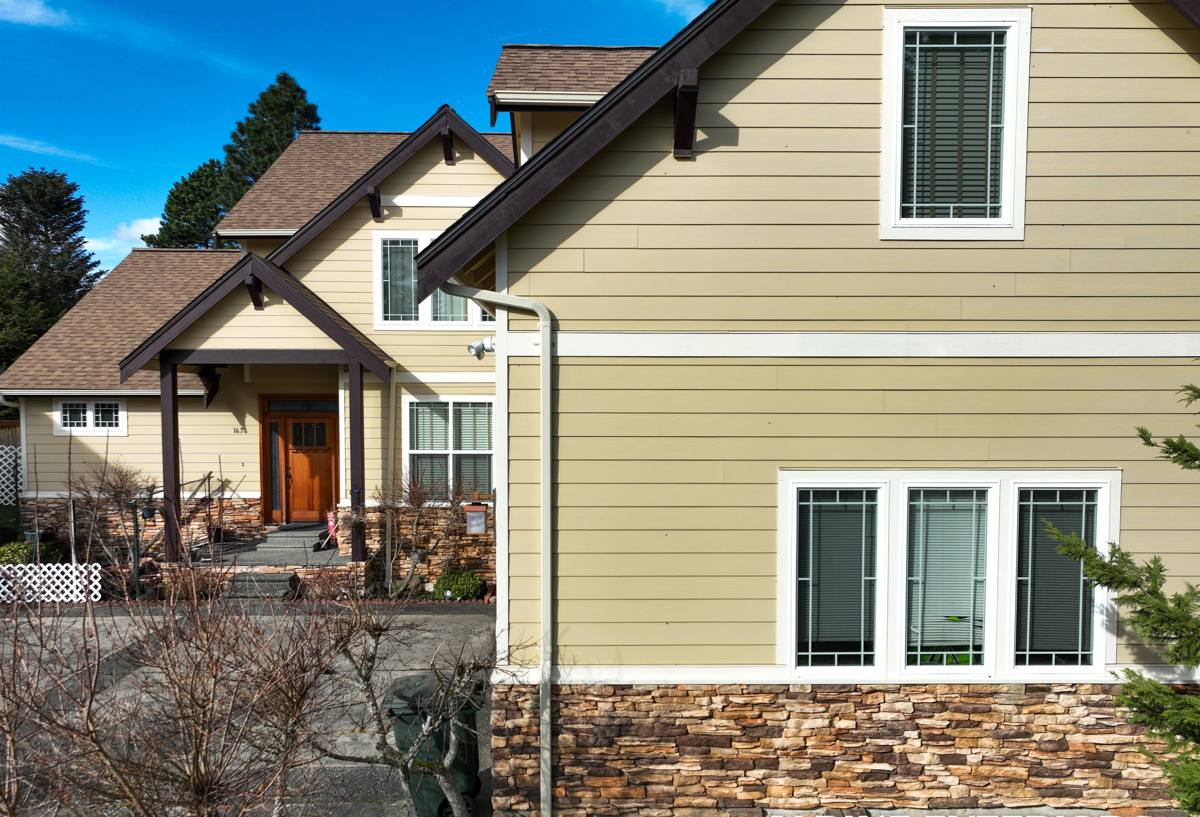
Why Terrell Creek Homes Wear Out Windows Faster
A few things stack up in this specific area that don't apply the same way even a few miles inland:
- Salt air: Airborne salt from the bay accelerates corrosion on window hardware, screen frames, and any exposed fasteners that aren't rated for coastal exposure.
- Driving rain: Storms coming off the water push rain sideways into window walls, which stresses flashing and sealant joints far more than a straight-down rain would.
- Shade and tree cover near the creek: Wooded and creek-adjacent lots dry out slower after rain, so any moisture that gets behind trim or siding lingers instead of evaporating off in an afternoon.
- Long moss season: Whatcom County's wet stretch runs long, and moss doesn't just grow on roofs — it colonizes north-facing sills, shaded trim, and window tracks that stay damp for weeks at a time.
None of this means windows can't hold up well in Terrell Creek. It means the installation has to account for these conditions from day one, not treat them as an afterthought.
What a Correct Window Installation Actually Involves
It's Not Just "Pull Out the Old One, Put In the New One"
A window replacement done right is mostly about what happens before the new window ever goes in the opening. The visible part — the window itself — is often the easiest piece. The part that determines whether it stays dry for the next twenty years is everything around it.
The Details That Matter Most Here
On a proper installation, we're checking and addressing:
- Condition of the rough opening and framing once the old window is out — this is where hidden rot from years of moisture intrusion shows up
- A correctly sloped sill pan so any water that does get past the window drains back outside instead of pooling in the wall
- Self-adhered flashing tape integrated with the house wrap in the right shingle-lap order, so water sheds downward and outward at every layer
- Head flashing or a drip cap above the window to break up driving rain before it reaches the top seam
- Proper shimming so the window is plumb, level, and square — a racked frame stresses seals and makes the sash bind over time
- Low-expansion foam or batt insulation in the gap, not stuffed in a way that bows the frame
- Exterior sealant rated for the joint width and movement it'll see, applied over backer rod rather than as a standalone gap-filler
Skip any one of these and the window can still look fine for a year or two. In a climate like this one, the problems usually show up as interior staining, soft trim, or fogged glass well before the window itself fails.
Common Window Problems We See in Terrell Creek Homes
When we're called out to look at an existing window here, the issues tend to fall into a short, predictable list:
- Fogged or hazy glass: This means the seal between panes has failed and the gas fill has escaped — a sign of age or a manufacturing defect, not something that can be cleaned away.
- Soft or discolored trim and sill: Usually traced back to a missing or failed flashing detail that let water track behind the trim instead of shedding away from it.
- Moss and green staining: Common on shaded, north- or west-facing windows near tree cover, where surfaces don't get enough sun to dry out between rains.
- Stiff or corroded hardware: Locks, cranks, and balances that have taken on salt air exposure over the years, especially on older aluminum or steel components.
- Drafts around an otherwise intact window: Often a sealant or weatherstripping issue rather than a reason to replace the whole unit — worth a real inspection before assuming a full replacement is needed.
Not every window with a problem needs full replacement. Part of an honest estimate is telling you which of these is a repair and which genuinely calls for a new window.
Choosing the Right Window Material for This Area
There's no single "best" window material for every home — it depends on your budget, your home's exposure, and how much upkeep you want to take on. Here's how the common options compare for a coastal, shaded lot like Terrell Creek:
| Material | Moisture & Salt Air Resistance | Maintenance | Typical Lifespan |
|---|---|---|---|
| Vinyl | Good — won't corrode or rot, but can warp under heavy heat cycling | Low — occasional cleaning, no painting | 20-30 years |
| Fiberglass | Excellent — very stable dimensionally, handles moisture and salt air well | Low — durable finish, rarely needs attention | 30-40+ years |
| Wood-clad | Good on the exterior cladding, but any breach in the cladding exposes wood to rot | Higher — cladding seams and any exposed wood need regular inspection | 20-30 years with upkeep |
| Aluminum | Poor in salt air without a marine-grade finish — prone to corrosion and condensation | Moderate — thermal performance and corrosion resistance both need attention | 15-25 years |
For most Terrell Creek homes, we steer people toward vinyl or fiberglass because they hold up against salt air and moisture without asking for ongoing maintenance. Wood-clad windows can still be the right call for a specific look, but we're upfront that they carry a higher maintenance burden in a climate this wet — that's a trade-off you should choose knowingly, not discover later.
Glass Package Matters as Much as Frame Material
Double-pane, argon-filled, low-E glass is the standard for this region and handles our temperature swings and condensation risk well. Triple-pane adds insulation value and sound dampening but costs more and adds weight — worth it for a north-facing wall exposed to wind off the water, less necessary on a sheltered, tree-shaded elevation.
Our Process for Terrell Creek Window Installation
- On-site assessment: We look at each window opening, check for existing rot or moisture damage, and take real measurements — not estimates from a photo.
- Material and glass selection: We walk through frame material, glass package, and grille options based on your budget and each window's exposure.
- Ordering and scheduling: Lead times vary by manufacturer; we give you a realistic timeline up front rather than a best-case guess.
- Prep and protection: We protect flooring, landscaping, and surrounding siding before removal begins.
- Removal and opening inspection: Old windows come out carefully so we can inspect the framing underneath before anything new goes in.
- Flashing, sill pan, and install: This is where the weatherproofing happens — sill pan, flashing tape, the new window set plumb/level/square, then sealed.
- Insulation and interior/exterior finish work: Gaps insulated, trim reinstalled or replaced, caulk lines finished clean.
- Final walkthrough: We test operation on every window and go over care before we consider the job done.
What Affects the Cost of Window Installation Here
Every home is different, but the cost of a window project in Terrell Creek tends to move on a handful of factors:
| Factor | Why It Affects Cost |
|---|---|
| Number of windows | Per-window cost typically drops as more units are done in one visit |
| Frame material | Vinyl is generally the most budget-friendly; fiberglass and wood-clad cost more upfront |
| Window size and configuration | Large picture windows, bays, or custom shapes cost more than standard sliders or single-hungs |
| Hidden rot or framing damage | Found once old windows come out; this is the most common source of cost surprises |
| Trim and interior finish work | Full trim replacement costs more than reusing sound existing trim |
| Access and site conditions | Second-story windows, tight shaded lots, or limited equipment access add labor time |
We won't quote broad, meaningless price ranges here — every Terrell Creek home is different, and a real number requires a real look at your windows. What we can promise is that our estimate spells out these factors so you know exactly what you're paying for and why.
Why a Crew That Already Works Terrell Creek Matters
Window installation isn't a product you buy off a shelf — it's a job that gets done well or done poorly depending on who's doing it and how well they understand the site. A crew that regularly works this specific pocket of Birch Bay already knows:
- Which flashing details actually hold up against driving rain off the water, versus what's adequate in a drier inland area
- How shaded, creek-adjacent lots affect drying time and material choice
- What Whatcom County and local permitting typically require for window replacement, so there are no surprises mid-project
- How to schedule around this region's wet stretch so work isn't rushed into a window opening during a storm
That local familiarity isn't a marketing line — it's the difference between an installer guessing at what a coastal, tree-shaded home needs and one who's already seen how the last ten jobs in this exact area held up over time.
Keeping Your New Windows Performing in This Climate
A well-installed window still benefits from some basic upkeep in a salt-air, moss-prone environment. This isn't a heavy maintenance list — just a few habits that go a long way:
- Rinse salt residue and debris off frames, tracks, and screens a couple of times a year, especially after windy weather off the bay
- Check exterior caulk lines annually for cracking or separation and have any gaps resealed before they let water in
- Clear moss or algae buildup on sills and shaded trim gently — a soft brush and mild cleaner, not pressure washing directly at the seals
- Keep nearby vegetation trimmed back where possible to improve airflow and sun exposure on shaded elevations
- Test operation each season — a window that's stiff to open or close is worth checking before it becomes a bigger issue
Timing a Window Project Around Birch Bay Weather
Window installation can happen in most seasons, but drier stretches make for a cleaner job — less risk of moisture getting into an open wall cavity during the swap. We plan around the forecast, stage materials so each opening is exposed for as little time as possible, and use temporary protection if weather shifts mid-project. If you're planning ahead, the drier months give the most flexibility, but we work with Terrell Creek homeowners year-round and adjust our approach to the conditions rather than asking you to wait for a perfect week.
If your windows are showing their age, letting in drafts, or you're just planning ahead for a home in Terrell Creek, we're happy to take a look and give you a straight answer — no pressure, no upsell. Fill out the form below for a free estimate.