 Birch Bay Siding
 Windows in Point Whitehorn Take a Different Kind of Beating
Point Whitehorn sits close enough to the water that salt air is part of daily life, not an occasional nuisance. Add in Whatcom County's long wet season, wind-driven rain off the Strait, and the moss and mildew that come with months of shade and moisture, and you've got a set of conditions that ages windows faster than most manufacturers' literature accounts for. Vinyl frames chalk and go brittle at the seals. Aluminum frames pit and corrode where salt spray settles into the extrusion. Wood sashes that aren't kept painted swell, then shrink, then let water in at the joints.
We work on homes in Birch Bay and the surrounding Point Whitehorn area regularly, and the pattern is consistent: window failure here usually starts at the seal and the flashing, not the glass. By the time a homeowner notices fogging between panes or a draft at the sash, moisture has often already been getting into the wall framing behind the window for a season or two. Replacing the window right the first time — with materials and flashing details suited to this specific coastal exposure — matters more here than it does twenty miles inland.
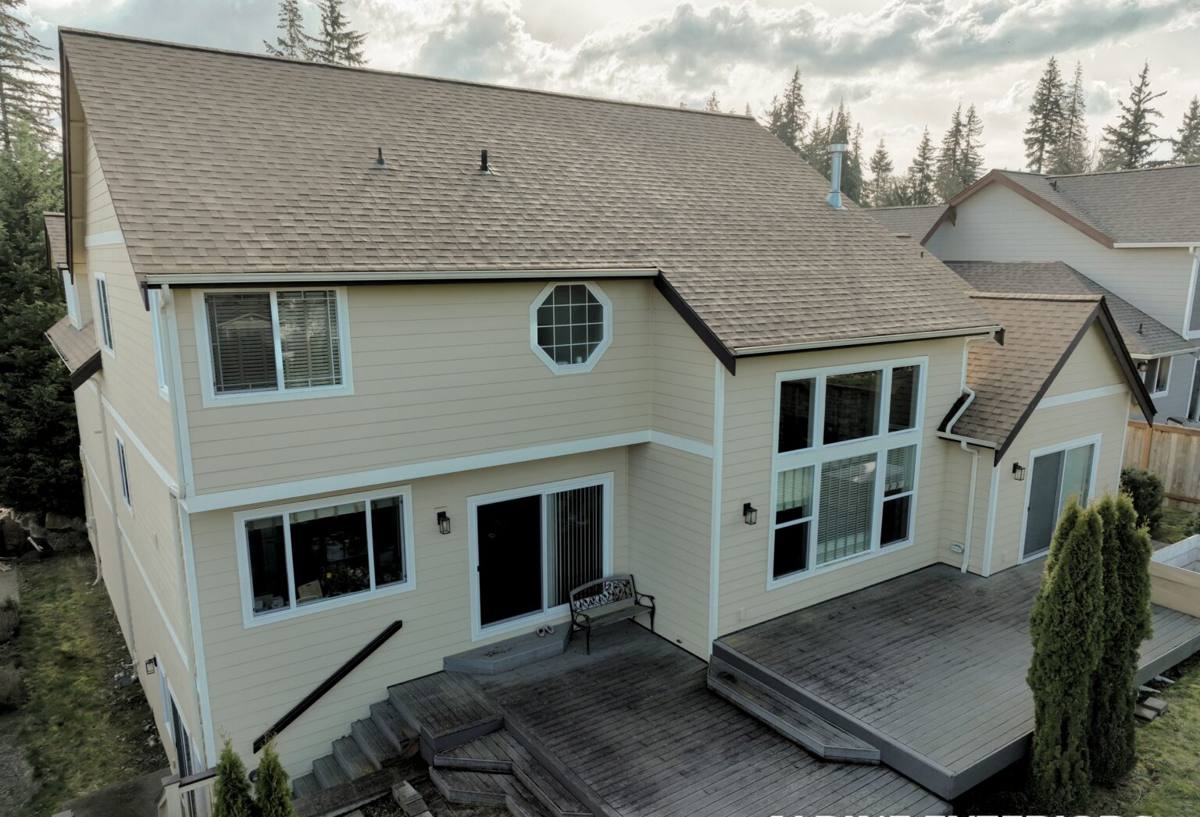
What "Correct" Window Replacement Actually Means
A window replacement isn't just popping out an old unit and screwing in a new one. Done right, it's a sequence of steps where any one skipped step can undo the benefit of a good window. This is where a lot of budget installs fall short, especially on a coastal property where the margin for error is smaller.
The Opening, Not Just the Window
Before a new window goes in, the rough opening gets inspected. On older Point Whitehorn homes, this is often where we find the real story: soft sheathing from years of minor leaks, old flashing paper that's failed, or framing that's shifted slightly out of square. Any rot gets cut out and replaced before anything new goes in — installing a new window over compromised framing just hides the problem for a few more years.
Flashing and Water Management
This is the step that determines whether the window lasts 25 years or 8. Proper flashing integrates with the home's weather-resistive barrier in a shingled, water-shedding sequence — sill pan flashing first, then side flashing, then head flashing lapped over the top — so that any water that gets past the exterior finish is directed back out, not into the wall cavity. In a driving-rain, salt-air environment like Birch Bay, we don't shortcut this step or substitute caulk for proper flashing. Caulk fails; correctly lapped flashing doesn't rely on a bead of sealant to keep water out.
Air Sealing and Insulation
The gap between the window frame and the rough opening needs to be sealed and insulated, not just stuffed with fiberglass. Low-expansion window foam or backer rod and sealant, applied correctly, closes off the air leak path that causes drafts and condensation complaints in winter.
Interior and Exterior Finish
Trim, caulking, and paint or sealant on both sides finish the job. On the exterior, this is also where salt-air-appropriate sealants and fasteners matter — standard hardware corrodes faster this close to the water.
Choosing Materials for a Salt Air, High-Moisture Climate
Not every window product sold in the Pacific Northwest is a good fit for a property exposed to salt spray and near-constant winter moisture. We steer homeowners toward materials and configurations that hold up specifically to this exposure, and we're upfront about the trade-offs of each option rather than pushing one product line.
| Frame Material | How It Handles Salt Air & Moisture | Maintenance |
|---|---|---|
| Vinyl (quality, welded-corner) | Doesn't corrode; UV and coastal-grade formulations resist chalking longer than economy vinyl | Low — occasional cleaning |
| Fiberglass | Very stable dimensionally, strong resistance to moisture-driven expansion/contraction | Low |
| Aluminum (non-clad, standard) | Prone to pitting and white corrosion near salt spray unless specifically coastal-rated | Moderate to high near the water |
| Wood, unclad | Handsome but needs consistent paint maintenance to keep moisture out of the joints | High |
| Wood, clad (vinyl or aluminum-clad) | Wood interior warmth with a protected exterior shell; cladding quality matters near salt air | Low to moderate |
We don't install every product on this list on every home — the right call depends on the home's exposure, existing trim and siding, and the homeowner's maintenance appetite. What we won't do is put an unclad wood window on a wall that takes direct salt spray without being clear about what that means for upkeep, or use standard hardware where corrosion-resistant fasteners are the right call.
Glass Packages
Double-pane, low-E glass with argon fill is the practical standard for this climate — it cuts heat loss in winter and reduces solar gain in summer without the added cost of triple-pane, which usually isn't necessary at Birch Bay's latitude and moderate coastal temperatures. Where a home faces prevailing wind and rain directly, we'll also talk through impact-resistant or laminated glass options, less for storm protection than for the added durability against wind-driven debris.
Signs Your Point Whitehorn Home's Windows Need Attention
- Fogging or a visible haze between the panes — the seal has failed and the insulating gas is gone
- Visible corrosion or white powdery buildup on aluminum frames
- Soft or discolored wood trim or sill at the base of the window
- Persistent moss or dark staining on or near the frame that keeps coming back after cleaning
- Noticeable draft when standing near the window on a windy day
- Windows that are difficult to open, close, or latch — a sign the frame has shifted or swollen
- Rising heating bills without another clear explanation
- Condensation forming on the interior glass regularly in cold weather
Our Process, Start to Finish
1. On-Site Assessment
We look at the windows themselves, but also the flashing, trim, and siding around them, since window failure and siding failure often share a cause. We'll tell you honestly if a window still has useful life left rather than pushing replacement it doesn't need.
2. Straightforward Proposal
You get a written scope covering the window products recommended, the flashing and installation approach, and a clear price — no vague allowances that turn into change orders once work starts.
3. Careful Removal
Old windows come out with attention to protecting the surrounding siding and interior finishes. If we find hidden rot or damaged sheathing once the old window is out, we'll show you before we close anything up.
4. Correct Installation
Flashing, air sealing, and finish work follow the sequence described above — every time, not just when it's convenient.
5. Walkthrough
We test operation, check the seals, and walk the job with you before we consider it done.
Why Local Experience in This Specific Area Matters
Birch Bay and Point Whitehorn aren't generic Whatcom County — the direct salt exposure, wind patterns off the water, and moss-heavy shade in the wooded lots around the point create conditions that differ even from homes a few miles inland. A crew that works this area regularly already knows which details get skipped by installers who don't, and which corners cost homeowners money down the road. We're not guessing at flashing details or material choices for this climate; we've done the work and seen what holds up and what doesn't over time.
We also carry that local knowledge into how we sequence a job around Point Whitehorn's weather — timing installs to avoid working an open wall cavity during a heavy rain stretch, and making sure any temporary weather protection during a multi-window job actually holds up to real coastal wind.
What Affects the Cost of Window Replacement
| Factor | Why It Matters |
|---|---|
| Number and size of windows | More or larger openings mean more material and labor |
| Frame material chosen | Vinyl, fiberglass, and clad wood carry different price points |
| Condition of the existing opening | Rot or damaged sheathing found during removal adds repair scope |
| Glass package | Standard low-E double-pane vs. upgraded or impact-resistant glass |
| Access and site conditions | Second-story or hard-to-reach windows take more time and equipment |
| Trim and finish work | Matching existing interior or exterior trim profiles adds labor |
Most straightforward residential window replacement jobs run from a few hundred dollars per window for a basic vinyl unit in good conditions, up into the low thousands per window for larger openings, premium materials, or jobs that turn up hidden repair work. We'll never give you a number without seeing the actual windows and openings first — anyone who quotes sight unseen is guessing.
Ready When You Are
If your windows are showing their age, or you just want an honest read on whether they're holding up to what Point Whitehorn's climate throws at them, we're glad to take a look. Estimates are free, there's no pressure to move forward, and you'll get a straight answer about what your home actually needs. Use the form below to get started.