 Birch Bay Siding
 Composite Decking Built for Lynden's Climate
Lynden sits in a part of Whatcom County that gets more rain, more standing damp, and a longer moss season than most homeowners realize until they're dealing with a rotting deck board or a slick, green-tinged walking surface every spring. Wood decks in this area take a beating from moisture that never fully dries out between storms, and even pressure-treated lumber struggles to keep up over a decade of Pacific Northwest winters. Composite decking was built for exactly this kind of exposure, and it's why we install more of it here than any other decking material.
This page is about composite decking specifically for Lynden homes — what the local climate demands from the material, what a correctly built deck actually involves, and how our process works from first look to final walkthrough.
Why Lynden's Weather Is Hard on Decks
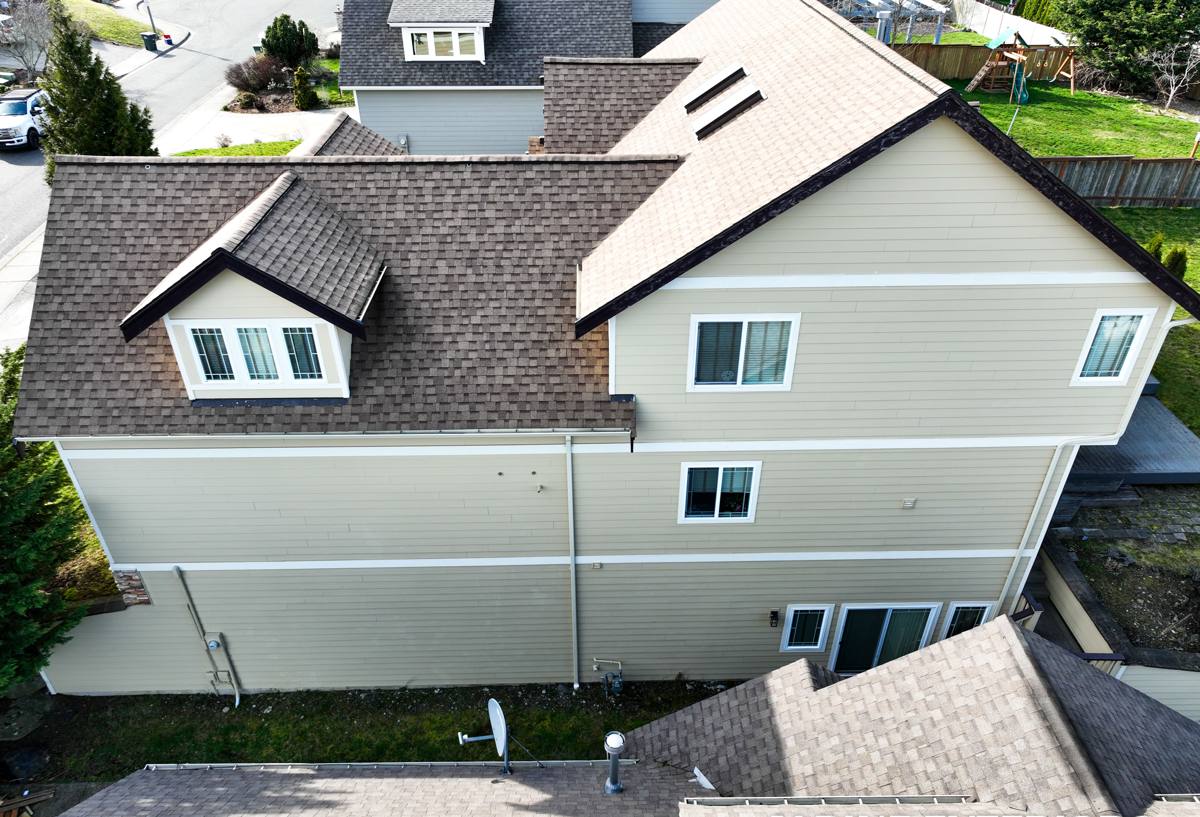
Whatcom County's marine-influenced climate means long stretches of grey, damp weather rather than short, heavy downpours. That steady dampness is worse for decking than an occasional hard rain, because it keeps wood fibers wet for days at a time. A few specific local conditions matter for anyone planning a deck project:
- Driving rain: wind-driven rain gets under railings, around post bases, and into any gap in a wood deck's finish — spots a simple roof overhang won't protect.
- Extended moss and algae season: shaded and low-airflow areas of a deck can stay damp for months, which is exactly what moss and mildew need to take hold.
- Regional coastal air: moisture-laden air moving through the county carries salts and minerals that accelerate corrosion on fasteners and hardware over time.
- Limited hard freezes, frequent freeze-thaw cycles: repeated freezing and thawing during winter months stresses any material that absorbs water, opening cracks that get worse each season.
None of this makes decking impossible here — it just means the material and the installation details matter more in Lynden than they would in a drier climate.
What Composite Decking Solves
Composite decking is made from a blend of wood fiber and recycled plastic, capped (in most quality product lines) with a protective outer shell. That construction directly addresses the failure points we see on old wood decks around Lynden:
Moisture Resistance
Composite boards don't absorb water the way solid wood does, so they don't swell, cup, or splinter after a wet winter. That matters most in shaded yards or decks tucked under trees, where a wood deck would stay damp for days after a storm.
No Annual Refinishing
Wood decks in this climate typically need staining or sealing every one to two years just to keep moisture out. Composite boards skip that maintenance cycle entirely — a real advantage for homeowners who don't want a recurring outdoor project every spring.
Resistance to Rot and Insect Damage
Standing moisture and long damp stretches are exactly what invite rot and wood-boring insects. Composite decking removes the food source, which is one of the biggest reasons we recommend it for ground-level and low-clearance decks where airflow underneath is limited.
What a Correct Composite Deck Installation Involves
Composite decking is only as good as what's underneath it. A lot of the deck failures we get called out to inspect in Whatcom County aren't the decking material's fault — they're framing, drainage, or fastening mistakes that would have caused problems no matter what surface was installed. A proper job includes:
- Framing sized and spaced to the manufacturer's specifications for composite spans — composite typically needs tighter joist spacing than wood.
- Ledger board flashing and waterproofing where the deck attaches to the house, so water is directed away from the structure rather than into it.
- Hidden or manufacturer-approved fastening systems that avoid surface screw holes where water and grime can collect.
- Proper gapping between boards for drainage and material expansion, which changes with temperature more than most homeowners expect.
- Ventilation underneath the deck to prevent moisture from being trapped between the joists and the ground.
- Corrosion-resistant hardware throughout, given the mineral content in local rain and groundwater.
Skipping any one of these doesn't show up on day one — it shows up two or three winters later as soft framing, a loose railing, or boards that trap water instead of shedding it.
Composite vs. Wood vs. PVC: Honest Trade-Offs
We install all three materials, and each has a legitimate place depending on budget, look, and how much upkeep a homeowner actually wants to take on. Here's how they compare for a Lynden application specifically:
| Factor | Pressure-Treated Wood | Composite | PVC/Cellular |
|---|---|---|---|
| Upfront cost | Lowest | Mid-range | Highest |
| Annual maintenance | Staining/sealing needed | Occasional cleaning only | Cleaning only |
| Moisture performance | Absorbs water, can cup or rot | Resists moisture well | Fully moisture-resistant |
| Moss/mildew resistance | Needs regular treatment | Good, capped boards resist staining | Very good |
| Expected lifespan (this climate) | 10-15 years with upkeep | 25-30 years | 25-30+ years |
| Feel underfoot | Natural wood grain | Wood-like, warmer than PVC | Smoother, more plastic feel |
For most Lynden homeowners, composite lands in the sweet spot: it handles the damp climate far better than wood without the premium cost of full PVC. We'll walk through the honest trade-offs for your specific deck rather than push whatever has the best margin — the right call depends on your budget, how the deck is shaded, and how long you plan to stay in the home.
Sizing, Layout, and Design Considerations Local to This Area
Deck layout decisions carry more weight here than in a drier region. A few things we factor into every Lynden project:
Drainage and Grading
We check how water moves off the deck and away from the foundation before we finalize framing height and joist direction. A deck that dumps runoff back toward the house creates the same moisture problems the deck was supposed to eliminate.
Shade and Airflow
Decks under mature trees or against north-facing walls stay damp longer and are more prone to moss. We may recommend wider board gapping, different board orientation, or trimming recommendations to keep airflow moving underneath.
Railing and Fastener Material
Given the corrosive effect of damp, mineral-heavy regional air on lower-grade metal, we spec stainless or coated hardware for railings and structural connections rather than standard galvanized fasteners wherever it makes a durability difference.
Our Process for a Lynden Composite Deck
- On-site assessment: we look at existing structure (if replacing a deck), grading, sun/shade exposure, and how the space will actually be used.
- Material and layout walkthrough: we go over composite board options, color, and layout, plus honest cost ranges before any commitment.
- Permitting: we handle the permit process where required for the scope of work — deck size, height, and attachment to the home all factor into whether one's needed.
- Demolition and framing (if applicable): old wood decking is removed, and framing is inspected or rebuilt to current span and moisture-management standards.
- Installation: decking, fascia, and railing go in with hidden fasteners and manufacturer-specified gapping.
- Final walkthrough: we check the whole deck with you before calling the job done — fastening, railing stability, drainage, and finish.
Why Hiring a Crew That Already Works in Lynden Matters
A composite deck built to a generic national spec sheet doesn't automatically hold up to Whatcom County's specific mix of driving rain, long damp seasons, and freeze-thaw winters. A crew that regularly works in and around Lynden has already seen which framing details, fastener grades, and drainage approaches actually last here — and which ones look fine for the first year or two and then start failing. That local track record shows up in fewer callbacks, fewer surprises, and a deck that's still solid a decade in, not just on installation day.
We also know the practical side of building here: how local permitting works for deck projects, what inspectors in the area expect to see, and how to schedule a build around the wetter months so framing and structural work aren't done in the worst weather windows.
Maintaining Your Composite Deck
Composite decking cuts maintenance dramatically compared to wood, but "low-maintenance" isn't "no-maintenance." A simple seasonal routine keeps a composite deck performing the way it's supposed to in this climate:
- Sweep off leaves and debris regularly, especially in fall — trapped organic material is what feeds moss and mildew growth.
- Rinse the deck a few times a year with a garden hose and mild soap; avoid pressure washers on capped composite unless the manufacturer specifically allows it.
- Keep gutters and downspouts clear so runoff isn't discharging directly onto or under the deck.
- Check railing posts and fasteners annually for movement, especially after the first winter.
- Trim back overhanging branches to improve airflow and sun exposure on shaded sections.
If your current deck is showing soft spots, moss buildup, or you're planning a new one and want it built for what Lynden winters actually do to a deck, we're happy to take a look. We offer free, no-pressure estimates — walk us through what you're picturing, and we'll give you a straight assessment of what it'll take.