 Birch Bay Siding
 Why Ferndale Decks Wear Differently Than the Catalog Photos Suggest
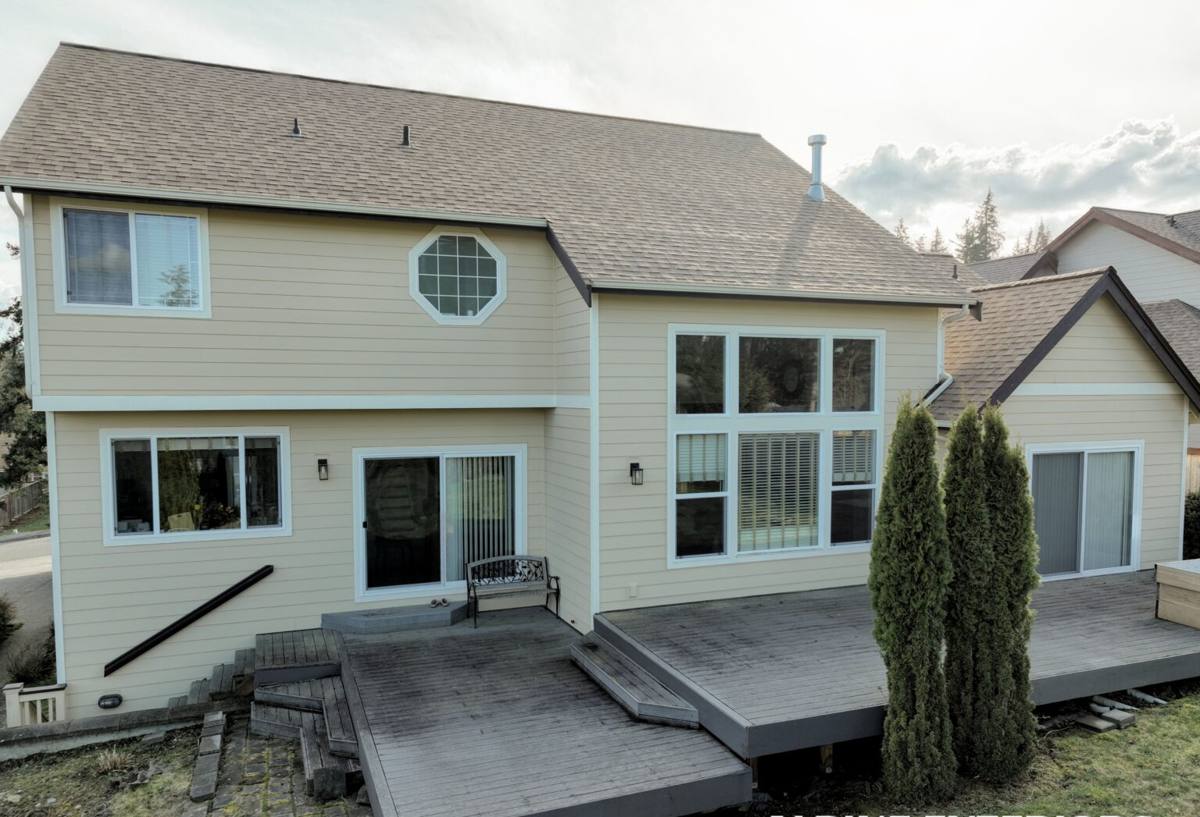
Ferndale sits close enough to Birch Bay and the Strait of Georgia that homes here deal with a mix of weather most inland deck builders never have to plan for. You get salt-laden air rolling in off the water, long stretches of driving rain through fall and winter, and a moss season that can run six months or more depending on how much shade and moisture a yard holds. None of that shows up in a manufacturer's brochure photo, but it shows up fast on a deck that wasn't built with it in mind.
A deck that would hold up fine in a drier part of Whatcom County can start showing problems in Ferndale within a couple of seasons if the fastener choice, drainage plan, or board spacing wasn't matched to local conditions. That's not a knock on any particular product — it's just the reality of building outdoor structures this close to the coast.
What Salt Air, Rain, and Moss Actually Do to a Deck
Salt air and metal fasteners
Airborne salt accelerates corrosion on fasteners, brackets, and hardware. Standard galvanized coatings can start breaking down faster near the water than they would ten or twenty miles inland. Once a fastener starts rusting, it stains the surrounding wood or composite, weakens its grip, and eventually needs replacing — usually before the deck boards themselves are due for attention.
Driving rain and water intrusion
Rain here doesn't always fall straight down. Wind-driven rain gets under railings, into ledger board connections, and behind fascia if those areas weren't flashed and sealed correctly. Most of the rot we find on older decks starts at the ledger — where the deck attaches to the house — because that joint traps moisture against the framing for months at a time.
Moss, algae, and shaded ground
A long moss season means any deck surface that stays damp and shaded — north-facing decks, areas under mature trees, low decks close to the ground — will grow moss and algae faster than a sun-exposed deck in a drier climate. Beyond the slip hazard, moss holds moisture against the board surface, which shortens the life of wood decking and can void warranties on some composite products if left unaddressed.
What a Correctly Built Deck Needs in This Climate
- Corrosion-resistant fasteners and structural hardware rated for coastal or high-moisture exposure, not just standard exterior-grade
- Proper ledger board flashing and a sealed, ventilated connection where the deck meets the house
- Joist spacing and blocking that accounts for the specific decking material's span rating — this changes by product and by board orientation
- A drainage plan so water sheds off the deck surface and away from the foundation, not pooling underneath
- Gapping between boards sized for the material — too tight and debris packs in and holds moisture; too wide and it looks unfinished and catches heels
- Railing posts anchored with hardware rated for the actual loads, not just what's visible from the top
Decking Material Comparison for Ferndale Conditions
| Material | How it handles salt air and rain | Moss/algae resistance | Maintenance |
|---|---|---|---|
| Pressure-treated wood | Good if fasteners and flashing are corrosion-resistant; wood itself handles moisture well when sealed | Needs regular cleaning and sealing to resist moss buildup | Annual cleaning, re-sealing every 1-3 years |
| Cedar | Naturally moisture-resistant; still needs proper fastener selection near the coast | Better natural resistance than most woods, but still grows moss in shaded, damp spots | Periodic cleaning and oil/sealer application |
| Composite decking | Handles rain and moisture well; check manufacturer's coastal/salt-air warranty terms | Textured composites can trap moisture in shaded areas — surface cleaning matters | Occasional washing, no sealing or staining required |
| PVC/capped composite | Strong moisture resistance; least affected by salt air of the common options | Smoother caps shed moss better, but low, shaded decks still need cleaning | Lowest maintenance of the group; occasional washing |
There's no single "best" material for every Ferndale property — it depends on how much sun and airflow the deck gets, how close it sits to the water, and how much upkeep the homeowner actually wants to do. We walk through this honestly during the estimate rather than pushing whatever has the best margin.
Framing, Fasteners, and the Parts You Don't See
Most deck failures don't start at the surface — they start underneath, at the framing and connections nobody looks at after the project is finished. This is where corner-cutting does the most long-term damage and is hardest for a homeowner to catch at the time.
The ledger connection
This is the single most important structural and moisture point on any deck attached to a house. Proper flashing, a small air gap or drainage channel behind the ledger, and correctly rated lag bolts or structural screws matter more here than almost anywhere else on the project.
Post bases and footings
Whatcom County soil and drainage vary block to block. Footings need to be sized and set to local frost depth and drainage conditions, with post bases that keep the post end off standing water — wood or composite posts sitting in damp gravel or soil are a common source of early failure.
Fastener selection
We use fasteners and structural connectors rated for the exposure the deck will actually see, not just what's rated for general exterior use. Near the water, that distinction matters more than it does further inland.
Design Choices That Matter for Ferndale Properties
Ferndale properties range from open, sun-exposed lots to yards with heavy tree cover and more shade — both are common in this area, and each changes the deck plan.
- Orientation and sun exposure: shaded, low-airflow decks need extra attention to gapping and drainage since they'll stay damp longer after rain
- Railing style: open baluster designs let air and light through, which helps a deck dry out faster than solid privacy panels in a wet climate
- Deck height off grade: decks built low to the ground are more prone to trapped moisture and moss underneath — proper clearance and ventilation underneath the frame helps
- Covered vs. open sections: a partial roof or pergola can protect part of the deck from driving rain, but changes how that section drains and dries
Our Process for a Ferndale Deck Project
- On-site assessment — we look at sun exposure, drainage slope, existing structure (if replacing a deck), and how the house's siding and roofline will tie into the ledger connection
- Material and design walkthrough — honest comparison of wood, cedar, composite, and PVC options based on your budget, maintenance preference, and the specific exposure of your lot
- Permitting — we handle the permit process required for the scope of work
- Framing and structural work — footings, ledger flashing, joists, and hardware sized and rated for this climate
- Decking, railing, and finish work — installed with the fastener and gapping approach matched to the material chosen
- Final walkthrough — we go over maintenance expectations specific to the material installed, so there are no surprises in year two or three
Maintenance Reality: What Different Materials Actually Require
Every deck material needs some upkeep in this climate — the question is how much and how often. Wood and cedar need periodic cleaning and resealing to keep moss and moisture from working into the grain. Composite and PVC need less frequent attention but still benefit from an annual wash, especially on shaded sections where algae and moss get a foothold. Gutters and downspouts near the deck should be checked regularly too, since misdirected roof water is a common and avoidable cause of premature deck wear.
Questions Worth Asking Before You Hire Anyone
- What fastener and hardware grade will be used, and is it rated for coastal exposure?
- How will the ledger board be flashed and sealed against the house?
- What's the drainage plan for water shedding off the deck surface?
- Is the footing depth and post base setup suited to this property's soil and drainage?
- What does the manufacturer's warranty actually cover in a high-moisture, salt-air environment?
- What maintenance will this specific material realistically require here, not in a drier climate?
Why Local Experience in Ferndale and Birch Bay Matters
A crew that already works this stretch of Whatcom County has already seen which fastener grades hold up, which ledger details fail first, and which decking materials handle a long moss season without turning into a maintenance headache. That's not something you can fully substitute with a generic install checklist — it comes from repeatedly seeing how decks in this specific coastal environment age over years, not just how they look on install day.
If you're planning a new deck or replacing one that's showing its age, we're happy to take a look and walk you through your options honestly. Reach out for a free, no-pressure estimate — there's a form just below this page to get started.