 Birch Bay Siding
 Building a Deck That Actually Holds Up Near Birch Bay
A deck in Bellingham or along the Birch Bay shoreline lives a harder life than a deck built inland. Between the salt-laden air coming off the water, the long stretches of driving rain that define a Whatcom County fall and winter, and a moss season that seems to start earlier every year, an outdoor structure here is under near-constant moisture and biological pressure. A deck built with generic techniques or materials chosen for a drier climate will show it within a few seasons — soft spots, algae film underfoot, corroding hardware, and boards that cup or split. A deck built for this specific environment can look and perform well for decades. The difference is almost entirely in the decisions made before the first board goes down.
We build and repair decks throughout Bellingham, Birch Bay, and the surrounding Whatcom County waterfront and inland neighborhoods, and this page focuses specifically on new deck construction for homes in that corridor — not a generic national overview, but what actually matters when you're building within a few miles of Bellingham Bay and the Strait of Georgia.
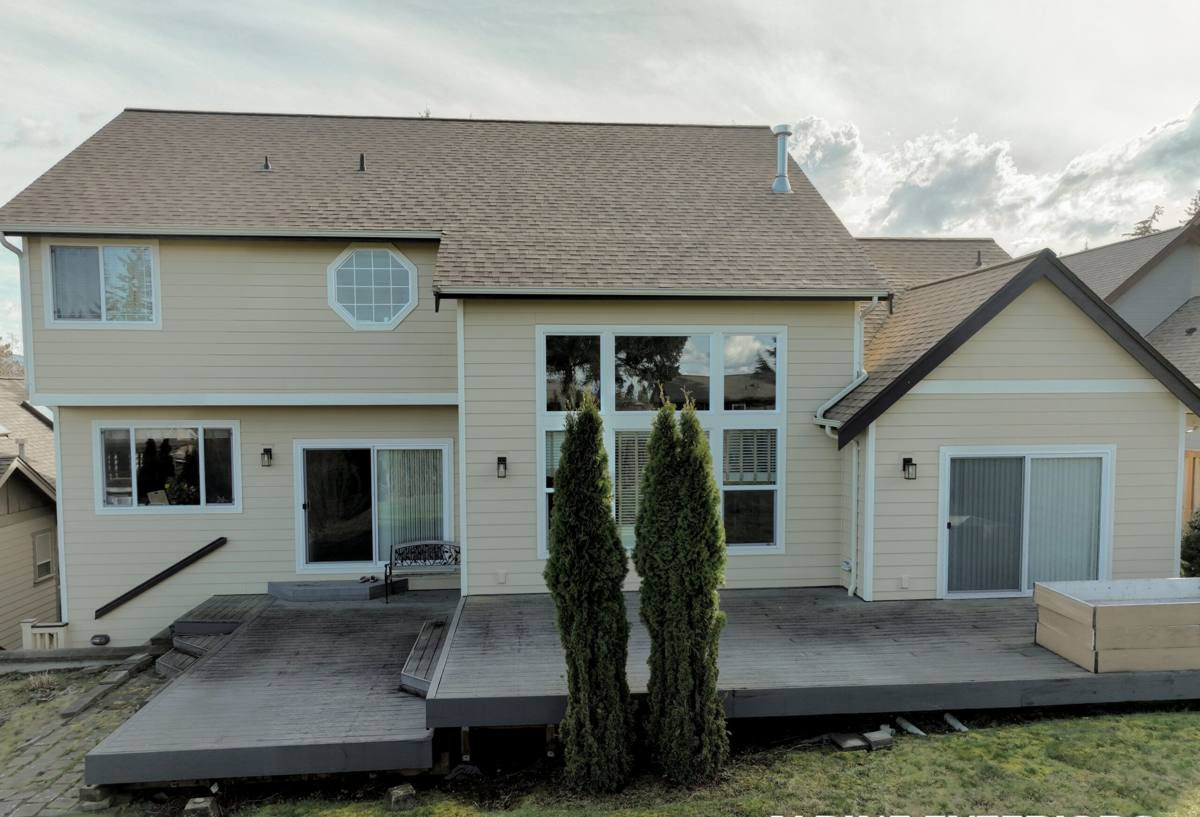
What This Climate Does to a Deck
Understanding the failure modes is the first step to avoiding them. In this region, decks don't usually fail from one dramatic event — they fail slowly, from repeated exposure that a homeowner in a drier climate would never plan around.
Salt Air and Metal Fatigue
Properties closer to Birch Bay and Bellingham Bay deal with airborne salt that accelerates corrosion on anything metal — fasteners, joist hangers, railing brackets, and structural connectors. Standard galvanized hardware can start to rust and weaken well before the wood around it shows any wear, which is a real structural concern because the hardware, not the decking boards, is what's actually holding the frame together.
Driving Rain and Moisture Intrusion
This isn't gentle, straight-down rain. Wind-driven rain off the water pushes moisture sideways into ledger board connections, under railing posts, and into any gap where end grain is exposed. Wood absorbs water fastest through end grain, so every cut edge, notch, and post base is a vulnerable point if it isn't sealed and detailed correctly.
Moss, Algae, and Shade
Long wet seasons combined with tree cover common in this area create ideal conditions for moss and algae growth on horizontal surfaces. Beyond looking bad, a moss layer holds moisture against the decking material and creates a genuinely slick, dangerous walking surface — this is a safety issue as much as a cosmetic one.
Freeze-Thaw Cycling
Whatcom County doesn't get extreme cold for long, but it gets enough freeze-thaw cycling in the footings and any trapped moisture in wood fibers to gradually work apart joints and fasteners that weren't installed with any tolerance for movement.
What a Correct Deck Build Involves Here
A deck that's going to hold up under these conditions is built differently in a few specific ways, starting below grade and working up.
Footings and Foundation
Footings need to be sized and set below the local frost depth and bear on undisturbed, well-draining soil. In areas with heavier clay or poor drainage — common in parts of Whatcom County — that can mean larger footings or added gravel drainage beneath them so water isn't sitting against the concrete and post base year-round.
Framing and Fasteners
This is where salt air exposure matters most. We spec stainless steel or heavy-duty coated fasteners and connectors rated for coastal or high-corrosion environments rather than standard-grade galvanized hardware, especially on any deck within a mile or two of the water. It costs more up front. It's far cheaper than replacing corroded joist hangers under a deck that's already built.
Ledger Attachment
Where the deck attaches to the house is the single most common source of moisture damage and, in worst cases, structural failure. Correct flashing at the ledger board — installed so water is shed away from the house framing, not trapped behind the deck — is non-negotiable in a climate with this much sideways rain.
Decking Material Choice
Material selection has to account for moss resistance, moisture behavior, and long-term maintenance realistically, not just up-front cost.
| Material | Moisture & Moss Behavior | Maintenance | Typical Lifespan Here |
|---|---|---|---|
| Pressure-treated lumber | Absorbs moisture readily; needs sealing to resist moss and cupping | Annual cleaning and re-sealing | 15-20 years with upkeep |
| Cedar | Naturally moisture- and insect-resistant; still needs periodic sealing in this climate | Cleaning and sealing every 1-2 years | 20-25 years with upkeep |
| Composite decking | Doesn't absorb water or rot; can still grow surface algae/moss film if shaded and unwashed | Periodic washing, no sealing needed | 25-30+ years |
There's no single "correct" material for every property — a shaded, moss-prone lot near the water and a sunny inland lot call for different recommendations, and we'll walk through that trade-off honestly rather than pushing whatever has the best margin.
Railings and Hardware
Railing posts are another moisture entry point if base connections aren't detailed correctly, and any exposed metal railing hardware needs the same corrosion-resistance consideration as the framing fasteners underneath.
Surface Detailing for Drainage
Board spacing, joist spacing, and any gaps at the house or rim are set to let water and debris pass through and air circulate underneath — a deck that traps standing water or blocks airflow is a deck that grows moss faster and dries out slower after every rain, which in this region is most days for half the year.
Our Process for a Bellingham Deck Build
- Site visit and assessment — we look at sun/shade exposure, proximity to the water, existing drainage, soil conditions, and how the deck will connect to your home.
- Design and material discussion — we walk through decking and railing options against your budget, maintenance appetite, and how exposed the site is to salt air and moss.
- Permitting — most new deck construction in Whatcom County and the City of Bellingham requires a permit; we handle that process rather than leaving it to you.
- Footings and framing — built to the depth, spacing, and hardware standard appropriate for your specific site conditions.
- Decking, railing, and finish work — installed with the fastening pattern and gap spacing that suits the material and local moisture load.
- Final walkthrough — we cover basic maintenance specific to your material choice so you know what to expect season to season.
Maintenance Realities Homeowners Should Know Going In
No deck built in this climate is truly maintenance-free, even composite. Setting realistic expectations at the outset avoids surprises later.
- Sweep or blow off leaves and debris regularly in fall — trapped organic matter is what moss and algae feed on.
- Rinse or lightly scrub decking surfaces once or twice a year to interrupt moss and algae growth before it establishes.
- Check railing post bases and any visible framing connections annually for corrosion or loosening, especially on properties closer to the shoreline.
- Re-seal wood decking on the schedule appropriate to the species — skipping this is the single biggest cause of premature wood deck failure in this region.
- Keep nearby vegetation trimmed back so the deck surface gets sun and airflow rather than staying shaded and damp.
- Address any soft spots, discoloration, or hardware rust promptly — these issues get more expensive to fix the longer they're left.
Why Local Experience on This Specific Build Matters
A contractor who mostly builds inland, in a drier part of the state, may still build a technically sound deck by generic standards and still get the fastener spec, flashing detail, or material recommendation wrong for a Bellingham or Birch Bay property. The failure modes here — salt air corrosion, wind-driven rain intrusion, and persistent moss — aren't hypothetical concerns you plan around once; they're the ongoing operating conditions the deck has to withstand every single season. Crews who work this area regularly make these decisions by default because we've seen what happens when they're skipped.
We also know the practical side: what Whatcom County and City of Bellingham permitting actually requires for deck construction, what soil and drainage conditions look like on different lot types in the area, and how to sequence a build around the wet months so the work isn't rushed or compromised by weather.
Getting Started
Whether you're planning a new deck from scratch, replacing an aging one that's showing moss, soft spots, or corroded hardware, or you're not yet sure what material makes sense for your specific site, we're happy to take a look and talk through it honestly. Reach out for a free, no-pressure estimate using the form below, and we'll walk your property with the realities of Bellingham and Birch Bay weather in mind from the very first conversation.