 Birch Bay Siding
 Deck Repair Built for Semiahmoo's Coastal Conditions
Semiahmoo sits close enough to the water that decks here take a different kind of beating than decks fifteen miles inland. Salt-laden air corrodes fasteners and hardware faster than it does elsewhere in Whatcom County. Driving rain off the Strait finds every gap in flashing and decking boards. And the long, damp Pacific Northwest moss season coats horizontal surfaces in a slick, moisture-holding layer for a good chunk of the year. A deck that would coast along for another decade in a drier climate can develop real problems here in half that time if it's not built and maintained with these conditions in mind.
We repair decks throughout Semiahmoo and the surrounding Birch Bay area, and the calls we get tend to follow a pattern: fastener corrosion, ledger board rot where the deck meets the house, soft or spongy decking boards, and railings that have loosened from years of moisture cycling through the wood. None of these are unusual problems for the region — they're just what happens when a structure sits outdoors near saltwater in a wet climate. The good news is that most of them are repairable if they're caught before they spread into the framing.
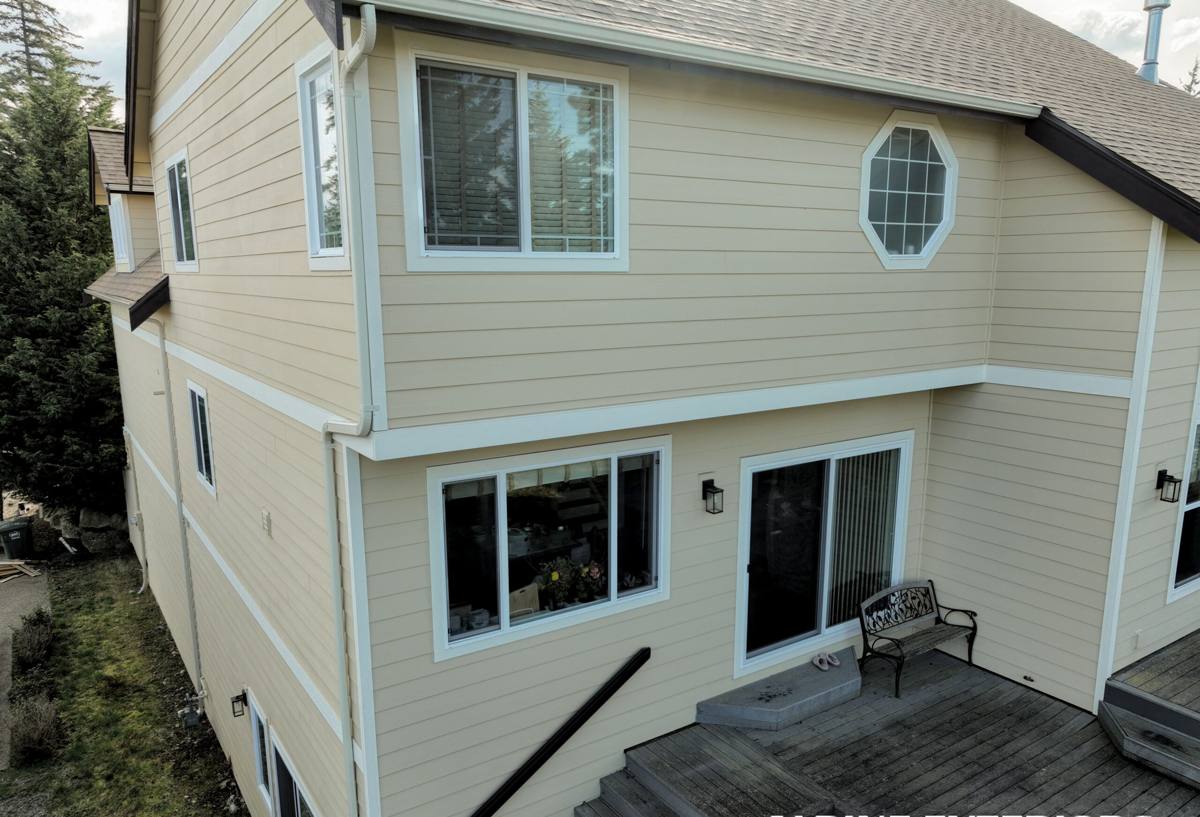
Signs Your Deck Needs Attention
Homeowners often wait until a board fails or a railing wobbles before calling anyone, but there are earlier warning signs worth acting on:
- Boards that feel soft, spongy, or slightly bouncy underfoot, especially near the house or around post locations
- Rust streaks bleeding out from screw heads or nail heads onto the decking surface
- Gaps opening up between the deck and the house where the ledger board attaches
- Railings or stair stringers that have developed noticeable play or movement
- Persistent green or black staining that doesn't clean off with a simple wash
- Standing water that takes more than a day to dry after a normal rain
- Visible splitting or checking in structural posts and beams
Any one of these on its own might be minor. Several showing up together usually means moisture has been working on the structure for a while and it's worth having someone look underneath, not just at the surface.
What a Correct Deck Repair Actually Involves
Starting Underneath, Not Just on Top
A repair that only addresses the decking boards you can see is treating the symptom, not the cause. Most of the deck failures we find in this area start below the walking surface — at the ledger board connection, in the joists, or at the post bases where water collects and doesn't drain away. We pull boards and check the framing before deciding what actually needs to happen, because a deck with sound framing and a bad top surface is a very different job than one with rotted joists hiding under decent-looking boards.
The Ledger Board Connection
Where the deck attaches to the house is the single most important connection on the structure, and it's also the one most exposed to water intrusion if the original flashing was undersized or installed incorrectly. In a climate with as much driving rain as Semiahmoo sees, we pay close attention to how water sheds away from this joint. A ledger repair usually means removing decking near the house, checking the rim joist and sheathing behind it for rot, and reinstalling proper flashing before anything goes back together.
Fasteners and Hardware
Salt air accelerates corrosion in standard fasteners and connector hardware. If a deck was built with fasteners that weren't rated for coastal exposure, you'll often see rust bleed and weakening well before the wood itself is a problem. Part of a proper repair is replacing failed hardware with fasteners and structural connectors rated for the conditions, not just matching what was there before.
Decking, Railings, and Stairs
Individual board replacement, railing tightening or rebuilding, and stair stringer repair round out most jobs. We match materials to what's already there when it makes sense, or talk through options if the original decking is reaching the end of its useful life across the board.
Repair vs. Replacement: How We Make the Call
Not every deck problem means starting over, and we don't push replacement when a repair will hold up. The table below outlines how we generally think through it.
| Condition Found | Typical Approach | Why |
|---|---|---|
| A few soft or damaged boards, framing solid | Board replacement | Isolated damage, structure underneath is sound |
| Rusted or failing fasteners, wood otherwise good | Hardware replacement | Corrosion is the failure point, not the wood itself |
| Rot at the ledger connection only | Ledger and flashing repair | Localized moisture intrusion, addressable without full rebuild |
| Loose or leaning railings | Railing rebuild or reinforcement | Often a fastener or post-attachment issue, not a full-deck problem |
| Widespread rot in joists, beams, or multiple posts | Partial or full rebuild | Structural integrity is compromised across the deck, not just at one point |
| Deck over 20-25 years old with recurring issues | Full evaluation, replacement often recommended | Repeated repairs on an aging structure rarely outperform a rebuild long-term |
We'll tell you honestly which category your deck falls into, including when a repair is the right call even if a rebuild would be more profitable for us. A deck that's structurally sound doesn't need to be torn out.
Our Deck Repair Process in Semiahmoo
1. On-Site Inspection
We walk the deck, check the framing where accessible, test boards and railings for movement, and look closely at the ledger connection and any areas holding moisture. This is where we form an honest opinion on repair versus replacement.
2. Written Scope and Estimate
You get a clear description of what we found, what we recommend, and what it costs — no vague allowances or surprise change orders once we start pulling boards.
3. Removal and Framing Check
We remove the decking or components involved in the repair and inspect the framing underneath before closing anything back up. If we find more than expected, we stop and talk to you before proceeding.
4. Repair and Rebuild
Ledger flashing, framing repairs, fastener and hardware replacement, and new decking or railing components go in using materials suited to coastal exposure.
5. Final Walkthrough
We walk the finished repair with you, check for level and secure railings, and make sure everything meets the standard we'd want on our own homes.
Materials That Hold Up Near the Water
Material choice matters more here than in a drier inland climate. For fasteners and structural hardware, we use products rated for coastal and high-moisture exposure rather than standard galvanized options, which can start showing corrosion within a few years this close to the water. For decking itself, both quality pressure-treated lumber and composite materials have a place depending on the homeowner's priorities — treated wood costs less upfront but needs more regular maintenance, while composite carries a higher material cost but sheds moisture and resists moss growth better over time. We'll walk through the real trade-offs for your specific deck rather than pushing one option across the board.
Moss, Mildew, and Maintenance Between Repairs
Whatcom County's wet season gives moss and algae a long window to establish themselves on any shaded or slow-draining deck surface. Left alone, that buildup holds moisture against the wood and accelerates exactly the kind of rot and fastener corrosion that leads to the repairs described above. A few habits go a long way toward stretching the life of a repair:
- Sweep debris and standing leaves off the deck regularly, especially in fall
- Clean visible moss and algae with an appropriate deck cleaner rather than letting it spread
- Check that gaps between boards remain clear so water can drain rather than pool
- Reseal or restain wood decking on the manufacturer's recommended schedule, not just when it looks faded
- Inspect the ledger area and post bases once a year for early signs of moisture staining
- Keep gutters and downspouts near the deck clear so runoff isn't draining directly onto it
None of this replaces a proper repair when something's actually failed, but it does reduce how often you need one.
Permits and Whatcom County Considerations
Depending on the scope of work, deck repairs in Whatcom County can fall under different permitting requirements — minor board and hardware replacement typically doesn't trigger a permit, while structural repairs involving framing, footings, or significant rebuilds often do. Requirements can also vary depending on whether your property is in an area with additional shoreline or environmental considerations, which is common near Semiahmoo given its proximity to the water. We handle the determination and any necessary permitting as part of the job so you're not left guessing whether your repair is compliant.
Why Hire a Crew That Already Works Semiahmoo
A deck repair contractor who mainly works inland, drier areas may not think twice about fastener corrosion or moss-driven moisture retention — problems that show up reliably in coastal Whatcom County but aren't top of mind everywhere. Working regularly in Birch Bay and Semiahmoo means we've seen how salt air and driving rain actually affect decks here over time, not just in theory. That shapes what hardware we reach for, how carefully we handle ledger flashing, and how honestly we can tell you whether a repair will hold up through another wet season or whether it's time to talk about a rebuild.
If your deck has soft spots, rusting hardware, a wobbly railing, or you're just not sure what shape it's really in underneath, we're happy to take a look. Fill out the form below for a free, no-pressure estimate — we'll give you a straight answer on what it needs.