 Birch Bay Siding
 Why Blaine's Waterfront Climate Is Tougher on Siding Than Most People Realize
Blaine sits right where the Salish Sea meets Whatcom County's coastline, and that location comes with a specific set of problems for exterior siding. Salt-laden air off the water accelerates the breakdown of paint films and corrodes exposed fasteners faster than it would a few miles inland. Add in Northwest Washington's long stretch of driving, wind-blown rain that comes in sideways off the water rather than straight down, and you have a climate that finds every gap, every unsealed seam, and every weak fastener a siding system has.
Then there's moss. Whatcom County's mild, wet winters and short summers mean siding surfaces stay damp for long stretches of the year, especially on north-facing walls and anywhere shaded by trees or neighboring structures. Moss and algae don't just look bad — they hold moisture against the surface of the siding for weeks at a time, which is exactly the condition that causes rot, paint failure, and substrate breakdown in less durable materials.
None of this is unique to any one home in Blaine. It's the baseline condition every siding job in this part of the county has to be engineered for, and it's why the choice of material and the quality of installation matter more here than they would in a drier, calmer climate.
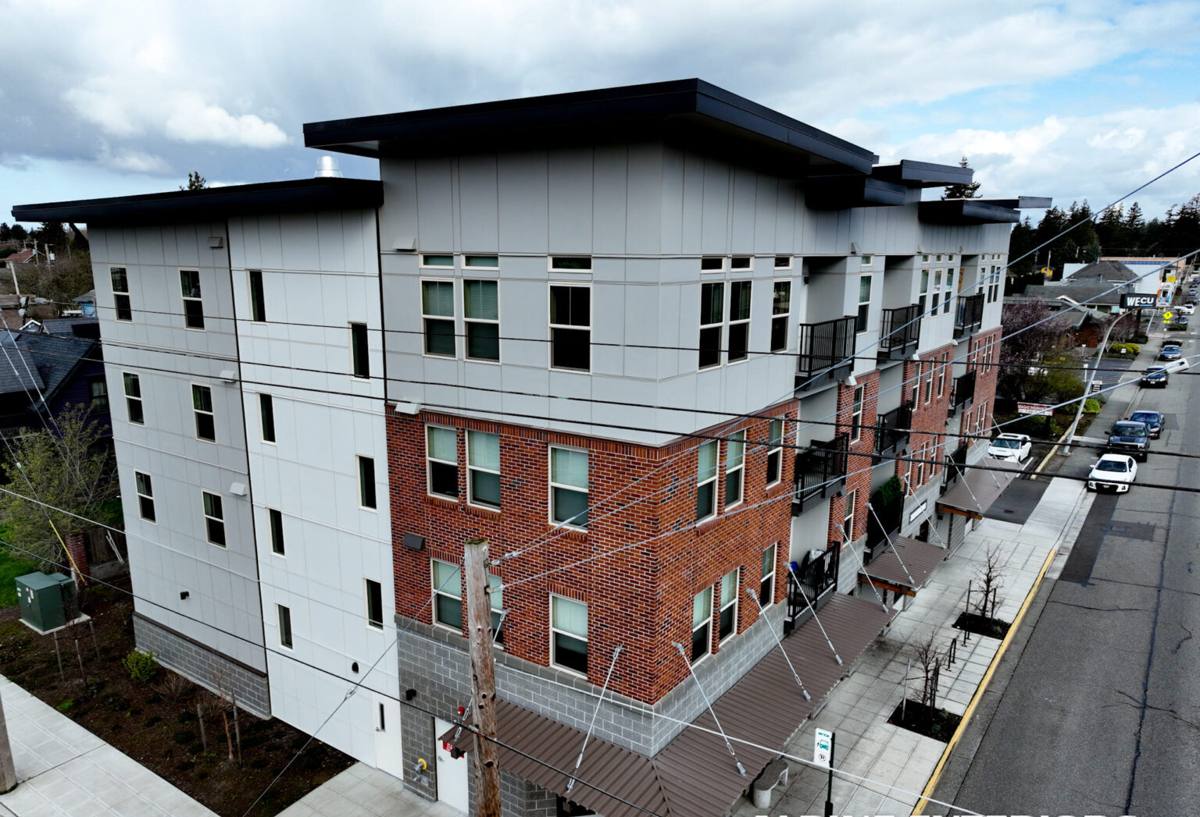
Why We Install Only James Hardie Fiber Cement
We don't install vinyl, LP SmartSide, primed spruce, or cedar. That's not a marketing position — it's a standard we hold because we've seen how each of those products performs over a full lifecycle in a coastal, high-moisture climate like Blaine's, and we'd rather stand behind one product we trust than offer a menu of options with different long-term outcomes.
James Hardie fiber cement is non-combustible, dimensionally stable, and engineered specifically for regional moisture and temperature conditions through Hardie's HZ5 product line, which is formulated for the Pacific Northwest's wet climate zone. It doesn't absorb water the way wood-based products do, it doesn't expand and contract the way vinyl does in temperature swings, and its factory-applied ColorPlus finish is baked on under controlled conditions rather than field-painted, which matters enormously in a place where site-applied paint has to cure in unpredictable weather.
That combination — a moisture-resistant substrate, a factory finish that isn't dependent on job-site conditions, and a fire-resistant composition — is why Hardie is what we put on Blaine homes instead of the alternatives.
What "Climate-Engineered" Actually Means
Hardie manufactures different formulations of its siding for different climate zones across the country. The HZ5 formulation used in our region is built to resist moisture intrusion and freeze-thaw stress specific to the Pacific Northwest, rather than a one-size-fits-all product shipped nationwide. For a home a few blocks from the water in Blaine, that distinction isn't a footnote — it's the difference between siding that's suited to the environment it's installed in and siding that's merely tolerant of it.
What a Correct James Hardie Installation Involves
Fiber cement siding is only as good as the installation behind it. Hardie's own warranty terms are explicit about this: improper installation can void coverage, and the failures we see most often on homes that had siding installed by crews unfamiliar with the product trace back to a handful of installation shortcuts, not the material itself.
Moisture Management Starts Behind the Siding
Before a single plank goes up, the wall needs a correctly lapped weather-resistant barrier, properly integrated flashing at every window, door, and penetration, and a drainage plane that lets any moisture that does get behind the siding find its way back out. In a climate with as much driving rain as Blaine sees, this layer does more long-term work than the siding itself.
Fastening and Clearances
Hardie specifies exact fastener types, spacing, and penetration depth, along with minimum clearances from grade, roof lines, and abutting surfaces. Panels installed too close to grade or without proper clearance trap moisture at the bottom edge — one of the most common causes of premature failure we're called to inspect and repair on homes where someone cut corners.
Joints, Caulking, and Paint Touch-Up
Butt joints need to be treated correctly — sealed or flashed per Hardie's specifications rather than just butted together — and any field cuts need their exposed edges primed and painted to match the factory ColorPlus finish. Skipping this step leaves the cut edge of the fiber cement exposed to exactly the kind of driving rain Blaine gets on a regular basis.
Comparing James Hardie to the Alternatives
Every siding material has trade-offs. The table below reflects how the products most commonly compared to Hardie actually perform against Blaine's specific conditions — salt air, sustained moisture, and moss growth — not just general durability claims.
| Material | Moisture Behavior | Finish Durability | Fire Resistance |
|---|---|---|---|
| James Hardie Fiber Cement | Does not absorb or swell; engineered for wet climates | Factory-baked ColorPlus finish, resists fading and chalking | Non-combustible |
| Vinyl | Sheds water but seams and edges can allow intrusion; can warp in temperature extremes | Color molded through, but can fade and become brittle over time | Combustible, can melt or deform near heat sources |
| LP SmartSide (engineered wood) | Wood-based; vulnerable to swelling and rot if moisture reaches the core | Field or factory finish, dependent on sealing all cut edges | Combustible |
| Cedar / Primed Spruce | Absorbs moisture readily; high maintenance to prevent rot | Requires regular refinishing, especially in coastal air | Combustible |
Our Process for a Blaine Siding Project
Inspection and Assessment
We start by walking the exterior with the homeowner, checking for existing moisture damage, rot at trim and penetrations, and any areas where prior siding or flashing has failed. This tells us what's happening behind the current siding, not just what it looks like from the curb.
Removal and Substrate Repair
Old siding comes off, and we address any rot, damaged sheathing, or compromised framing before anything new goes up. Covering over existing moisture damage is one of the most common mistakes in siding replacement, and it's one we won't make.
Weather Barrier and Flashing
A new weather-resistant barrier and correctly integrated flashing go in at every opening and penetration, sized and lapped for the amount of wind-driven rain a waterfront property in Blaine actually experiences.
Hardie Panel Installation
Panels are installed to Hardie's fastening, clearance, and joint specifications, with cut edges primed and finished before they're closed up.
Final Walkthrough
We review the finished work with the homeowner, including a plain-English explanation of the warranty coverage and what routine maintenance looks like going forward.
Living With Hardie Siding in a Coastal, Moss-Prone Climate
Fiber cement is low-maintenance compared to wood or repainted surfaces, but "low-maintenance" doesn't mean "no maintenance," especially this close to the water. A periodic gentle rinse — garden hose pressure, not a pressure washer aimed directly at seams — keeps salt residue and organic buildup from accumulating on north-facing and shaded walls where moss and algae tend to establish first. Keeping vegetation trimmed back from the siding and gutters clear also goes a long way toward keeping moisture off the wall surface during Whatcom County's wetter months.
Because the ColorPlus finish is factory-applied and warranted separately from the substrate, most Blaine homeowners go many years without needing to think about repainting at all — a real advantage over cedar or field-painted alternatives that need refinishing on a recurring cycle in this climate.
A Simple Seasonal Maintenance Checklist
- Rinse siding gently once or twice a year, focusing on shaded and north-facing walls where moss tends to establish
- Keep gutters clear so overflow doesn't run down the siding face
- Trim back shrubs and trees to maintain airflow and sunlight on the wall surface
- Inspect caulking at trim, windows, and joints annually and re-seal if it's cracked or pulling away
- Address any impact damage or chipped finish promptly so the substrate underneath stays protected
Why Hiring a Crew That Already Works in Blaine Matters
Siding installation isn't just a spec sheet — it's judgment calls made on-site about flashing details, clearance adjustments for a specific wall's exposure, and fastening decisions that account for local wind and moisture loads. A crew that regularly works Blaine and the surrounding Birch Bay area has already made those judgment calls on homes facing the same salt air, the same driving rain patterns off the water, and the same moss pressure. That's not something a crew based well inland or unfamiliar with waterfront conditions picks up on the first job.
It also matters for accountability. A contractor with an ongoing presence in the area has a reputation to maintain with neighbors and repeat clients, which is a different incentive structure than a crew passing through for a single job.
What to Look for When Comparing Siding Contractors
- Are they a factory-certified or preferred James Hardie installer, or installing it without specific training on the product?
- Do they explain flashing and moisture-barrier details, or only talk about the visible panel and color?
- Will they put fastener type, clearance specs, and joint treatment in writing as part of the scope of work?
- Do they carry proper licensing and insurance for exterior work in Washington State?
- Can they speak specifically to coastal Whatcom County conditions rather than generic siding advice?
If your home in Blaine is due for new siding, or you're dealing with moss, moisture stains, or failing paint on what you have now, we're happy to take a look and walk you through what correct James Hardie installation would involve for your specific home. Reach out for a free, no-pressure estimate using the form below.