 Birch Bay Siding
 Metal Roofing in Marietta: A Coastal Job, Not a Catalog Job
Marietta sits close enough to the water that every roofing decision here has to account for salt air, wind-driven rain, and a moss season that runs longer than most homeowners expect. A metal roof installed the same way you'd install one forty miles inland, away from the water, will show problems years before it should. Fastener corrosion shows up early. Moss finds the low-slope valleys and stays. Trim that wasn't detailed for wind-driven rain lets water track sideways under the panel edge instead of shedding off the roof.
None of this means metal roofing is a bad fit for Marietta — it's actually one of the better long-term choices for this stretch of Whatcom County, when it's specified and installed correctly. This page walks through what that actually means: what the climate does to a roof over time, what a correct installation involves, and how we run the job from first estimate to final walk-through.
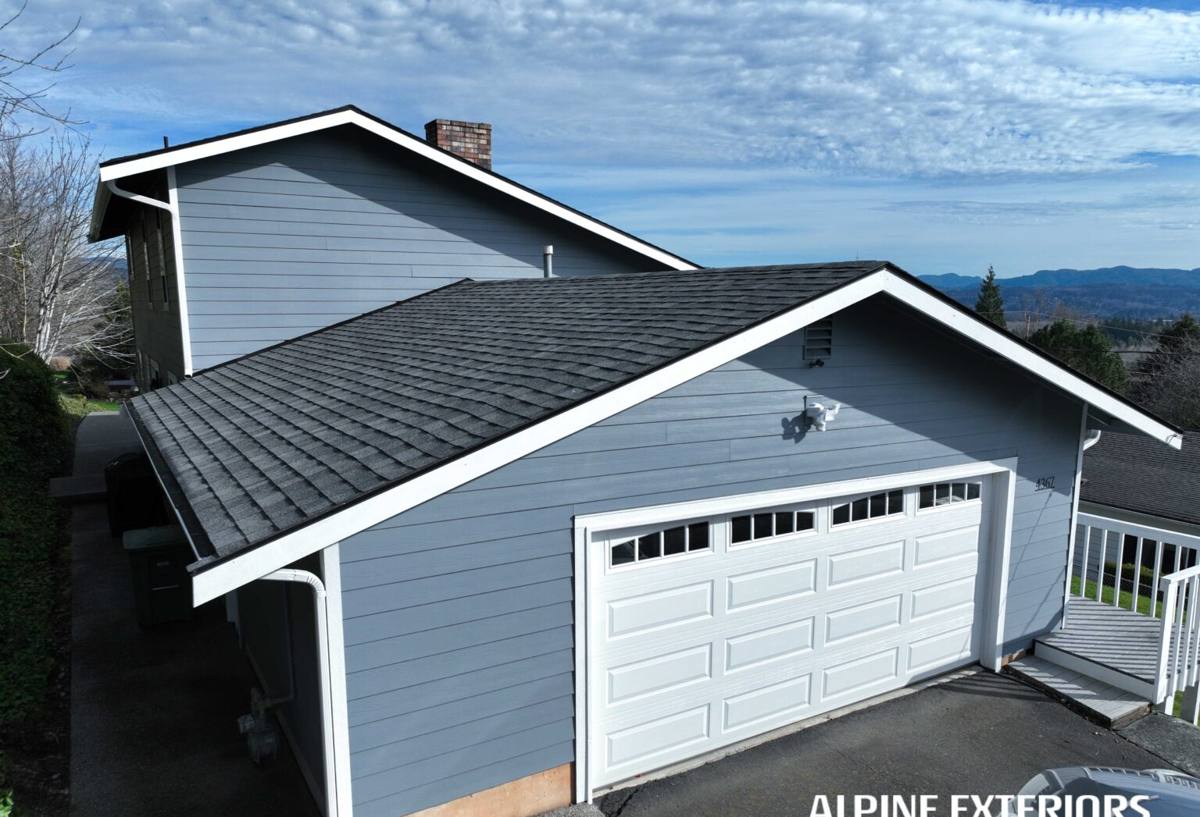
What Salt Air, Rain, and Moss Actually Do to a Roof
These three factors don't act alone. They compound each other, and understanding how helps explain why some of the shortcuts common in metal roofing don't hold up here.
Salt Air and Metal Fasteners
Airborne salt accelerates corrosion on any exposed metal, and the fasteners are almost always the first thing to fail — not the panels themselves. Standard zinc-coated screws that would last decades in a dry inland climate can start rusting at the head within a few years this close to the water. Once a fastener corrodes, its seal degrades and water finds a path underneath the panel.
Driving Rain and Lateral Water Movement
Birch Bay gets wind-driven rain off the water that doesn't behave like a straight-down rainstorm. It pushes water sideways and upward under panel laps, ridge caps, and trim edges that weren't detailed for it. A roof that only has to shed water falling straight down can get by with minimal lap engagement and basic trim. A roof exposed to driving rain off Birch Bay needs proper lap coverage, storm collars, and closures at every transition, or it will leak from the side, not just from a puncture.
Moss Season and Roof Deck Moisture
Whatcom County's moss season is long, and moss doesn't just sit on the surface — it holds moisture against the roof and, on the wrong roofing material, works into seams and fastener penetrations. Metal roofing sheds moss more easily than composition shingles once it's established, but only if the panel profile and slope allow water and debris to actually clear. Low-slope sections, valleys, and any area that stays shaded through the day are where moss gets a foothold first, and those are the areas that need the most attention during design and installation, not the least.
Choosing a Metal Roofing System for This Area
Not every metal roofing product is built the same, and the right choice for Marietta depends on slope, exposure, and how much of the roof faces the prevailing weather. Standing seam panels are generally our recommendation for homes with direct coastal exposure because the concealed-fastener design keeps screw heads out of the weather entirely, which removes the single most common point of coastal corrosion. Exposed-fastener panel systems can still be a sound, more budget-friendly choice on more sheltered elevations, but they need a maintenance commitment the homeowner should go in understanding.
| System | Fastener Exposure | Best Fit in Marietta | Trade-off |
|---|---|---|---|
| Standing seam (concealed fastener) | None — clips are hidden under the seam | Full coastal exposure, primary roof planes | Higher material and labor cost |
| Exposed-fastener panel | Screws through the panel face | Sheltered elevations, outbuildings, additions | Fasteners need periodic inspection and eventual replacement |
| Metal shingle / shake profile | Varies by manufacturer | Homes wanting a traditional look with metal's durability | More seams than standing seam; detailing matters more |
Coating and finish matter as much as panel style. We favor factory-applied finishes rated for coastal or marine exposure over generic mill finishes, and we pay attention to metal gauge rather than just price per square. A thinner panel can look identical to a heavier one on install day and perform noticeably worse after a decade of salt exposure and wind uplift.
What a Correct Installation Actually Involves
Metal roofing rewards good installation and punishes shortcuts more than most roofing materials, because the system depends on details doing their job for decades with almost no give. Here's what we treat as non-negotiable on a Marietta roof.
Underlayment and Deck Prep
We use a high-temperature synthetic or self-adhered underlayment rated for the moisture load this climate produces, not a basic felt product. Any soft or water-damaged decking gets replaced before a single panel goes down — covering a compromised deck with new metal just hides the problem for a while.
Fastening and Panel Attachment
Fastener type, spacing, and torque all affect how a panel handles wind uplift and thermal movement. We match fasteners to the panel manufacturer's coastal specification, not a generic hardware list, and we account for expansion and contraction so panels aren't fastened in a way that fights the metal as it moves with temperature.
Flashing, Valleys, and Penetrations
Valleys, chimneys, vents, and wall transitions are where the large majority of roof leaks actually start, on any roofing material. On a metal roof exposed to driving rain, these details need proper laps, sealant rated for the substrate, and geometry that sheds water rather than collecting it. We treat this stage as the most important part of the install, not a fast finish item.
Ventilation
A well-ventilated attic keeps condensation from forming on the underside of the roof deck, which matters year-round in a climate this damp. We check existing ventilation as part of every metal roofing job and address gaps before closing the roof up, rather than leaving it as a problem for later.
How the Process Works
We keep the process straightforward and try not to leave a homeowner guessing what happens next.
- Estimate and roof assessment — we look at slope, existing deck condition, ventilation, and exposure to figure out what the roof actually needs, not just its square footage.
- System selection — we walk through panel and finish options with the trade-offs specific to the home's exposure, in plain terms.
- Written scope and pricing — what's included, what isn't, and a realistic timeline before any work starts.
- Tear-off and deck inspection — existing roofing comes off and the deck gets checked before anything new goes on.
- Installation — underlayment, panels, flashing, and trim installed to the standards above.
- Final walk-through — we go over the finished roof with the homeowner and cover basic care going forward.
Maintenance Marietta Homeowners Should Actually Expect
Metal roofing is lower-maintenance than most materials, but "low-maintenance" isn't "no-maintenance," especially this close to the water.
- Rinse off accumulated salt spray and debris during an annual roof check, particularly on elevations facing the water.
- Keep gutters and valleys clear so moss and organic debris don't sit against the panel edges through the wet season.
- Trim back overhanging branches that keep sections of roof shaded and slow to dry.
- Have exposed fasteners (on panel systems that use them) inspected periodically and re-torqued or replaced as needed.
- Address any scratched or damaged finish promptly — exposed bare metal is where coastal corrosion gets started.
What Affects Cost
Every metal roofing quote should reflect the specifics of the home, not a flat per-square rate. The main variables we factor in are below.
| Factor | Why It Matters |
|---|---|
| Panel system and gauge | Standing seam with heavier gauge metal costs more upfront than exposed-fastener panels but needs less long-term attention |
| Roof complexity | Valleys, dormers, and multiple roof planes add labor and flashing detail regardless of panel type |
| Deck condition | Rot or soft decking found at tear-off adds repair cost that can't be known until the old roofing is off |
| Ventilation upgrades | Adding or correcting attic ventilation is often worth bundling into a re-roof rather than doing separately later |
| Coastal-rated hardware and finish | Fasteners and coatings rated for salt exposure cost more than standard-grade materials but directly affect how long the roof lasts here |
Why a Local Marietta Crew Matters
A roofing crew that has actually worked on homes in this part of Whatcom County knows which elevations take the worst of the weather off the water, where moss builds up fastest on a given roof shape, and which flashing details actually hold up against driving rain instead of just looking right on install day. That's the kind of knowledge that doesn't come from a spec sheet — it comes from working roofs in this exact climate, season after season. It's also why we don't treat every metal roofing job in Birch Bay the same way; a roof on a sheltered inland lot and a roof facing open water need different decisions even if the homes are a few miles apart.
If you're weighing metal roofing for a home in Marietta, we're happy to come take a look, walk the roof, and give you a straightforward assessment of what it needs. There's no pressure and no obligation — just a free estimate and an honest answer about what makes sense for your home. Use the form below to get started.