 Birch Bay Siding
 Siding Installation Built for Semiahmoo's Waterfront Climate
Homes around Semiahmoo sit close to the water, and that proximity shapes almost everything about how siding should be chosen and installed. Salt-laden air off the bay, driving rain that comes in sideways during winter storms, and a moss season that can stretch for most of the year all put steady pressure on exterior walls. A siding installation done right here isn't just about appearance — it's about choosing a material and a installation method that can stand up to conditions that are noticeably harsher than what you'd find further inland in Whatcom County.
We install siding throughout the Birch Bay and Semiahmoo area regularly, which means we're not guessing at how a wall assembly will hold up two winters from now. We've seen what salt air does to fasteners that weren't rated for it, what trapped moisture does behind siding that wasn't flashed correctly, and what constant dampness does to materials that weren't designed to handle it. This page is about what a correct siding installation looks like for a Semiahmoo home specifically, not a generic overview of siding in general.
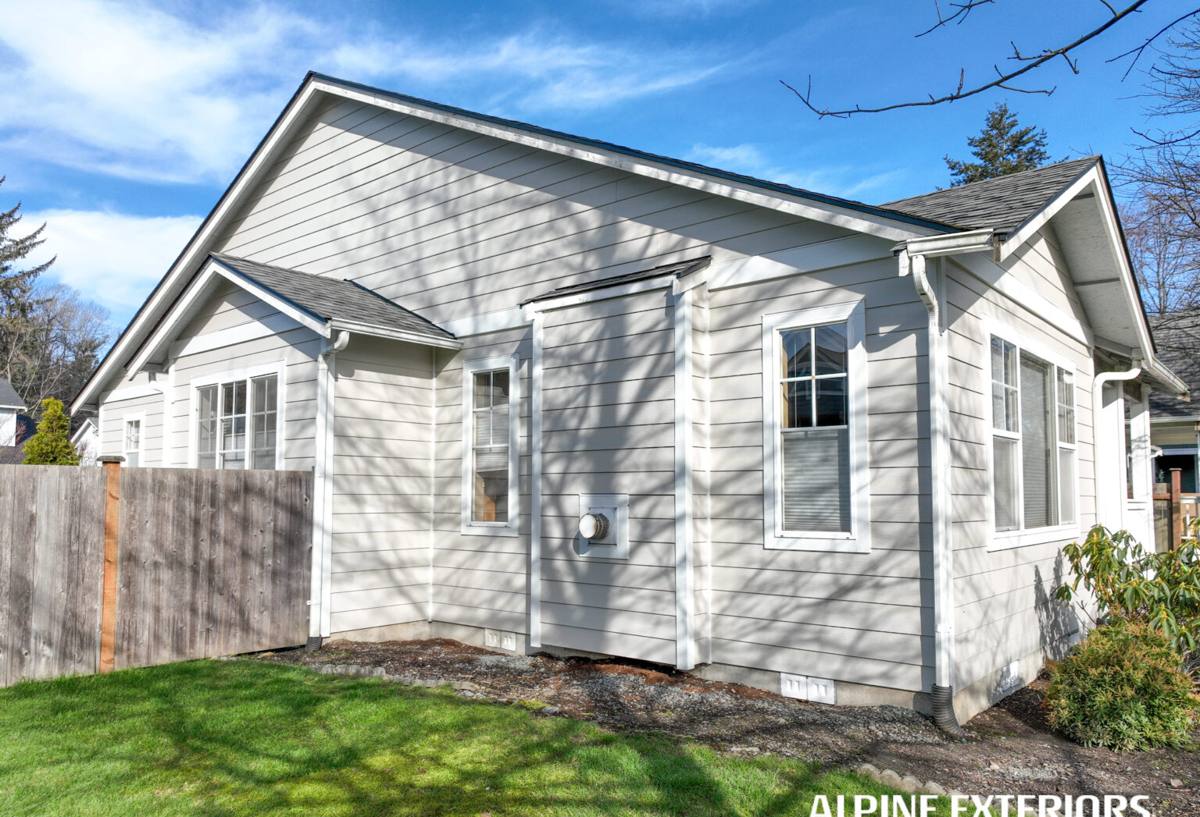
What the Semiahmoo Climate Actually Does to Siding
Salt Air and Corrosion
Waterfront and near-waterfront properties are exposed to airborne salt that accelerates corrosion on anything metal — fasteners, flashing, trim connectors. Siding systems that rely on standard hardware can start showing rust streaks and weakened connections years before they would in a drier, inland location. This is one of the biggest reasons material and fastener selection matters more here than in a typical inland neighborhood.
Driving Rain
Storms coming off the water don't just drop rain straight down — wind pushes it sideways into wall assemblies, seams, and butt joints. A siding installation that isn't properly lapped, caulked, and flashed at every penetration will eventually let water behind the cladding, even if the surface material itself is fine. Wind-driven rain finds the weak points in an installation faster than calm weather ever will.
Moss and Sustained Moisture
Whatcom County's long wet season means siding surfaces stay damp for extended stretches, especially on north-facing walls and anywhere shaded by trees or neighboring structures. That sustained moisture is exactly what moss, mildew, and algae need to take hold. Materials and finishes that don't resist moisture absorption will show green and black staining sooner, and organic growth that isn't cleaned off eventually holds even more moisture against the wall.
Why Fiber Cement Fits This Environment
We install James Hardie fiber cement siding exclusively, and the Semiahmoo climate is a good illustration of why. Fiber cement doesn't absorb moisture the way wood-based products do, it doesn't warp or rot when it stays damp for long stretches, and it's non-combustible. James Hardie's factory-applied ColorPlus finish is baked on under controlled conditions and is formulated to resist fading and moisture intrusion better than field-applied paint, which matters in a location where the finish is going to be tested by salt air and rain for a lot of the year.
James Hardie also engineers specific product lines for different climate zones (their HZ5 line, for example, is built for regions with more moisture exposure and freeze-thaw activity). That's a meaningfully different approach than a one-size-fits-all siding product, and it's part of why we standardized on Hardie rather than offering several competing brands.
What a Correct Installation Involves Here
The material is only half the equation. A siding installation is only as good as the assembly behind it, and in a wind-driven-rain environment like Semiahmoo, the details behind the surface matter as much as the panels themselves.
- A properly installed weather-resistant barrier (house wrap) behind the siding, lapped correctly so water sheds outward, not inward
- Rain screen or drainage gap detailing where appropriate, so any moisture that does get behind the siding has somewhere to drain and dry out
- Corrosion-resistant fasteners rated for coastal exposure, driven to Hardie's specified depth and spacing — not just "close enough"
- Correct flashing at every window, door, and roofline intersection, since these are the most common points where water gets behind siding
- Proper caulking at butt joints and trim, using sealants rated for the movement and moisture cycles of this climate
- Ground and deck clearance kept to manufacturer spec so the bottom edge of the siding isn't sitting in standing moisture
Skipping any one of these doesn't necessarily show up right away. It shows up two, three, or five years later as trapped moisture, rot in the sheathing behind the siding, or premature paint and finish failure — problems that cost far more to fix than they would have cost to do right the first time.
Our Process for a Semiahmoo Siding Installation
1. On-Site Assessment
We look at your home's specific exposure — how close it sits to the water, which walls take the most wind-driven rain, existing moisture damage, and the condition of the sheathing underneath your current siding. Every property here has a slightly different exposure profile depending on elevation, tree cover, and orientation to the water.
2. Removal and Substrate Check
Old siding comes off and we inspect the sheathing and framing underneath before anything new goes up. This is the point where hidden moisture damage gets caught — and it's far cheaper to address before new siding goes on than to discover later.
3. Weather Barrier and Flashing
We install or verify the weather-resistant barrier and flash every penetration — windows, doors, vents, and roof intersections — before a single piece of Hardie board goes up. This step is invisible once the job is done, but it's the layer doing the most work against wind-driven rain.
4. Hardie Installation to Spec
Panels or lap siding go up per James Hardie's published installation guidelines, with corrosion-resistant fasteners, correct nailing patterns, and proper clearances at the foundation, roofline, and trim. This is also what keeps the manufacturer's warranty valid — installation that deviates from spec can affect warranty coverage.
5. Finish Details
Trim, caulking, and touch-up work get finished with attention to the joints and transitions that are most exposed to driving rain, since these are the spots that fail first when they're rushed.
Comparing Siding Approaches for a Waterfront-Adjacent Property
| Factor | What Matters in Semiahmoo | Why It Matters |
|---|---|---|
| Moisture resistance | Material must tolerate sustained dampness without swelling or rotting | Long wet season keeps walls damp for extended periods |
| Fastener corrosion resistance | Hardware rated for coastal/salt-air exposure | Standard fasteners corrode faster near the water |
| Finish durability | Factory-cured finish over field-applied paint | Reduces early fading, chalking, and moisture intrusion at the surface |
| Joint and flashing detail | Installer experience with wind-driven rain assemblies | Poor flashing is the most common cause of hidden water damage here |
| Growth resistance | Surface that doesn't hold moisture against itself | Reduces how quickly moss, algae, and mildew take hold |
Cost Factors for Semiahmoo Siding Projects
Every home is different, so we don't quote broad numbers without seeing the property, but a few things consistently affect the cost of a siding installation in this area:
- How much of the existing sheathing needs repair or replacement once old siding comes off
- The complexity of the roofline and how many flashing points the home has (dormers, multiple gables, chimneys)
- Square footage and number of stories, which affects both material and labor
- Trim and finish detail level — more architectural detail takes more time to flash and finish correctly
- Access and staging, particularly on waterfront lots with limited working space around the home
A home with sound sheathing and straightforward geometry will cost meaningfully less than one that needs substrate repair or has a complicated roofline with lots of penetrations. We walk through these specifics during the estimate so there aren't surprises once work starts.
Why Local Experience Matters for This Job
Siding installation isn't identical everywhere, and a crew that mostly works drier, inland jobs may not default to coastal-grade fasteners or rain-screen detailing unless they're specifically asked. Working in Birch Bay and Semiahmoo regularly means we already know which walls typically take the worst of the wind-driven rain, where moisture tends to collect on local homes, and what it takes to keep a Hardie installation performing well through a Whatcom County winter. That familiarity shows up in the details you can't see once the job is finished — the flashing, the fastener choice, the drainage plane — which are exactly the details that determine whether a siding job lasts fifteen years or fifty.
If you're planning a siding project on a Semiahmoo or Birch Bay property, we're happy to take a look and walk you through what your home specifically needs — no pressure, no obligation. Use the form below to request a free estimate.