 Birch Bay Siding
 Roof Repair Built for Marietta's Coastal Exposure
Marietta sits close to the water in northern Whatcom County, near Birch Bay, and that location puts extra demands on a roof that homes further inland simply don't face. Salt-laden marine air, wind-driven rain coming off the bay, and a moss season that can run most of the year all work on a roof at the same time. A repair that would hold up fine on a sheltered, inland roof can fail within a couple of seasons out here if it isn't done with this specific exposure in mind.
We repair roofs for homes in and around Marietta and the greater Birch Bay area, and we treat roof repair as a diagnostic job first and a materials job second. Most of the roofs we get called out to look at have a real, specific cause behind the leak or the damage — a lifted shingle, a failed flashing detail, a clogged valley, moss holding moisture against the surface. Finding that cause and fixing it correctly matters more than which brand of shingle goes back on.
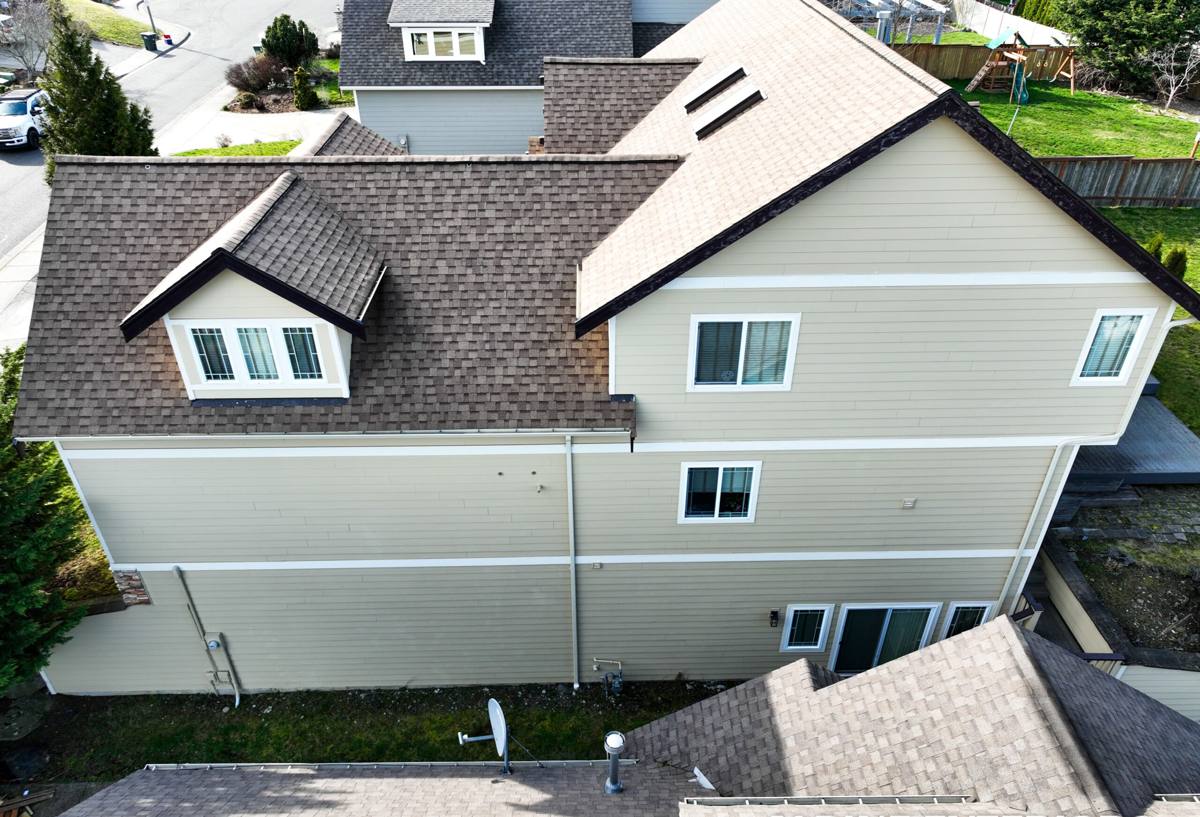
What Marietta's Climate Does to a Roof
Salt Air and Metal Corrosion
Being close to the bay means Marietta roofs take on more airborne salt than roofs a few miles inland. Salt accelerates corrosion of exposed fasteners, flashing, and any metal roof components, and it can shorten the working life of lower-grade hardware significantly. A repair that reuses corroded fasteners or skips stainless or coated hardware in favor of whatever's cheapest is a repair that's likely to need redoing sooner than it should.
Wind-Driven Rain
Waterfront proximity also means more sustained wind, and wind-driven rain doesn't behave like a calm, straight-down rainfall. It gets pushed sideways and upward under shingle edges, into ridge caps, and around any penetration in the roof plane — vents, chimneys, skylights. A lot of the leaks we find in Marietta trace back to a flashing detail or shingle edge that was fine in normal rain but couldn't handle water being driven sideways into it.
Moss and Sustained Moisture
Mild temperatures, shade, and near-constant moisture add up to a long moss season across this part of Whatcom County, and roofs are usually the first place it shows. Moss holds water against the roofing material long after the rain has stopped, which speeds up granule loss on asphalt shingles, keeps wood roofing damp, and can work its way under shingle tabs and lift them. North-facing slopes and anything shaded by trees are typically the worst affected and need more frequent attention than sun-exposed sections of the same roof.
Freeze-Thaw and Temperature Swings
Whatcom County doesn't see extreme cold most winters, but it does see enough freeze-thaw cycling to matter. Water that gets into a crack, a fastener hole, or under a lifted shingle and then freezes expands and widens that opening. Over a wet winter, a small, unnoticed gap can turn into an active leak by spring. That's part of why timing matters — small damage caught in fall is a much smaller job than the same damage found after a full winter of freeze-thaw.
Common Roof Repair Issues We See in Marietta
The specific problems change with roof age, slope orientation, and how much shade and moss exposure a section of roof gets, but a handful of issues show up repeatedly on service calls in this area.
- Lifted or missing shingles: Usually from wind, age, or moss growth working under the tabs and breaking the seal.
- Flashing failures: Around chimneys, skylights, vent pipes, and roof-to-wall transitions — often the actual source of a leak that shows up somewhere else inside the house.
- Valley deterioration: Valleys carry the most water on a roof and take the most wear, especially where moss or debris has been allowed to build up.
- Granule loss on asphalt shingles: Accelerated by sustained moisture and moss, and a sign the shingle's UV and weather protection is thinning out.
- Damaged or missing ridge cap: A common wind-damage point that's easy to miss from the ground.
- Soft or rotting decking: Found under damaged shingles or flashing once we open up the area — a sign water has been getting in for longer than the visible symptoms suggested.
- Clogged or damaged gutters affecting the roof edge: Backed-up water at the eave can work its way up under the first courses of shingles.
How We Diagnose a Roof Problem
A roof repair is only as good as the diagnosis behind it. We don't quote or patch based on a quick look from the ground — a proper diagnosis means getting on the roof (weather permitting) and inspecting the affected area along with the surrounding roof plane, since the entry point for water is often several feet from where the leak actually shows up inside the house.
What a Thorough Inspection Covers
- The shingle or roofing material condition in and around the reported problem area
- All flashing points on that roof plane — chimneys, vents, skylights, wall transitions
- Valleys and any spot where two roof planes meet
- Signs of moss, algae, or sustained moisture holding against the surface
- Decking condition where accessible, checking for soft spots or staining
- Gutter and eave condition at the affected section
- Attic or interior signs of moisture intrusion, when accessible, to trace the actual water path
We explain what we find in plain terms before any work starts, including what's actually causing the problem, what the repair involves, and what it would take to fix versus what it would take to properly monitor if the damage is minor. Not every issue we find needs immediate replacement — some genuinely are a straightforward, contained repair, and we'll tell you that.
What a Correct Roof Repair Involves
Repairing a roof correctly in this climate means matching the fix to the actual failure, not just covering the visible symptom. A few principles guide how we approach every repair:
- Match materials to what's already on the roof where possible, or use a compatible upgrade — mismatched shingle types or weights can create new problems at the seams.
- Replace corroded or undersized fasteners rather than reusing them, especially on a roof this close to the bay.
- Rebuild flashing to spec rather than just re-caulking over a failed flashing detail — caulk is a short-term patch, not a fix, on a chimney or wall transition.
- Address the moisture source, not just the leak point — if moss buildup or a clogged valley caused the failure, that gets cleared and addressed as part of the repair, not left to cause the same problem again next season.
- Check and repair decking before new roofing goes back down over it — roofing installed over soft or rotted decking won't hold up regardless of the material quality.
Repair or Replace: How We Help You Decide
Not every roof problem in Marietta calls for a full replacement, and not every roof problem is safely fixed with a patch either. The right call usually comes down to the roof's age, how widespread the damage is, and how many previous repairs it's already had.
| Factor | Leans toward repair | Leans toward replacement |
|---|---|---|
| Roof age | Under roughly 15 years, or well within expected lifespan for the material | Near or past the material's typical service life |
| Damage extent | Isolated to one section or a single flashing point | Spread across multiple slopes or recurring in different spots |
| Decking condition | Solid, no rot found on inspection | Soft or rotted decking found in multiple areas |
| Repair history | First or second repair on this roof | Repeated patch jobs in the same general area |
| Granule loss / wear | Localized, surrounding shingles still in good shape | Widespread granule loss across most of the roof |
We'll give you an honest read on where your roof falls on that spectrum. If a repair is the right call, that's what we'll recommend and price — a full replacement isn't the default answer just because it's a bigger job.
Cost Factors on a Marietta Roof Repair
Every repair is different, but the price of a roof repair in this area generally comes down to a consistent set of variables: how many roof planes and penetrations are involved, whether decking replacement is needed once we open things up, roof pitch and accessibility, and how much flashing work is required versus straightforward shingle replacement. We won't quote a number without inspecting the roof first, but we'll walk you through what's driving the cost on your specific job before any work begins.
Why Local Roofing Experience Matters in Marietta
A roofing crew that mostly works drier, more sheltered inland areas doesn't necessarily know how to spot the specific failure patterns that show up on a waterfront-adjacent roof like the ones in Marietta. Corrosion patterns, moss growth locations, and the way wind-driven rain finds its way past standard flashing details are all things you learn from working this exact stretch of Whatcom County repeatedly, not from a general roofing background alone.
We show up already knowing which slopes in this area tend to hold moss longest, which flashing details tend to fail first in this wind exposure, and what fastener and material choices actually hold up against the salt air here. That local pattern recognition is part of what makes a repair last, and it's the kind of thing that's hard to get from a crew driving in from outside the area for a one-off job.
What to Ask Before Hiring a Roof Repair Contractor
- Are you licensed and insured in Washington State, and can you provide proof?
- Will you inspect the full roof plane, not just the spot where the leak shows up inside?
- Will decking be checked and repaired if it's soft or damaged, or just covered over?
- What's your warranty on the repair, and does it cover labor as well as materials?
- Do you have experience with roofs specifically in this coastal, moss-heavy part of Whatcom County?
Maintenance That Extends a Repair's Life
A well-done repair still benefits from basic upkeep in a climate like this one. Keeping moss growth under control — through gentle removal methods rather than pressure washing, which can strip granules and damage shingles — goes a long way toward protecting both the repaired section and the rest of the roof. Keeping gutters clear so water isn't backing up at the eaves, and having the roof looked at after any major windstorm, also catches small issues before they become interior water damage. We're happy to point out what to watch for on your specific roof after a repair, so you know what's normal wear and what's worth a call.
If you've got a leak, missing shingles, or a roof that's just due for a look after last winter, we're glad to come out to your Marietta home for a free, no-pressure estimate — no obligation, just an honest read on what your roof actually needs.