 Birch Bay Siding
 Storm Damage Roofing in a Waterfront Whatcom County Community
Point Whitehorn sits close enough to the water that its roofs take a different kind of beating than homes further inland in Whatcom County. Wind off the Strait comes in with more force and less warning, salt-laden air works on exposed metal and fasteners year-round, and the long Pacific Northwest wet season keeps roofs damp for months at a stretch. None of that means a roof here is doomed — it means storm damage shows up in specific, predictable places, and repairing it correctly means understanding those places rather than treating every roof the same.
This page is about one job: storm damage roof repair for homes in and around Point Whitehorn. Not a full re-roof pitch, not a generic checklist — what actually goes wrong on a roof exposed to this stretch of coastline, and what it takes to fix it right.
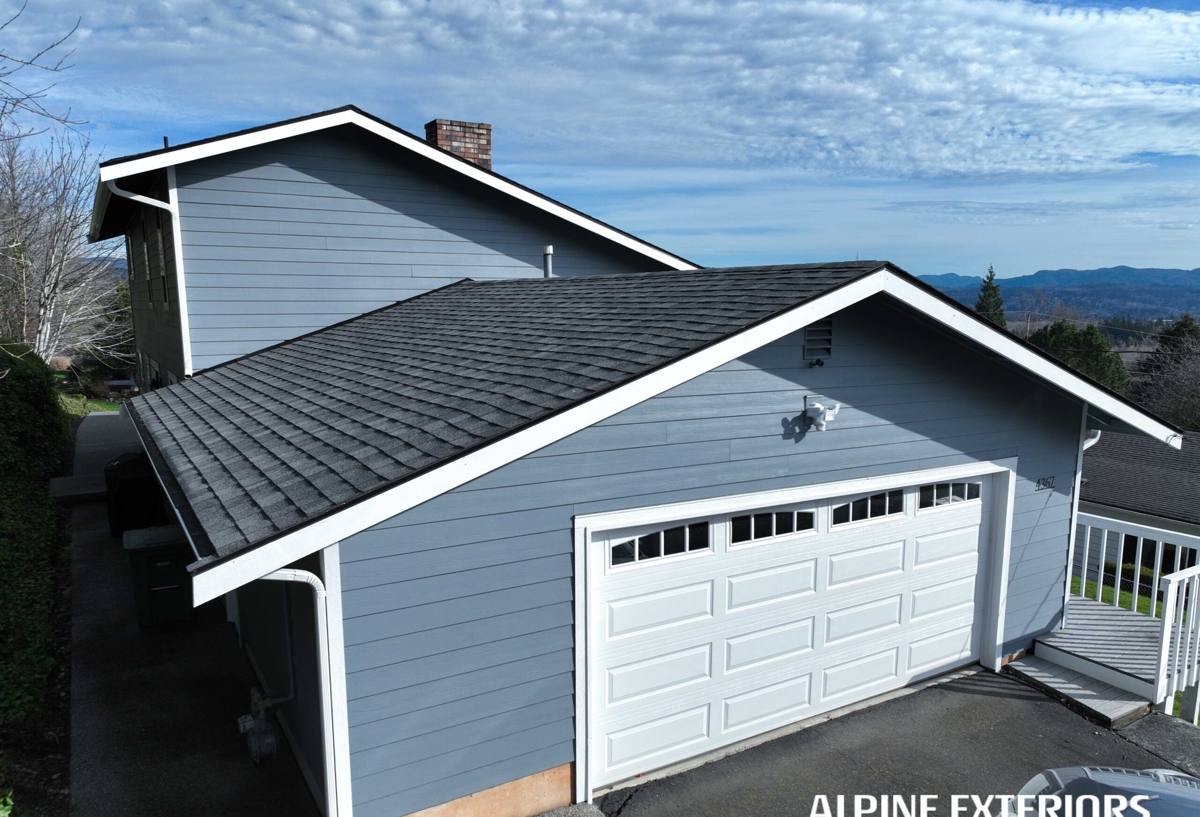
Why Storm Damage Looks Different Here
Wind Exposure Off the Water
Homes with open exposure toward the water catch gusts that inland Birch Bay properties are partly shielded from by trees and terrain. That extra wind load is hardest on the parts of a roof already under the most stress in any storm: ridge caps, hip lines, and the first few courses of shingles or panels along the windward edge. Repeated wind events loosen fasteners and lift shingle tabs even when nothing looks obviously broken from the ground.
Salt Air and Metal Fatigue
Proximity to saltwater accelerates corrosion on exposed metal — flashing, nail heads, gutter fasteners, and any exposed screws on metal roofing. A flashing seam that would last decades inland can start failing years earlier here. Storm damage often makes an existing salt-corrosion problem visible rather than causing it outright, which is why a proper repair has to look past the obvious damage to the metal underneath it.
A Long, Wet Moss Season
Whatcom County's damp climate gives moss a long growing window, and Point Whitehorn's marine air keeps roofs damp longer after a storm than drier inland areas. Moss holds moisture against shingles and decking, and after a windstorm knocks loose material into moss-covered valleys or behind flashing, that trapped moisture has nowhere to go. What looks like simple storm debris is often sitting on top of a moss problem that's already been working on the roof for months.
What Actually Counts as Storm Damage
Homeowners often picture storm damage as a hole or a missing section of roof. In practice, most of the storm-related repair calls we see involve less obvious problems:
- Wind-lifted or creased shingle tabs that have re-sealed poorly or not at all
- Granule loss from wind-driven rain, leaving shingles thinner and less protected
- Flashing pulled loose or bent at chimneys, skylights, and roof-to-wall transitions
- Fasteners backed out or corroded loose from repeated wind cycling
- Debris impact — branches, gravel, or blown material — causing localized punctures or bruising
- Moss and organic debris pushed into valleys and behind flashing during heavy rain
- Gutter and downspout separation that redirects water back under roof edges
Any one of these can lead to a slow leak long before a homeowner sees a stain on the ceiling. That lag time is exactly why storm damage should be checked after a significant weather event, not just after visible leaking starts.
The Damage You Don't See From the Ground
A roof can look intact from the driveway and still have real storm damage. Wind can lift a shingle just enough to break its seal without tearing it off, so it settles back down and looks fine until the next rain finds the gap. Flashing can shift a fraction of an inch — enough to open a water path, not enough to be visible without getting on the roof or using a camera at close range.
This matters most in a place like Point Whitehorn because the marine climate doesn't give a damaged roof much of a dry-out period between storms. A small opening that might cause a minor issue in a drier climate has weeks of steady moisture to work with here before the next dry stretch even arrives. Catching that damage early, while it's still a repair and not a rot problem, is the whole point of a proper post-storm inspection.
What a Correct Storm Damage Repair Involves
1. A Full Roof Inspection, Not a Spot Check
We look at the whole roof, not just the area the homeowner points out. Wind damage rarely stays confined to one spot, and a repair that only addresses the visible problem often misses a second weak point that fails a few storms later.
2. Checking the Decking, Not Just the Surface
Before any shingle or panel goes back down, we check the sheathing underneath for soft spots or moisture staining. Replacing surface material over damaged decking is a short-term fix that costs more to undo later.
3. Matching Materials Honestly
We use materials that match the existing roof as closely as possible in type, weight, and where reasonable, color and age-appropriate appearance. Exact shingle color matching isn't always possible once a roof has weathered for a few years — we'll tell you upfront if a perfect match isn't realistic rather than promise one we can't deliver.
4. Rebuilding Flashing and Underlayment Properly
Any flashing that's been disturbed gets reset or replaced with correct overlap and sealant, not just re-nailed in place. Underlayment in the repaired section is replaced, not reused, since it's usually the first thing wind and rain compromise.
5. Addressing Moss and Debris, Not Just Covering It
If moss or trapped debris contributed to the damage, we clear it and address the underlying drainage issue — a repair that goes back down on top of an unresolved moss problem won't hold up through the next wet season.
Repair or Replace: How We Make That Call
Not every storm-damaged roof needs a full replacement, and not every roof is a good candidate for another patch. We base the recommendation on the roof's age, the extent of damage, and how many prior repairs it's already had — not on which option is bigger.
| Situation | Typical Approach | Why |
|---|---|---|
| Roof under 10-15 years old, isolated wind/debris damage | Targeted repair | Remaining material still has useful life; localized fix restores protection cost-effectively |
| Roof already near the end of its expected lifespan | Repair now, plan replacement timeline | Stops active leaking without over-investing in material that's due for replacement soon anyway |
| Multiple storm repairs in recent years, recurring leak points | Full replacement discussion | Repeated patching on aging material usually costs more over time than one correct replacement |
| Widespread granule loss or wind damage across most slopes | Full or partial replacement | Damage isn't isolated enough for a patch to restore even protection across the roof |
| Decking found soft or rotted under the damaged area | Repair scope expands to include decking | New roofing over compromised decking won't hold up regardless of the surface material |
Insurance and Documentation
Storm damage repairs often involve a homeowner's insurance claim. We document what we find — photos, notes on the type and likely cause of damage, and the scope of repair needed — so you have a clear record if you choose to file a claim. We're not adjusters and we don't promise claim outcomes, but a clear, honest assessment done promptly after a storm gives you better footing with an insurer than a vague description written weeks later.
Why a Crew That Already Works Point Whitehorn Matters
A contractor who works this stretch of Whatcom County regularly knows which roof edges take the worst wind exposure here, how far salt air travels inland before it stops being a real factor, and how long moss actually takes to become a drainage problem in this climate versus a drier area. That local pattern recognition shortens the inspection and reduces the chance of missing a second, less obvious problem area.
There's also the practical side: familiarity with Whatcom County permitting requirements where applicable, realistic scheduling around the region's weather windows, and a crew that isn't guessing at material behavior in a marine climate for the first time on your roof.
Signs You Should Have Your Roof Checked After a Storm
- Shingle tabs or pieces visible in the yard or gutters after wind
- Granules collecting at downspout outlets or in gutters
- Visible lifting, curling, or gaps along ridge or hip lines
- New or worsening moss buildup in valleys or along the eaves
- Water stains on interior ceilings or walls following heavy rain
- Flashing that looks bent, separated, or missing around chimneys or vents
- Gutters pulling away from the fascia or sagging after a storm
If you're seeing any of these after a windstorm or heavy rain event, it's worth having it looked at before the next system moves through — a small repair now is almost always less disruptive than a bigger one after a second round of weather finds the same weak spot.
If you're dealing with storm damage on a Point Whitehorn roof, or just want an honest look at how your roof came through the last storm, we're glad to come take a look. Use the form below to request a free, no-pressure estimate.