 Birch Bay Siding
 Roofing Built for Sandy Point's Coastal Conditions
Sandy Point sits close enough to the water that every roof in the community deals with the same combination of stresses: salt-laden air drifting off the Strait, wind-driven rain that finds its way under poorly sealed edges, and long stretches of gray, damp weather that give moss and algae plenty of time to take hold. An asphalt shingle roof that would hold up fine in a drier inland part of Whatcom County can wear out years early here if it wasn't installed with these specific conditions in mind.
We work on roofs throughout Birch Bay and the surrounding shoreline communities, and Sandy Point roofs get a specific kind of attention from us because of where they sit. This page is about what a correctly installed asphalt shingle roof looks like for this neighborhood, what tends to go wrong when it's not done right, and how we approach the job so it actually lasts through the marine climate instead of fighting it.
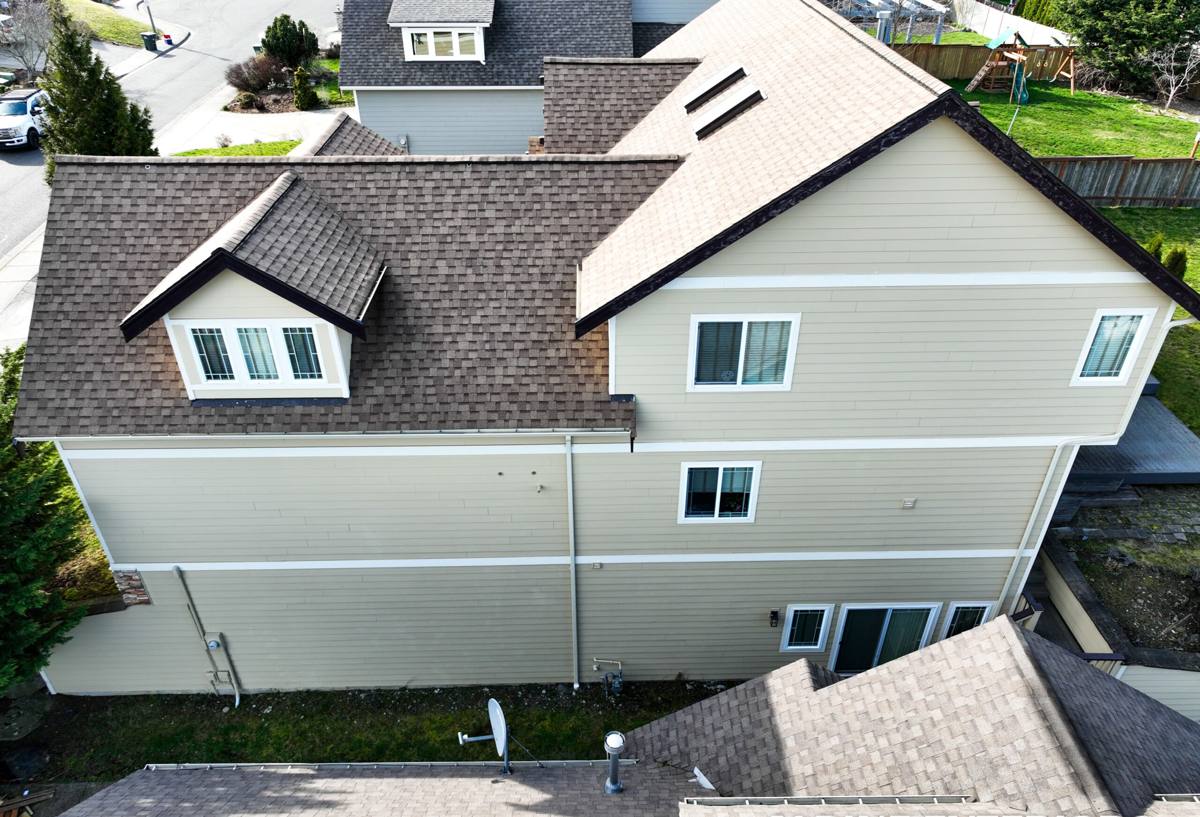
Why Salt Air, Wind, and Moss Matter More Here
Salt Air and Metal Components
Asphalt shingles themselves resist salt reasonably well, but a roofing system is more than shingles. Nail heads, flashing, drip edge, vent stacks, and any exposed metal fasteners are all vulnerable to accelerated corrosion when they're regularly exposed to salt-laden coastal air. Once flashing or fasteners start to corrode, they lose their ability to keep water out at the exact points where roofs are most likely to leak — valleys, chimneys, and roof-to-wall transitions.
Driving Rain and Wind
Storms coming off the water don't just drop rain straight down — wind pushes it sideways and up under shingle edges, especially at eaves, rakes, and low-slope sections. A roof that relies on standard nailing and minimal underlayment can hold up in calm weather but fail during the kind of sideways, sustained rain that Sandy Point sees during winter storm systems.
Moss, Algae, and a Long Damp Season
Whatcom County's extended wet season, combined with the shade many Sandy Point lots get from surrounding trees, creates ideal conditions for moss and algae growth on north-facing and shaded roof slopes. Left unaddressed, moss holds moisture against the shingle surface, lifts shingle edges as it grows, and shortens the life of the roofing material well below its rated lifespan.
What a Correct Asphalt Shingle Roof Needs in This Environment
A roof that's going to hold up in Sandy Point isn't just about which shingle brand goes on top. The system underneath and around the shingles matters as much, if not more.
- Corrosion-resistant fasteners and flashing — hot-dipped galvanized or stainless steel nails and flashing hold up far longer in salt air than standard-grade metal.
- Full synthetic underlayment — a continuous water-resistant barrier under the shingles that protects the deck even if wind-driven rain gets past the shingle layer.
- Ice-and-water shield at vulnerable points — valleys, eaves, and roof penetrations get a self-adhering waterproof membrane rather than relying on underlayment alone.
- Proper starter strip and edge sealing — the first line of defense against wind lift at the eaves and rakes.
- Balanced attic ventilation — intake and exhaust venting that keeps moisture from condensing on the underside of the roof deck, which matters in a consistently humid coastal climate.
- Algae-resistant shingle granules — most major manufacturers offer a shingle line with copper-infused granules specifically to slow moss and algae growth on shaded, damp roofs.
Our Asphalt Shingle Roofing Process
1. Roof Assessment
We start by looking at the whole system, not just the shingle surface — deck condition, existing ventilation, flashing at chimneys and walls, and how much moss or granule loss is already present. On coastal properties like Sandy Point, we pay particular attention to fastener corrosion and any soft spots in the decking near valleys and eaves, since that's usually where hidden moisture damage shows up first.
2. Tear-Off and Deck Inspection
A full tear-off lets us see the actual condition of the roof deck, which a re-roof over old shingles never does. Any damaged or soft plywood gets replaced before anything new goes down — installing a new roof over a compromised deck just locks the problem in for another 20-plus years.
3. Underlayment and Flashing
This is where a coastal roof earns its durability. We install synthetic underlayment across the full roof, ice-and-water membrane at valleys, eaves, and penetrations, and corrosion-resistant flashing at every wall and chimney transition. This layer is what actually keeps water out during the driving rain events Sandy Point sees several times a winter — the shingles on top are the first line of defense, not the only one.
4. Shingle Installation
Shingles go down with corrosion-resistant fasteners, correct nailing patterns for the local wind exposure, and properly sealed starter courses at eaves and rakes. For homes with shaded or north-facing slopes, we talk through algae-resistant shingle options as part of this step, since it's a lot cheaper to choose that upgrade at installation than to deal with moss growth a few years in.
5. Ventilation Check
We confirm intake and exhaust venting are balanced for the attic size. Under-ventilated attics trap humid air, which accelerates deck rot from the inside and can void shingle warranties — a detail that's easy to overlook but matters more in a climate this damp.
6. Final Walkthrough
We walk the finished roof and go over what was done, what to watch for, and simple maintenance steps specific to a coastal property.
Choosing Shingles for a Coastal Whatcom County Roof
Not every asphalt shingle product is worth the added cost for a Sandy Point roof, and not every basic shingle is a bad choice either — it depends on the exposure of your specific roof. Here's how we think about the trade-offs.
| Shingle Type | Best For | Trade-Offs |
|---|---|---|
| Standard 3-tab | Budget re-roofs, less exposed slopes | Shorter lifespan, less wind resistance, no algae resistance |
| Architectural/dimensional | Most Sandy Point homes | Higher upfront cost, but stronger wind ratings and longer warranty life |
| Algae-resistant architectural | Shaded, north-facing, or tree-covered roofs | Slight cost premium; significantly slows moss/algae growth |
| High-wind-rated architectural | Fully exposed, waterfront-facing slopes | Higher fastener count and labor cost, best wind performance |
For most Sandy Point homes, a mid-to-upper-tier architectural shingle with algae-resistant granules ends up being the most cost-effective choice over the life of the roof, even though it costs more at installation. The moss and salt-air resistance pays for itself in fewer callbacks and a longer service life.
Maintenance That Actually Extends a Coastal Roof's Life
Even a correctly installed roof needs some upkeep in this environment. Homeowners in Sandy Point get more out of their roofs when they stay ahead of a few simple things.
- Have moss and debris cleared from shaded slopes before it builds up thick enough to hold moisture against the shingles.
- Keep gutters clear so water isn't backing up under the shingle edges during heavy rain.
- Trim back overhanging branches that keep roof sections shaded and damp longer than they need to be.
- After major windstorms, do a visual check (or have us do one) for lifted or missing shingles before a small problem becomes a leak.
- Watch for granule buildup in gutters and downspouts, which signals accelerated shingle wear.
Signs Your Sandy Point Roof Needs Attention
Because coastal wear happens gradually, a lot of homeowners don't notice a problem until it shows up as a leak. A few earlier warning signs worth acting on:
- Curling, cupping, or cracked shingles, especially on wind-exposed slopes
- Visible moss or dark streaking on north-facing or shaded sections
- Rust staining around flashing, vent stacks, or nail heads
- Granules collecting in gutters faster than expected for the roof's age
- Daylight visible through the roof deck from inside the attic
- Soft or spongy spots when walking the roof (assessed by a professional, not the homeowner)
Why Hiring a Crew That Already Works Sandy Point Matters
A roofing crew that mostly works inland jobs isn't necessarily thinking about corrosion-resistant fasteners, algae-resistant granules, or wind-driven rain details by default — those aren't universal requirements everywhere in Whatcom County, but they're close to non-negotiable on a shoreline property. Working regularly in Birch Bay and Sandy Point means we've seen firsthand which parts of a roofing system fail first in this specific environment, and we build every roof to account for it rather than treating it as an inland job with a nicer view.
It also means we're not guessing at things like typical wind exposure, moss patterns by slope orientation, or how quickly untreated flashing corrodes near the water — we've watched it happen on roofs in this community and adjusted our process accordingly.
Get a Free, No-Pressure Estimate
If your Sandy Point roof is showing signs of wear, or you'd simply like an honest read on how much life it has left, we're happy to take a look. Fill out the form below to schedule a free estimate — no pressure, just a straightforward assessment from a crew that knows what this coastal climate does to a roof.