 Birch Bay Siding
 Siding Installation Built for Ferndale's Weather, Not Just Its Curb Appeal
Ferndale sits close enough to the water that homes here deal with a version of coastal weather most siding products were never designed for. Salt-laden air drifts in off the bay, driving rain comes in sideways during fall and winter storms, and a long, damp moss season settles over roofs, fences, and siding for months at a stretch. A siding installation in this part of Whatcom County has to hold up to all three at once, year after year, not just look good on the day it goes up.
We install James Hardie fiber cement siding exclusively, and Ferndale is one of the neighborhoods we work in regularly. That matters more than it might sound like — a crew that already understands how this specific stretch of coastline behaves makes different decisions on flashing, gaps, and fastening than a crew seeing salt-air exposure for the first time.
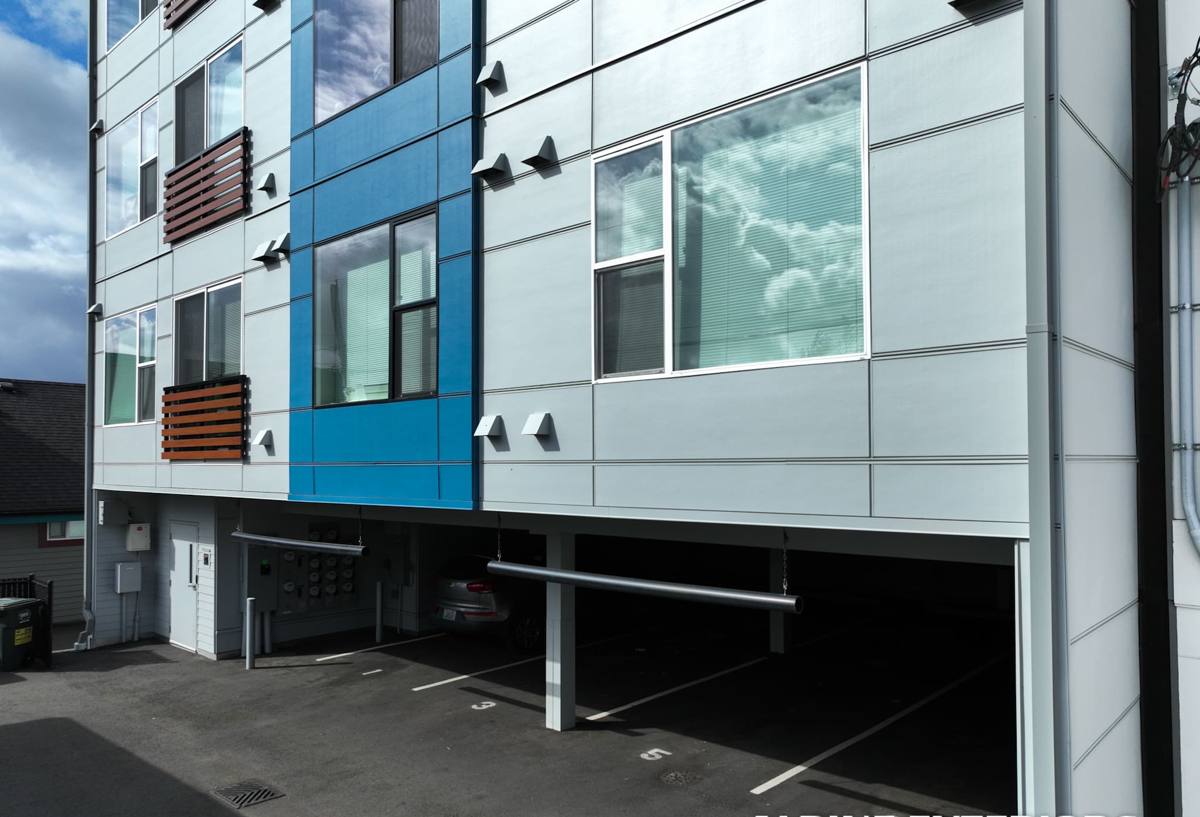
What Ferndale's Climate Actually Does to Siding
Salt Air and Moisture
Proximity to Birch Bay and the greater Salish Sea coastline means airborne salt is a constant, low-level presence. It accelerates corrosion on fasteners, trim, and any metal flashing that isn't rated for coastal exposure. It also interacts with paint film over time, which is part of why factory-applied, baked-on finishes hold up better here than field-applied paint that has to fight the salt air from day one.
Driving, Wind-Driven Rain
Storms off the water don't just fall straight down — they push rain sideways into wall assemblies, seams, and butt joints. Siding that relies on a tight, well-caulked seam alone (rather than proper flashing and drainage) is the first thing to fail under that kind of pressure. Water finds the smallest gap and works it wider over successive storms.
Long Moss and Mildew Season
Whatcom County's wet, mild winters give moss and mildew a long runway to establish themselves on north-facing walls, under eaves, and anywhere airflow is limited. Siding material that absorbs moisture gives moss something to root into; material that sheds water and resists moisture absorption gives it much less to work with.
Why We Only Install James Hardie Fiber Cement Here
We don't install vinyl, LP SmartSide, primed spruce, cedar, or other fiber cement brands like Cemplank or Allura. That's a deliberate standard, not a lack of options. In a climate that combines salt air, wind-driven rain, and extended moss exposure, the material matters as much as the installation:
- Non-combustible core — fiber cement doesn't feed a fire the way wood-based products can.
- Engineered for moisture — Hardie's HZ5 product line is formulated for wetter, harsher climates like ours, where wood-based siding and even some other fiber cement products can swell, delaminate, or absorb water at the edges over time.
- Factory-cured ColorPlus finish — baked on at the factory under controlled conditions, so it resists fading and holds up to salt air better than a coat of paint applied on-site.
- Dimensionally stable — it doesn't expand and contract with moisture the way wood siding does, which matters when you're getting soaked one week and dried out the next.
- Backed by a real transferable warranty — one that assumes correct installation, which is why we're particular about how we install it.
None of this is a knock on every alternative product across the board — vinyl and engineered wood have their place in some climates and budgets. It's that for Ferndale's specific combination of salt exposure, driving rain, and moss pressure, we've seen what holds up and what doesn't, and we've standardized on the material that performs.
What a Correct Installation Involves
Fiber cement siding is only as good as the assembly behind it. Ferndale's exposure makes a few details non-negotiable:
Water Management Behind the Siding
A drainage plane and properly lapped weather-resistant barrier come first, so any moisture that does get past the siding has somewhere to go besides your wall sheathing. This is the part of the job nobody sees once it's finished, and it's the part that determines whether the siding lasts twenty years or five.
Flashing at Every Penetration
Windows, doors, hose bibs, vents, and any other wall penetration need flashing detailed to shed water outward, not trap it against the sheathing. Given how much wind-driven rain Ferndale sees, flashing shortcuts show up as stains or rot within a few wet seasons, not decades.
Fastener Spec and Placement
James Hardie specifies fastener type, spacing, and clearance for a reason — get it wrong and you either void the warranty or create stress points where the board can crack or work loose in wind. We follow the manufacturer's installation instructions to the letter, including corrosion-resistant fasteners appropriate for coastal exposure.
Proper Clearances and Gaps
Hardie panels need gaps at butt joints, trim, and ground clearance to allow for expansion and to keep the bottom edge from wicking up moisture from grade, roofing, or hardscape. Skipping these clearances is one of the most common shortcuts we see on jobs we're called in to fix.
Pre-Installation Checklist for Ferndale Homes
- Existing sheathing inspected for hidden rot or moisture damage before new siding goes on
- Weather-resistant barrier installed and lapped correctly, shingle-style, top to bottom
- Flashing planned and installed at every window, door, and wall penetration
- Ground and roofline clearances confirmed to manufacturer spec
- Corrosion-resistant fasteners selected for coastal exposure
- Expansion gaps set at all butt joints and trim intersections
- Caulking and sealant limited to where Hardie's instructions actually call for it — not used as a substitute for proper flashing
Our Process for a Ferndale Siding Installation
- On-site assessment. We look at your home's exposure — how much direct weather it gets off the water, existing moisture issues, and the condition of the sheathing underneath your current siding.
- Product and color selection. We walk through Hardie's plank profiles, textures, and ColorPlus palette so you land on something that fits the house and the neighborhood.
- Written estimate. A clear scope and price before any work starts — no surprise change orders for things we should have caught during the assessment.
- Tear-off and sheathing check. Old siding comes off, and we inspect what's underneath before anything new goes up. If we find rot or moisture damage, we address it before proceeding, not after.
- Weather barrier and flashing installation. The unglamorous part that determines how the job performs in year ten, not just year one.
- Hardie siding installation to manufacturer spec. Correct fasteners, correct clearances, correct sequencing.
- Final walkthrough. We go over the finished job with you before we consider it done.
Cost Factors for a Ferndale Siding Job
| Factor | Why It Matters Here |
|---|---|
| Home size and wall complexity | More corners, dormers, and penetrations mean more flashing detail work, which affects labor time. |
| Condition of existing sheathing | Ferndale's moisture exposure means some tear-offs reveal hidden rot that needs repair before new siding goes on. |
| Hardie product line and profile | HZ5 boards, plank width, and texture (smooth vs. cedar-shake style) affect material cost. |
| ColorPlus vs. primed-for-paint | Factory-finished ColorPlus costs more up front but eliminates a repaint cycle and holds color better in salt air. |
| Access and site conditions | Scaffolding, tight lot lines, or difficult access add labor time on some Ferndale properties. |
Exact numbers depend on your home's specifics — we'll walk the property and give you a real, itemized estimate rather than a ballpark over the phone.
Why Hire a Crew That Already Works in Ferndale
Installation quality is what determines whether siding performs for its full expected lifespan or fails early — and that quality depends heavily on whether the crew understands the specific conditions they're building for. A crew that regularly works Whatcom County's coastal edge already knows where wind-driven rain tends to concentrate on a given roofline, how much clearance moss-prone shade areas really need, and which fastener and flashing details matter most for salt air exposure. That local pattern recognition is hard to replicate with a general contractor from outside the region, no matter how skilled they are elsewhere.
It also means faster, more accurate estimates — we're not guessing at your home's exposure category, we've seen it up and down the street.
Signs Your Ferndale Home May Need New Siding
- Visible moss or mildew growth that returns quickly after cleaning
- Soft spots, bubbling, or warping, especially on north- or west-facing walls
- Paint that's peeling or failing faster than expected on wood or engineered wood siding
- Gaps opening up at seams, trim, or corners
- Rising energy bills that suggest the wall assembly is no longer doing its job
If you're seeing any of these, it's worth having someone look at the wall assembly, not just the siding surface — by the time siding shows visible failure, moisture has often already reached the sheathing.
If you're considering new siding for a Ferndale home, we'll come take a look, walk you through what your home's exposure actually calls for, and give you a straightforward, no-pressure estimate — use the form below to get started.