 Birch Bay Siding
 Windows in California Creek Take a Different Kind of Beating
Homes in the California Creek area sit close enough to the water that salt-laden air is a daily fact of life, not an occasional nuisance. Add Whatcom County's long, wet winters and the low-angle, driving rain that comes off the Strait, and you have conditions that go after window frames, seals, and hardware from multiple directions at once. Wood sashes swell and stick. Vinyl frames chalk and go brittle years before they should. Aluminum corrodes at the fasteners. And in the shaded, moisture-heavy months that stretch from fall through spring, moss and algae find every horizontal ledge and gasket line a window has to offer.
None of this means windows here fail faster because the products are bad. It means the margin for error in the installation is smaller. A window that's flashed correctly and sealed with the right materials will handle this climate for decades. One that's caulked-and-hoped will start showing problems in five to seven years, sometimes sooner on west- and south-facing walls that catch the worst of the weather.
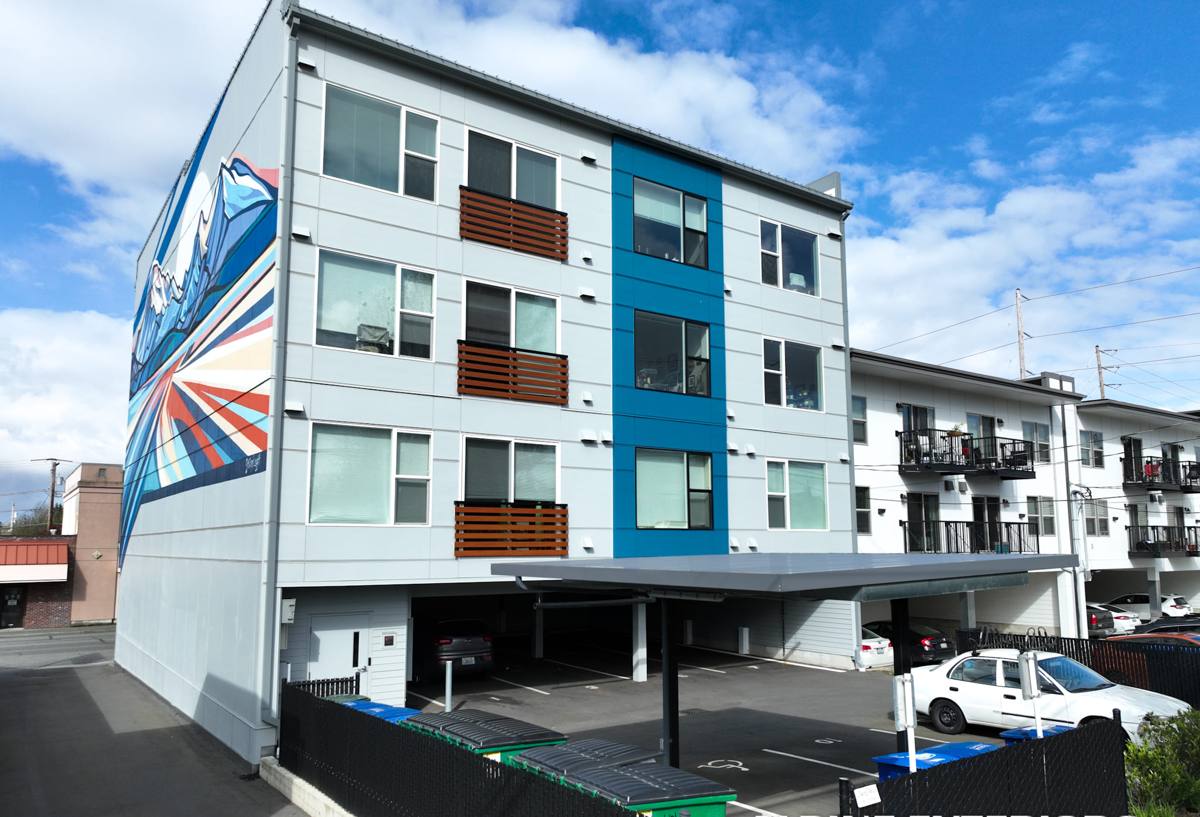
Signs a California Creek Home Needs Window Replacement, Not Just Repair
Not every drafty or foggy window needs a full replacement. But there's a point where patching stops making sense and a new, properly installed unit is the more honest recommendation. Common signs we look for:
- Fogging or a permanent haze between panes — the seal on the insulated glass unit has failed and moisture is trapped for good
- Visible wood rot at the sill, jamb, or corners, especially on older wood-frame windows
- Frames that are soft, spongy, or discolored when pressed
- Windows that won't stay open, won't latch, or have become difficult to operate
- Persistent drafts you can feel by hand along the frame edge on a windy day
- Condensation forming on the inside of the glass regularly, even with normal ventilation
- Visible daylight gaps around the frame from outside
- Recurring moss or black staining at the bottom corners that keeps coming back no matter how often it's cleaned
If you're only seeing one or two of these and the frame itself is sound, a repair or re-seal may buy you more years. If several are present, or the frame material itself is failing, replacement is usually the more cost-effective path — repeated repairs on a dying window add up fast without solving the underlying problem.
What a Correct Window Replacement Actually Involves
The window unit itself is only part of the job. In a coastal, high-rainfall area like California Creek, the installation details matter as much as the product — arguably more, since a good window installed poorly will leak regardless of its price tag.
Removal and Opening Prep
Old sashes and frames come out carefully to avoid damaging the surrounding siding or trim. Once the opening is exposed, we check the sill and framing underneath for hidden rot or moisture damage before anything new goes in. This is often where older homes reveal problems that never showed from the outside — catching it now, rather than sealing it back up, is the difference between a fix and a future headache.
Flashing and Water Management
This is the step that determines whether a window leaks in five years. Proper flashing — sill pan, side flashing, and head flashing integrated with the building's weather-resistive barrier — directs any water that gets past the exterior trim back out, rather than into the wall cavity. In a climate with this much wind-driven rain, skipping or shortcutting this step is the single biggest cause of the hidden rot we see when we open up older walls.
Setting, Shimming, and Sealing
The new window gets shimmed level and plumb, fastened per the manufacturer's specification, and insulated around the frame gap — not overpacked with spray foam, which can bow a frame out of square. Exterior sealant goes on at the joints designed to be sealed, and only those joints; sealing everything solid actually traps moisture that needs a path to escape.
Interior and Exterior Finish
Trim, casing, and any siding disturbed during the swap get reinstalled or replaced to match, with attention to keeping water shedding away from the new unit rather than toward it.
Choosing the Right Frame Material for This Climate
There isn't one "best" window material for every home — it depends on your budget, your home's age and style, and how much upkeep you want to take on. Here's how the common options hold up against salt air, rain, and moss exposure specifically:
| Frame Material | Coastal Durability | Maintenance | General Cost Position |
|---|---|---|---|
| Vinyl | Good — won't rot or corrode, but lower-grade vinyl can go brittle with age | Low — occasional cleaning | Lowest to mid-range |
| Fiberglass | Very good — dimensionally stable, resists moisture and salt exposure well | Low | Mid to upper-mid |
| Aluminum | Fair — corrosion risk at fasteners and joints near salt air over time | Moderate — watch for pitting and corrosion at hardware | Mid-range |
| Wood | Requires diligence — classic look, but vulnerable to rot without consistent upkeep | High — regular painting/sealing needed | Higher |
| Wood-Clad | Good — exterior cladding protects the wood core from weather | Low to moderate | Higher |
For most California Creek homes, we steer clients toward vinyl or fiberglass for the exterior-facing performance, reserving wood or wood-clad for homes where matching a historic or specific architectural look outweighs the added upkeep. This isn't a knock on wood windows — it's an honest trade-off between appearance and the maintenance commitment this climate demands.
Glass Package Matters Too
Beyond the frame, the glass itself makes a real difference in comfort and condensation control:
| Feature | What It Does |
|---|---|
| Dual-pane (standard) | Basic insulation, adequate for most rooms |
| Triple-pane | Better sound and thermal performance, useful for street-facing or exposed walls |
| Low-E coating | Reduces heat loss and UV fading of interior furnishings |
| Argon gas fill | Improves insulating value between panes |
| Reinforced weatherstripping | Cuts down on the drafts driving rain and wind push through over time |
Our Process for California Creek Window Replacements
- On-site assessment — we look at each window individually, not just the house as a whole, since exposure varies wall to wall
- Honest scope — we tell you which windows need full replacement, which can be repaired, and why
- Material and glass selection — matched to your budget and this climate, not upsold beyond what makes sense
- Scheduling around weather — we plan installs for drier stretches where possible to keep the opening protected during the swap
- Installation with proper flashing and sealing — the step most likely to get rushed elsewhere, done right here
- Cleanup and walkthrough — every new window operated and checked with you before we call the job done
Why Hiring a Crew That Already Works This Area Matters
A contractor who works Whatcom County's coastal neighborhoods regularly already knows which wall orientations take the worst weather, how local moss and moisture patterns behave through the year, and what building department expectations look like for this area. That familiarity shows up in small decisions — where to add extra flashing, which sealant holds up against this specific salt-and-rain combination, how tightly to schedule around wet weather — that a crew unfamiliar with the region might not think to make. It also means someone local to call if a question comes up after the job is finished, rather than chasing down a company that was only in town for one project.
After the Install: Keeping New Windows Performing
New windows aren't maintenance-free in this climate, but they're low-maintenance if you stay ahead of a few basics:
- Rinse salt residue and grime off glass and frames a few times a year, especially after storms
- Check exterior caulk lines annually and touch up any that have cracked or pulled away
- Keep gutters and nearby drainage clear so water isn't pooling near window sills
- Wipe down tracks and weep holes so they don't clog with debris or moss and trap water
- Operate each window a few times through the year so hardware doesn't seize up from disuse
Get a Straight Answer on Your Windows
If you're not sure whether your windows need repair or replacement, or you just want a clear-eyed look at what it would take to fix them right, we're glad to come take a look. The estimate is free, there's no pressure, and you'll get an honest answer either way — use the form below to get started.